
When you pick up a prescription, you might see two pills that look almost identical-one with a familiar brand name, the other with no name at all. You might wonder: are authorized generics really the same as brand drugs? The answer isn’t just yes-it’s more precise than that. Authorized generics aren’t just similar. They’re the exact same pill, made in the same factory, with the same ingredients, under the same quality controls. The only difference? The label.
What Exactly Is an Authorized Generic?
An authorized generic is a brand-name drug sold without the brand name on the bottle. It’s made by the original manufacturer-like Pfizer, Merck, or AbbVie-but packaged under a different label, often with a plain white pill and a simple box. The FDA defines it clearly: it’s the same active ingredient, same inactive ingredients, same strength, same shape, same release mechanism. Nothing changes except the name on the box.
This isn’t a loophole. It’s a legal pathway created by the Hatch-Waxman Act of 1984. That law let generic companies enter the market after patents expired, but it also let brand companies protect their market share by launching their own generics. So when a brand drug’s patent runs out, the maker might start selling an authorized generic at a lower price-sometimes even before the first true generic hits shelves.
Unlike typical generics, which go through the Abbreviated New Drug Application (ANDA) process, authorized generics are approved under the original brand’s New Drug Application (NDA). That means they don’t appear in the FDA’s Orange Book, where most generics are listed. But that doesn’t mean they’re less regulated. They’re held to the same strict manufacturing standards as the brand version.
How Authorized Generics Differ from Typical Generics
Most people think all generics are the same. But there’s a big difference between a typical generic and an authorized generic.
Typical generics must prove they’re bioequivalent to the brand drug-that is, they deliver the same amount of medicine into your bloodstream within an acceptable range. But they can have different fillers, dyes, or coatings. That’s why a generic version of a pill might look different: different color, different shape, different imprint. For most people, this doesn’t matter. But for some, it does.
Authorized generics don’t have that variability. They’re the same pill, just unlabeled. Same coating. Same filler. Same manufacturing line. Same batch control. If you’ve ever switched from a brand to a generic and noticed a change in how you feel-maybe a new stomach upset or a weird taste-that’s often due to inactive ingredients. With an authorized generic, that’s not a risk.
Take birth control pills, for example. Many women report that switching to a typical generic caused breakthrough bleeding or mood changes. Why? Even tiny differences in fillers can affect how the pill dissolves in the gut. Authorized generics avoid that entirely because they’re identical to the original.
Are They Really Therapeutically Equivalent?
Yes. And the data backs it up.
A 2018 study in the Journal of Managed Care & Specialty Pharmacy followed over 5,000 patients who switched from brand-name drugs to generics. About 94% switched to a generic. Of those, some got typical generics, others got authorized generics. The researchers tracked hospital visits, ER trips, and whether patients stopped taking their meds.
The results? No meaningful difference in outcomes. Patients on authorized generics had the same rate of hospitalizations, same adherence rates, same number of doctor visits as those on brand drugs. Even the small uptick in ER visits for authorized generics-0.25 events per year versus 0.22 for typical generics-wasn’t clinically significant. In other words: switching to an authorized generic didn’t increase risk.
The FDA has been clear for years: if the drug is made by the same company, with the same formula, under the same conditions, it’s therapeutically equivalent. Dr. Janet Woodcock, former head of the FDA’s drug center, said it plainly: “Authorized generics provide the same therapeutic effect as the brand-name product.”
And here’s the kicker: the FDA inspects the same factories that make brand drugs when they produce authorized generics. There’s no separate quality system. No lower standards. Just the same production line, same inspectors, same compliance checks.
Why Do Authorized Generics Cost More Than Typical Generics?
If they’re identical, why aren’t they always the cheapest option?
Because they’re not competing with other generics. They’re competing with the brand. So their price is usually lower than the brand-but sometimes higher than a typical generic. Why? The brand company still has to cover its costs, and they’re often the only supplier for a while. Once other generic makers enter the market, prices drop further.
For patients, this means timing matters. If you’re switching from a brand, asking your pharmacist for the authorized generic right away can save you money without risking formulation changes. But if you wait a few months, a typical generic might be cheaper. The trade-off? You might get a different filler. For most people, that’s fine. For others, it’s not.
What Patients and Pharmacists Need to Know
One of the biggest problems? Confusion.
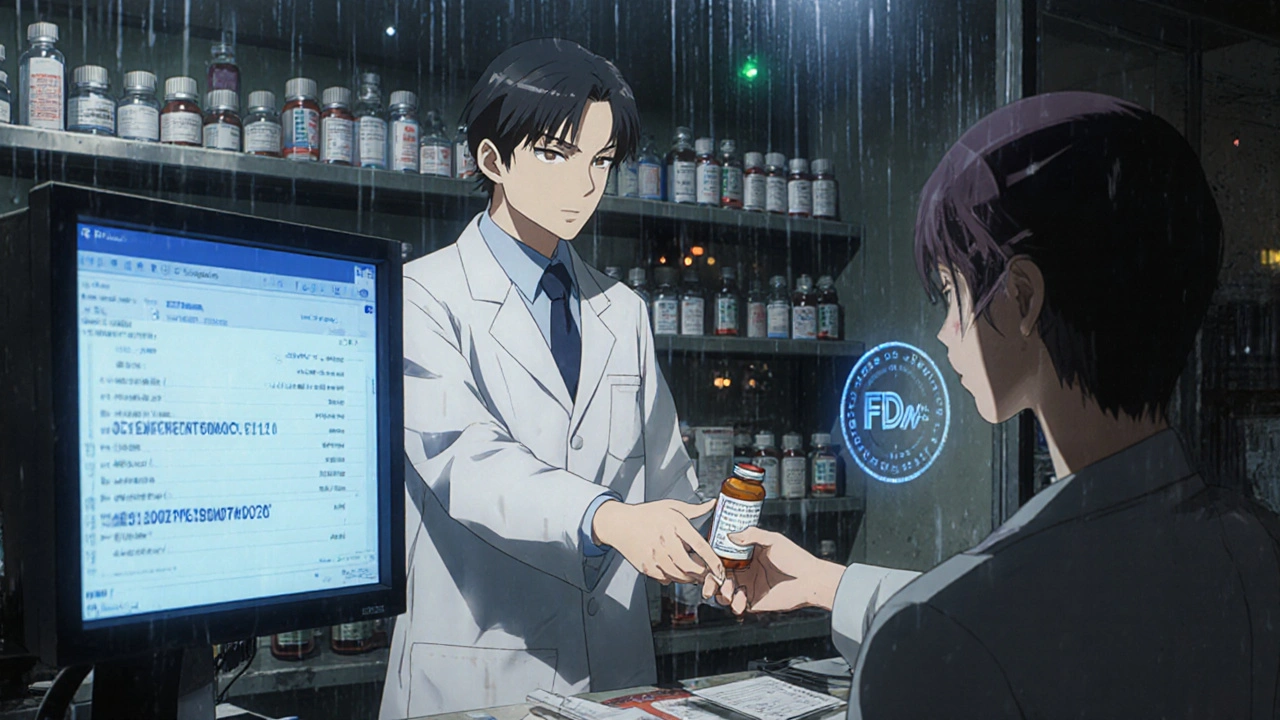
Pharmacists don’t always know which generic is which. Authorized generics don’t show up in the Orange Book, so they’re not flagged in pharmacy systems the same way. Insurance forms might list them differently. A patient might get an authorized generic one month, a typical generic the next, and not realize it’s a different product.
That’s why it’s important to ask: “Is this an authorized generic?” If your prescription says “metformin,” and you used to take Glucophage, ask if the new pill is the same one made by the original company. If your pharmacist says yes, you’re getting the exact same drug-just without the brand name.
Also, check the National Drug Code (NDC). Authorized generics have a different NDC than the brand, even though the drug is identical. That’s how insurance systems track them. But the NDC doesn’t tell you the quality. Only the manufacturer does.
When Authorized Generics Matter Most
Not every drug needs an authorized generic. For antibiotics or pain relievers, typical generics work just fine.
But for drugs with a narrow therapeutic index-where even small changes in blood levels can cause harm-authorized generics are a safer bet. Think: thyroid meds like levothyroxine, seizure drugs like phenytoin, blood thinners like warfarin, and psychiatric drugs like lithium. These drugs require precise dosing. A change in filler could alter absorption. For patients on these, an authorized generic removes that uncertainty.
Chronic conditions are another big one. Patients on long-term meds for diabetes, high blood pressure, or depression often stick with what works. If they’ve had bad experiences with typical generics, switching to an authorized version can improve adherence. And better adherence means fewer complications, fewer hospital visits, lower long-term costs.
The Bigger Picture: Market Dynamics and Controversies
Authorized generics aren’t just about patient care-they’re a business tool.
Some brand companies use them to delay competition. They’ll launch an authorized generic right when the patent expires, then use legal tactics to block other generics from entering. The Government Accountability Office found this happened in several cases between 2015 and 2020. The result? Patients pay more than they should because there’s no real price competition.
But that doesn’t change the science. Even when used as a market tactic, the authorized generic itself is still the same drug. If you’re getting it, you’re still getting the exact same formulation as the brand.
Today, authorized generics make up about 5-7% of the U.S. generic market, according to the Congressional Budget Office. That number is expected to hold steady through 2028. They’re not the majority-but they’re a critical option for patients who need consistency.
Bottom Line: Same Drug, Different Label
Authorized generics aren’t a trick. They’re not a compromise. They’re the original drug, sold under a different name. If you’re concerned about inactive ingredients, if you’ve had bad reactions to generics before, or if you’re on a drug where precision matters-ask for the authorized version. You’re not settling for less. You’re getting exactly what you were on before, just at a lower price.
And if your pharmacist says they don’t carry it? Ask them to order it. Most can. It’s not a special request. It’s a legitimate, FDA-approved option that’s been available for decades.
Therapeutic equivalence isn’t a buzzword here. It’s a fact. The pill in your hand? It’s the same one your doctor prescribed. The only thing missing is the logo on the bottle.
Are authorized generics as safe as brand-name drugs?
Yes. Authorized generics are made in the same facility, with the same ingredients, and under the same FDA inspections as the brand-name version. The FDA requires them to meet identical quality, purity, and strength standards. There is no difference in safety profile.
Why don’t authorized generics show up in the FDA’s Orange Book?
The Orange Book only lists drugs approved through the Abbreviated New Drug Application (ANDA) process. Authorized generics are approved under the original brand’s New Drug Application (NDA), so they’re not included. But this doesn’t mean they’re less regulated-it just means they’re categorized differently.
Can I ask my pharmacist for an authorized generic instead of a typical generic?
Absolutely. You have the right to request it. If your pharmacy doesn’t stock it, they can usually order it. Just ask: “Is there an authorized generic for this drug?” Many pharmacists aren’t trained to proactively offer it, but they can help if you ask.
Do authorized generics cost more than typical generics?
Sometimes. Authorized generics are usually cheaper than the brand name but may cost more than a typical generic because they’re produced by the original manufacturer and often enter the market before other generics. Prices vary by drug, insurer, and timing.
Are authorized generics better for narrow therapeutic index drugs?
Yes. For drugs like levothyroxine, warfarin, or phenytoin, where even small changes in blood levels can cause side effects or reduce effectiveness, authorized generics are often preferred. Because they contain the exact same inactive ingredients, there’s no risk of formulation-related absorption changes.
What to Do Next
If you’re on a long-term medication and have ever felt different after switching to a generic-whether it’s a new side effect, reduced effectiveness, or just unease-talk to your pharmacist. Ask if an authorized generic is available. Bring your current prescription bottle. Compare the pill color, shape, and imprint. If it matches your brand, you’re likely already on the authorized version.
Don’t assume all generics are the same. Some are. Some aren’t. Authorized generics give you the peace of mind that you’re getting the exact drug your doctor intended-without the brand price tag.
Geoff Heredia
December 1, 2025 AT 07:46They’re lying to you. Authorized generics? Nah. Big Pharma just rebrands the same pill to keep you hooked. They own the FDA too. You think they care if you live or die? They care about your co-pay. I’ve seen the inside of those factories - it’s all smoke and mirrors. The ‘same ingredients’? Sure, if you ignore the 0.003% of proprietary fillers they swap in. That’s all it takes to make you dependent. Wake up.
Tina Dinh
December 2, 2025 AT 03:28OMG YES THIS!! 🙌 I switched to an authorized generic for my anxiety med and my brain finally stopped feeling like a wet sock 😭 I was crying in the pharmacy aisle because I finally felt NORMAL again. No more weird dizziness, no more brain fog. Same pill, different label - why isn’t everyone screaming about this??
linda wood
December 3, 2025 AT 14:10Okay, but let’s be real - most people don’t even know this exists. I’ve had patients cry because they thought their ‘new’ generic was ‘weaker’ when it was just a different filler. I’ve seen people stop taking meds because they felt ‘off’ - not because the drug failed, but because the coating made them nauseous. Authorized generics? They’re the unsung heroes of chronic care. If you’re on levothyroxine or warfarin? Don’t gamble. Ask for it. Your body remembers what it’s used to.
jamie sigler
December 4, 2025 AT 17:56Whatever. I don’t care. My insurance only covers the cheapest one. If I feel fine, why bother? You people act like this is a moral crisis. It’s a pill.
Bernie Terrien
December 4, 2025 AT 20:17Big Pharma’s got a new scam: the ‘I’m still the same’ label. They don’t want competition - they want you to think you’re getting a bargain when they’re just repackaging their monopoly. The FDA’s a puppet. The Orange Book? A joke. They don’t list authorized generics because they don’t want you comparing. It’s not transparency - it’s obfuscation with a white pill.
Subhash Singh
December 6, 2025 AT 09:56It is indeed a matter of considerable scientific and regulatory significance. The Hatch-Waxman Act established a nuanced framework wherein authorized generics, while pharmacologically identical, operate under a distinct regulatory classification. This distinction, though seemingly semantic, has profound implications for market dynamics, pharmacovigilance, and patient outcomes. One must exercise due diligence when interpreting therapeutic equivalence, as bioequivalence does not always equate to clinical equivalence in all subpopulations.
Sullivan Lauer
December 7, 2025 AT 09:03Let me tell you something - I was on brand-name Lipitor for 12 years. My cholesterol was perfect. Then my insurance switched me to a generic - I felt like I was drowning in slow motion. My legs were heavy, my head was foggy, I couldn’t focus at work. I begged my pharmacist. I screamed. I cried. I showed them my pill bottle. And then - miracle of miracles - they found the authorized generic. Same pill. Same coating. Same everything. I started sleeping again. I started laughing again. I started living again. This isn’t just science. This is survival. If you’re on a long-term med and you’ve ever felt ‘off’ after a switch - don’t accept it. Fight for the authorized version. Your life isn’t a cost-cutting experiment.
tushar makwana
December 9, 2025 AT 05:45oh wow i never knew this! i switch my blood pressure med last year and felt kinda weird but i thought it was me. so u saying if i ask for authorized generic i might feel better? i will try next time. thanks man 😊
Richard Thomas
December 10, 2025 AT 03:56While the empirical data presented in the referenced study may suggest statistical non-inferiority, one must critically evaluate the methodological limitations inherent in observational cohort analyses. The absence of controlled pharmacokinetic measurements, the lack of stratification by genetic polymorphisms affecting drug metabolism, and the potential for confounding by indication severely undermine the validity of the conclusion that authorized generics are therapeutically equivalent across all clinical contexts. The FDA’s regulatory framework, while ostensibly rigorous, is not infallible. One must remain cognizant of the institutional capture of regulatory bodies by pharmaceutical interests.
Mary Kate Powers
December 11, 2025 AT 18:16If you’ve ever had a bad reaction to a generic - you’re not crazy. You’re not imagining it. And you’re not alone. Ask for the authorized generic. It’s not a luxury. It’s not a privilege. It’s your right. Your body deserves consistency. Your health isn’t a game of chance. Don’t be shy - tell your pharmacist. They’ll be glad you asked.
Sara Shumaker
December 12, 2025 AT 13:06It’s fascinating how we assign meaning to labels. The brand name is a story we tell ourselves - safety, trust, identity. But the pill? It’s just chemistry. The authorized generic strips away the myth and leaves us with the raw truth: it’s the same molecule, same mechanism, same outcome. Maybe the real question isn’t whether they’re equivalent - but why we need the brand name to believe they are.
Scott Collard
December 14, 2025 AT 02:22You’re not entitled to your preferred formulation. Insurance chooses. Deal with it.
Steven Howell
December 15, 2025 AT 20:26As a pharmacist with over two decades of experience in community pharmacy practice, I can confirm that authorized generics are frequently overlooked by both prescribers and patients. While the therapeutic equivalence is well-documented, the logistical barriers - including electronic prescribing system limitations, insurance formulary misclassification, and lack of pharmacist training - significantly impede access. I routinely educate patients on NDC codes and manufacturer identifiers. This knowledge empowers them to make informed choices. The system is flawed, but the solution is simple: ask.
Robert Bashaw
December 17, 2025 AT 08:52I switched to an authorized generic for my antidepressant and I swear to god - I felt like my soul got its WiFi back. I was crying in the shower because I finally remembered what joy felt like. Not because the drug changed. Because the filler didn’t. That’s it. That’s the whole damn thing. I didn’t need a new pill. I needed the same one back. And nobody told me I could ask for it. That’s the real tragedy.
Brandy Johnson
December 18, 2025 AT 23:48Why are we letting foreign manufacturers dictate our medicine? This is an American healthcare crisis. The FDA lets foreign plants make these pills. We don’t even know where they’re coming from. This isn’t medicine - it’s a national security risk.