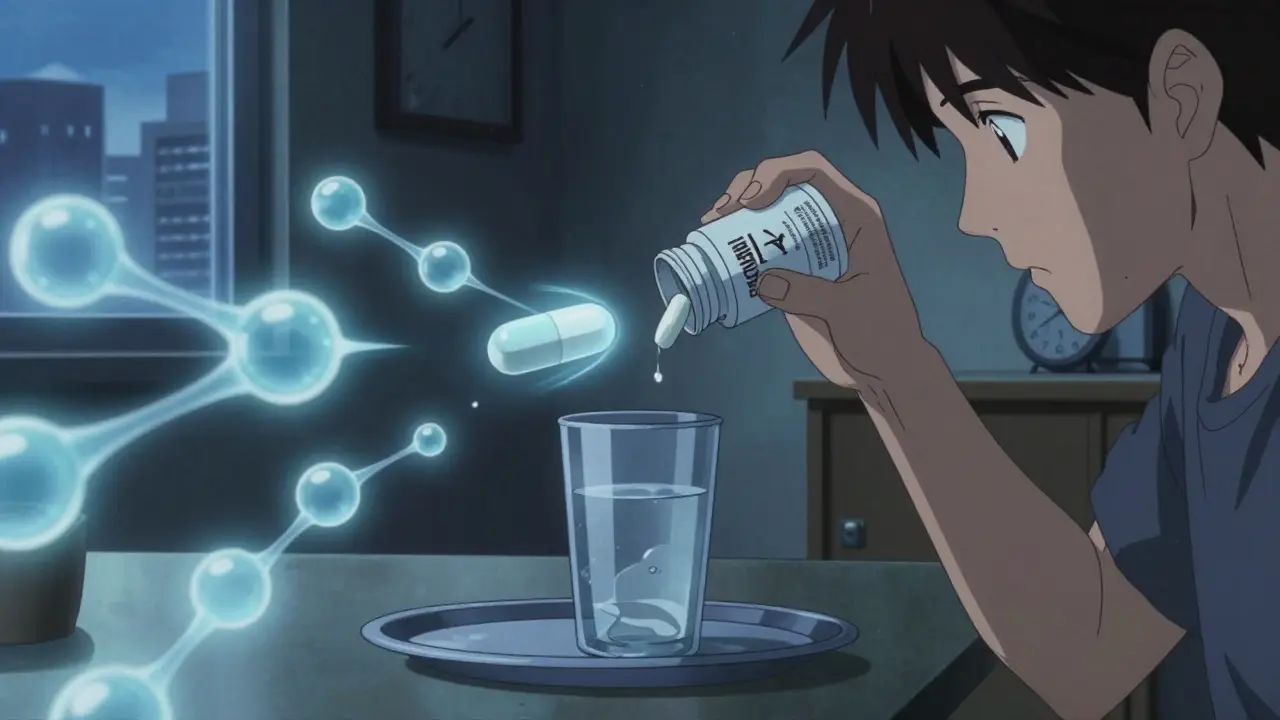
Ever taken a pill and wondered if it really worked - even though you followed the instructions? You might not be doing anything wrong, but the timing of your meal could be quietly sabotaging your medication. Food isn’t just something you eat - it’s a powerful player in how your body absorbs drugs. A simple mistake, like swallowing your antibiotic with milk or taking your thyroid pill right after breakfast, can cut its effectiveness by half. And you’re not alone: 35-40% of all prescriptions in the U.S. come with specific food-related instructions, yet nearly half of patients misunderstand them.
Why Food Changes How Medicines Work
Your digestive system doesn’t treat every pill the same. When you eat, your stomach and intestines go into a different mode. Food slows down how fast your stomach empties - sometimes by 30% to 50%. That delay means drugs take longer to reach the small intestine, where most are absorbed. But it’s not just about speed. Food can change the chemistry of your gut. Fats, calcium, fiber, and even acidity levels can lock drugs in place, block them, or help them dissolve better. For example, tetracycline antibiotics like doxycycline bind tightly to calcium. So if you take it with yogurt, cheese, or even a glass of milk, up to 75% of the drug gets trapped and never enters your bloodstream. That’s not just inconvenient - it can lead to treatment failure, like a recurring UTI that won’t go away. On the flip side, drugs like griseofulvin (an antifungal) need fat to dissolve. Without a high-fat meal, your body absorbs less than half of what it should.Empty Stomach vs. With Food: What’s the Difference?
When your doctor says “take on an empty stomach,” they mean one hour before or two hours after eating. Why? Because even a light snack can trigger stomach changes that interfere with absorption. Levothyroxine, the most common thyroid medication, is a prime example. Food reduces its absorption by 30% to 55%. That might not sound like much, but for a hormone that needs to be precise, it’s enough to throw off your entire metabolism. Patients who take it with breakfast often end up with persistent fatigue, weight gain, or brain fog - even if they’re taking the “right” dose. On the other hand, some drugs need food to work at all. Nitrofurantoin, used for urinary infections, absorbs 40% better when taken with food. Cefpodoxime, another antibiotic, sees a 50-60% boost in absorption when eaten with a meal. These aren’t suggestions - they’re biological facts. Taking them on an empty stomach could mean the drug doesn’t reach the level needed to kill the infection.Timing Matters More Than You Think
It’s not just “with food” or “without food.” The exact timing can make or break a treatment. For sulfonylurea diabetes drugs like glipizide, taking them before a meal isn’t just a recommendation - it’s a safety rule. These drugs trigger insulin release. If you take them on an empty stomach, your blood sugar can crash to dangerous levels (below 70 mg/dL) in as little as 30 minutes. A 2022 study from the American Diabetes Association found that 23% of patients on these medications had hypoglycemic episodes because they didn’t time their pills with meals. Even small delays matter. Semaglutide (Ozempic, Wegovy) is designed to be taken 30 minutes before food. If you take it within 30 minutes of eating, absorption drops by 44%, according to Novo Nordisk’s clinical data. That means you’re not getting the full weight-loss or blood sugar benefit - and you might be paying hundreds of dollars a month for a treatment that’s only working half as well.
What About NSAIDs? It’s Complicated
Nonsteroidal anti-inflammatories like ibuprofen and naproxen are often taken with food to avoid stomach upset. And yes, that helps - 78% of users in a GoodRx survey reported less stomach pain when they took them with meals. But here’s the catch: enteric-coated NSAIDs are designed to pass through the stomach and dissolve in the intestine. For these, food isn’t necessary. In fact, taking them with food might delay their effect without adding protection. The American College of Gastroenterology says you can take these on an empty stomach if you’re not prone to ulcers. The real issue? Many people assume “take with food” means “need a full meal.” That’s not true. For some drugs - like certain HIV medications - a small snack of 200-300 calories (a banana, a handful of crackers) is enough to prevent nausea and improve absorption. A 2023 report from Express Scripts found that 32% of patients misunderstood this, thinking they needed a full meal. That confusion leads to skipped doses and treatment gaps.Who’s Most at Risk?
Older adults are the most vulnerable. People taking five or more medications have a 65% higher risk of food-drug interactions. Why? Because their stomachs empty slower, their liver processes drugs differently, and they’re more likely to be on multiple drugs with conflicting food rules. Imagine someone on levothyroxine, a blood pressure pill, a statin, an antibiotic, and a diabetes drug - each with different food requirements. It’s easy to mix them up. Even healthy people can get tripped up. A Reddit user named u/ThyroidWarrior shared a story in March 2023: after months of tiredness and weight gain, they finally realized their doxycycline was being blocked by their daily yogurt. Once they spaced the antibiotic two hours apart from dairy, their infection cleared - and their energy came back.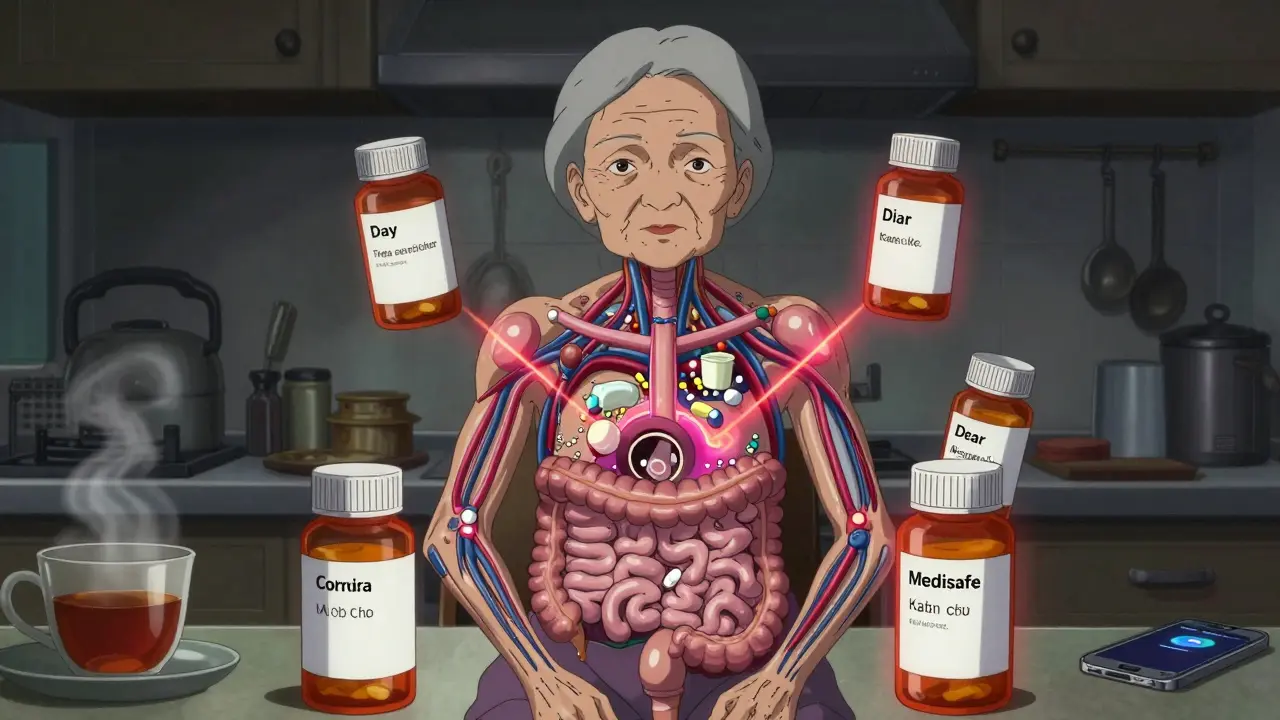
How to Get It Right
Here’s how to avoid common mistakes:- Read the label - not just the bottle, but the printed instructions. Look for “take on empty stomach,” “with food,” or “avoid dairy.”
- Use alarms - Set a phone reminder 60 minutes before breakfast if you take levothyroxine. Another alarm 30 minutes before dinner for glipizide.
- Ask your pharmacist - They’re trained to spot conflicts. If you’re on five or more drugs, ask them to map out your food schedule.
- Use apps - Medisafe and MyTherapy let you set food-timing alerts. Users who use these features have 27% fewer timing errors.
- Be consistent - If you take a pill with food, always do it the same way. Skipping meals or changing your routine can cause unpredictable drug levels.
The Bigger Picture
Food-drug interactions aren’t just a personal problem - they’re a national health crisis. In the U.S., medication-related problems cost $528 billion a year, and food timing contributes to about 8% of that. That’s over $42 billion in avoidable hospital visits, emergency care, and treatment failures. New guidelines are starting to catch up. In January 2024, the American Society of Health-System Pharmacists updated their standards to replace vague terms like “with food” with precise language: “within 30 minutes of meal initiation” or “minimum 60 minutes before first meal.” The FDA now requires food-effect testing for 92% of new drugs - up from 67% in 2015. And research is moving toward personalized timing. A 2023 study in Nature Medicine showed that adjusting levothyroxine timing based on individual gastric emptying rates improved outcomes by 22%.What’s Next?
We’re entering an era where your meal isn’t just fuel - it’s part of your treatment plan. Future apps might sync with smartwatches to track your digestion and suggest the best time to take your pill. Ingestible sensors are already being tested to measure stomach pH in real time and adjust dosing recommendations. But for now, the simplest tool is still the most powerful: knowing when to take your pill - and when to wait.Can I take my medication with water, or does it need to be with food?
Water is fine for most pills - unless the label says otherwise. For drugs that need food, water alone won’t help. For example, levothyroxine must be taken with plain water only, at least 30 minutes before food. But for drugs like itraconazole, which need stomach acid to dissolve, drinking water with food won’t help if the meal is too fatty. Always follow the specific instructions on your prescription.
What if I forget to take my pill at the right time? Can I take it later?
It depends on the drug. For antibiotics like tetracycline, taking it with dairy even an hour after eating can still block absorption. For thyroid meds like levothyroxine, if you eat breakfast before taking it, you’ll absorb less - and you may need to wait until the next day. For drugs like ibuprofen, taking it later with food is better than skipping it. When in doubt, call your pharmacist - they can tell you if it’s safe to take late.
Do I need to avoid all dairy if I’m on antibiotics?
Only for certain antibiotics - mainly tetracyclines (doxycycline, minocycline) and fluoroquinolones (ciprofloxacin, levofloxacin). These bind to calcium, magnesium, and iron in dairy, supplements, and even some antacids. You don’t need to avoid all dairy forever - just separate them by two hours. So if you take your antibiotic at 8 a.m., wait until 10 a.m. to have yogurt or milk. Other antibiotics, like amoxicillin, aren’t affected by dairy at all.
Is it okay to take medications with coffee or juice?
Sometimes, but often not. Grapefruit juice can interfere with over 85 medications, including statins and blood pressure drugs, by blocking enzymes that break them down. This can lead to dangerous buildup. Coffee, especially in large amounts, can affect how fast some drugs like the asthma medication theophylline are processed. For most pills, plain water is safest. If you’re unsure, check with your pharmacist - don’t assume juice is a good substitute.
Why do some pills say "take with food" if food slows digestion?
Because for some drugs, slowing digestion is actually helpful. Food helps dissolve fat-soluble medications like griseofulvin or itraconazole by triggering bile release. It also protects the stomach lining for drugs like NSAIDs or certain antibiotics. Even if absorption is slower, the total amount absorbed can be much higher - and that’s what matters. The goal isn’t speed - it’s getting the right amount into your bloodstream.
Aisling Maguire
March 1, 2026 AT 15:34Okay but can we talk about how wild it is that we’re still treating meds like they’re cereal? You don’t need a PhD to know yogurt kills doxycycline - yet here we are, people chugging milk with their antibiotics like it’s a breakfast ad. I had a roommate who took her thyroid med with oatmeal and wondered why she was exhausted. She switched to water-only, 30 mins before coffee, and suddenly had energy to do laundry. Not magic. Just biology.
Katherine Farmer
March 3, 2026 AT 14:32How is it still 2024 and people think "take with food" means "you can eat whatever you want, whenever"? The language is precise: "with a meal containing at least 300 calories". Not a banana. Not a cracker. Not a sip of coffee. Yet we treat medical instructions like vague suggestions from a poorly written Yelp review. It’s not ignorance - it’s willful negligence dressed up as "I’m too busy to read the label".
Full Scale Webmaster
March 4, 2026 AT 22:19Okay so I’ve been on five meds for five years and I just found out that my statin was basically useless because I took it with a bagel? I mean, I’ve been paying $700 a month for something that was 40% effective because I thought "with food" meant "don’t take it on an empty stomach like a caveman"? And now I’m supposed to schedule my meds like a NASA launch? My pharmacist gave me a chart with color-coded sticky notes and I cried. Not because I’m dramatic - because this system is designed to fail people. The FDA doesn’t care. The pharma companies don’t care. We’re just expected to memorize 17 different rules for 5 pills and pretend we’re not drowning. And now I’m supposed to set 6 alarms? I’m not a robot. I’m a human who works two jobs and still forgets to water my plants.
Brandie Bradshaw
March 5, 2026 AT 12:17It is not a coincidence that the most vulnerable populations - elderly, low-income, non-native English speakers - are precisely the ones who receive the least clear, least accessible instructions. The term "with food" is a linguistic trap. It is not a medical directive - it is a socioeconomic barrier. The American College of Gastroenterology recommends "take on empty stomach" be replaced with "take 60 minutes before first meal" - yet most pharmacies still print "with food" on labels because it’s cheaper. This is not an oversight. It is systemic neglect. And when people suffer treatment failure, we blame them. "Why didn’t you read the label?" - as if literacy and time are universal privileges.
Angel Wolfe
March 6, 2026 AT 18:00Sophia Rafiq
March 7, 2026 AT 17:26TL;DR: Food = pharmacokinetic modulator. Not a snack. Not a habit. A variable in the equation. For griseofulvin? Fat = solubility enhancer. For levothyroxine? Food = absorption blocker. For glipizide? Timing = hypoglycemia gatekeeper. Stop thinking of meals as comfort. Start thinking of them as delivery systems. Your body doesn’t care about your routine. It cares about pH, bile, transit time. You’re not being lazy. You’re just not trained to see meds as chemistry. And that’s on the system, not you.
Martin Halpin
March 9, 2026 AT 09:12Wait - so you’re telling me that if I take my doxycycline with my morning coffee and a bagel, I’m basically just wasting $30 and risking a UTI? And that’s not even the worst part. The worst part is that my doctor didn’t even mention it. My pharmacist? Didn’t say a word. I had to read a Reddit thread from a guy in Ohio who said he had the same issue. And now I’m supposed to be a biochemist just to take a pill? I’m not even mad. I’m just… disappointed. In the system. In the silence. In the fact that this is still a thing in 2024 and no one’s fixing it. I mean - how many people have died because they took their antibiotic with milk? We don’t even track that. We just blame the patient. "Didn’t follow instructions." Like we’re all born with a manual.
Eimear Gilroy
March 9, 2026 AT 18:29What about people who can’t eat breakfast? I have IBS. If I eat anything before 11 a.m., I’m in pain. But I take levothyroxine at 7 a.m. because that’s what the label says. So I’ve been taking it with water, sitting in silence for 30 minutes, then going back to bed. No breakfast. No coffee. Just… waiting. And now I’m wondering - is it better to take it with a meal I can tolerate later? Or is it worse to absorb less? My endocrinologist said "just do what you can." That’s not a medical answer. That’s surrender. And I’m tired of being told to adapt to a system that wasn’t designed for me.