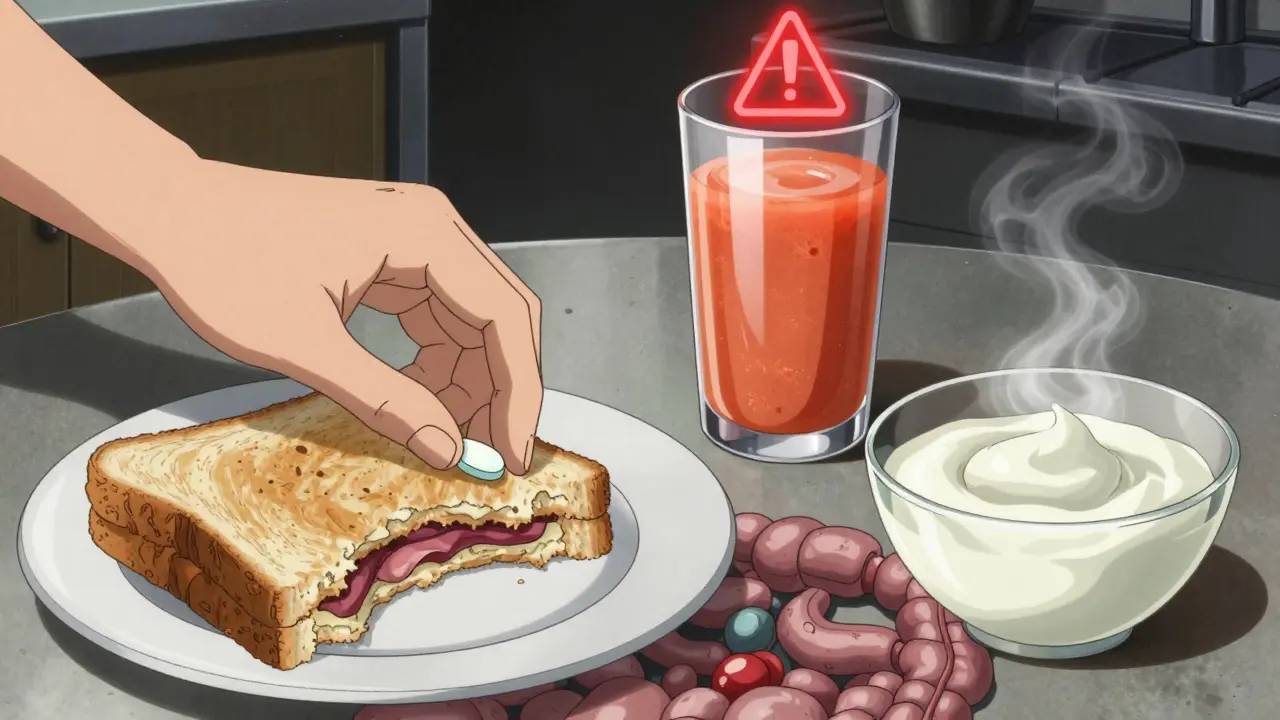
Many people swallow their pills with a glass of water and call it a day. But what if the thing you eat-or don’t eat-right before or after your medication could mean the difference between feeling fine and ending up in the hospital? Taking medication with food isn’t just a suggestion. For a lot of drugs, it’s a safety rule backed by decades of research and real-world outcomes.
Why Food Changes How Medicines Work
Your stomach and intestines aren’t just digestion machines-they’re drug processors. When you eat, your body shifts into a different mode. Blood flow changes. Stomach acid levels drop. The speed at which food leaves your stomach slows way down. All of this affects how much of your medicine gets into your bloodstream-and how fast.
Some drugs need food to be absorbed properly. Take griseofulvin an antifungal medication used for fungal infections, for example. Studies show that taking it with a high-fat meal can boost absorption by up to 30%. Without food, the drug just passes through, useless. On the flip side, tetracycline a common antibiotic binds to calcium in dairy products, cutting its absorption by half. If you take it with milk or yogurt, you might as well not have taken it at all.
Food also protects your gut. Non-steroidal anti-inflammatory drugs (NSAIDs) like ibuprofen a common over-the-counter pain reliever irritate the stomach lining. Endoscopic studies show that 38% of people who take these on an empty stomach develop microscopic ulcers. That number drops to 12% when taken with food. The food acts like a buffer, shielding the lining from direct contact with the drug.
When Food Makes Things Worse
Not all food helps. Some foods actively interfere. Grapefruit juice is the most infamous offender. It blocks an enzyme in your gut called CYP3A4, which normally breaks down certain drugs before they enter your bloodstream. When that enzyme is shut down, your body absorbs way more of the drug than intended.
Take simvastatin a cholesterol-lowering statin. If you drink just one glass of grapefruit juice with it, your blood levels of the drug can spike 9 to 15 times higher than normal. That’s not a small increase-it raises your risk of muscle damage, kidney failure, and even death. Meanwhile, pravastatin another statin doesn’t interact with grapefruit at all. The difference matters.
Then there’s warfarin a blood thinner. It works by blocking vitamin K, which helps blood clot. But if you suddenly eat a big bowl of spinach or kale one day and skip it the next, your INR (a measure of blood-thinning effect) swings wildly. A study in the New England Journal of Medicine found inconsistent vitamin K intake caused a 20-30% drop in warfarin’s effectiveness. That’s not just inconvenient-it’s dangerous.
Even levothyroxine a thyroid hormone replacement needs to be taken on an empty stomach. Calcium in fortified cereals, antacids, or even coffee can cut its absorption by 30-55%. Many patients don’t realize this. A Cleveland Clinic survey found 57% of levothyroxine users occasionally took it with breakfast. As a result, over a third needed higher doses just to get back into the normal range.
How Food Affects Different Types of Medications
Not all drugs play by the same rules. Here’s how food interacts with common categories:
| Medication Class | Food Interaction | Effect |
|---|---|---|
| Antibiotics (e.g., ciprofloxacin) | Calcium, iron, zinc supplements | Reduces absorption by up to 50% |
| Statins (e.g., simvastatin) | Grapefruit juice | Increases blood levels 9-15x |
| NSAIDs (e.g., ibuprofen) | Food | Reduces stomach ulcers by 68% |
| Thyroid meds (e.g., levothyroxine) | Calcium, iron, coffee | Reduces absorption by 30-55% |
| Antifungals (e.g., griseofulvin) | High-fat meals | Increases absorption by 15-30% |
| Antipsychotics (e.g., clozapine) | High-fat meals | Increases blood concentration by 40-60% |
| Diabetes meds (e.g., metformin) | Food | Reduces nausea and diarrhea by 70% |
For metformin a common diabetes drug, taking it with food cuts gastrointestinal side effects like nausea and diarrhea by more than half. A Drugs.com analysis of 15,000 patient reviews found 63% had severe stomach upset when taken without food, compared to just 18% when taken with meals.
And then there’s methotrexate used for rheumatoid arthritis and cancer. On Reddit’s r/Pharmacy, over 1,200 patients shared experiences. Seventy-eight percent said taking it with food made nausea much more manageable. But 22% noticed their symptoms returned because the food also lowered how much of the drug got absorbed. For these patients, timing matters more than food itself-taking it with a light snack at the same time each day works better than a heavy meal.
What ‘With Food’ and ‘On Empty Stomach’ Really Mean
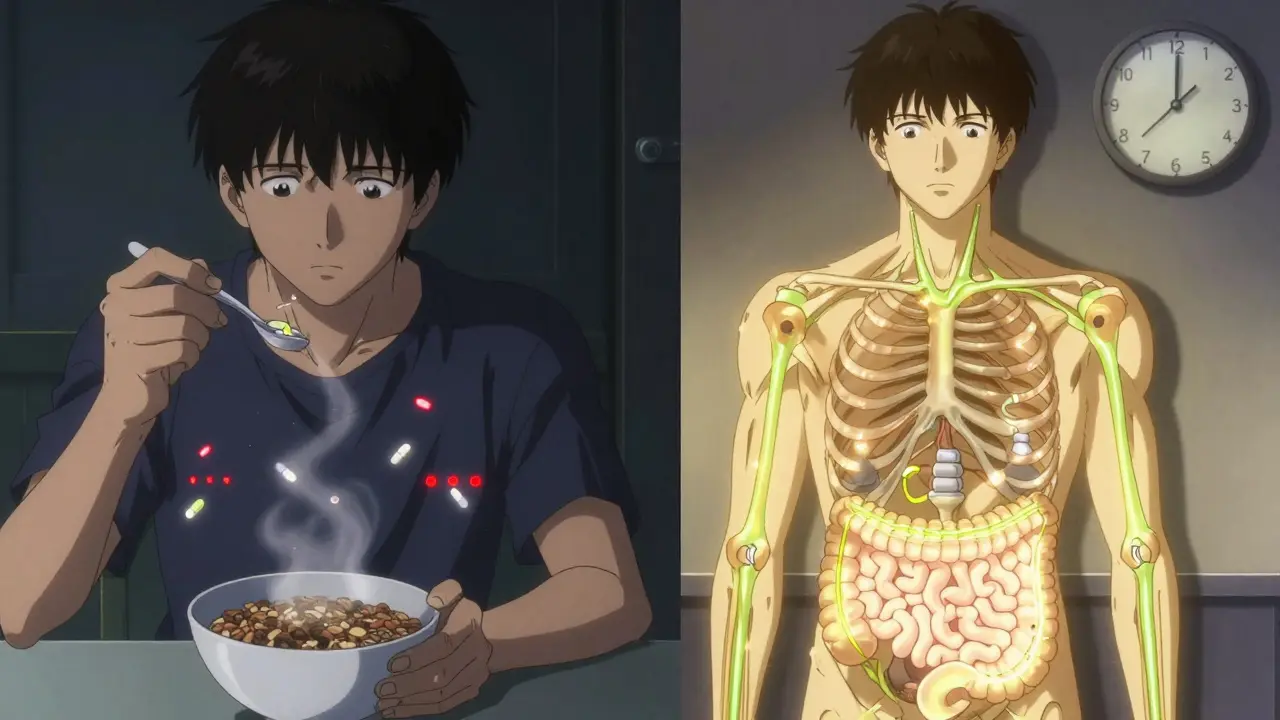
When a label says "take with food," it doesn’t mean a handful of chips. The FDA defines "with food" as at least 250-500 calories. That’s roughly a sandwich, a bowl of oatmeal with nuts, or a small meal. A glass of milk and a banana? Not enough.
"Take on empty stomach" means no food for at least one hour before and two hours after. That’s why people taking omeprazole a proton pump inhibitor for acid reflux are told to take it 30 minutes before breakfast. The drug needs an acidic environment to dissolve, and food neutralizes stomach acid. If you take it after eating, it won’t work as well.
Even caffeine can interfere. Coffee, especially when taken right after a pill, can delay absorption. For drugs like levothyroxine or ciprofloxacin, that delay can mean the difference between therapeutic levels and treatment failure.
Why So Many People Get It Wrong
Most people don’t realize how common these interactions are. A Mayo Clinic study found 68% of patients over 65 had no idea their medications needed special food rules. Only 22% were told about them during their prescription counseling.
It’s not just older adults. Younger people often assume their meds are "safe" because they’ve been taking them for years. But food habits change. Someone might start eating more greens, switch to plant-based milk, or begin intermittent fasting-all of which can throw off their drug levels.
And it’s expensive. The American Pharmacists Association estimates that 68% of medication-related hospitalizations stem from food-drug timing mistakes. That adds up to $177 billion a year in the U.S. alone.
How to Get It Right
Here’s what actually works:
- Ask your pharmacist. Not your doctor. Pharmacists are trained specifically in drug interactions. They see your full list of meds and can spot conflicts.
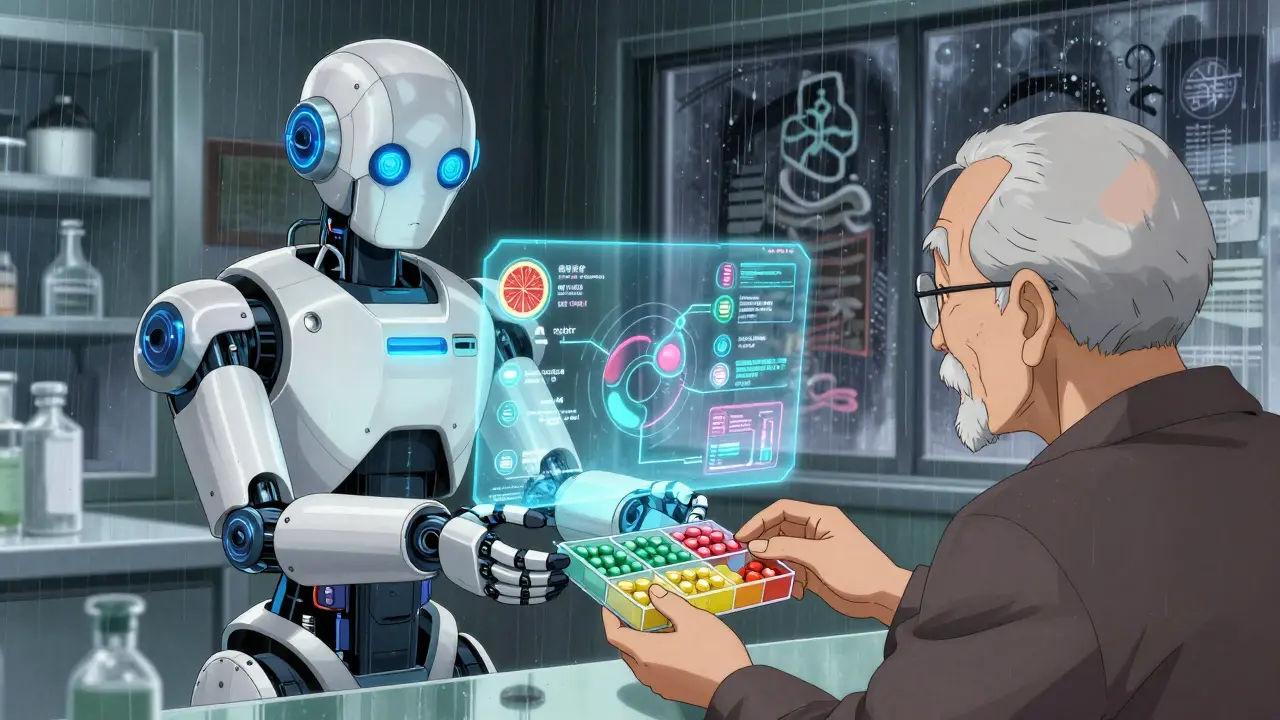
- Use a color-coded chart. Many U.S. hospitals now use a simple system: green = take with food, red = take on empty stomach, yellow = flexible. Ask for one.
- Set reminders. Apps like Medisafe have been shown to cut food-drug errors by 37%. They can alert you when to eat before or after your pill.
- Keep a food log for a week if you’re on warfarin, thyroid meds, or high-risk drugs. Note what you eat and when. This helps your doctor spot patterns.
- Don’t assume "natural" means safe. Grapefruit, green tea, St. John’s Wort, and even high-fiber supplements can interfere with medications.
There’s also new tech on the horizon. In March 2024, the FDA approved the first "smart pill"-Abilify MyCite-that tracks when you take your medication and whether it was taken with food. Early data shows a 32% drop in food-related side effects. And companies like Nutrino are now offering DNA-based reports that tell you how your genes affect your response to certain foods and drugs.
But none of that matters if you don’t know the basics. The simplest rule? When in doubt, ask. And never change how you take your meds without checking first.
What’s Next for Food-Drug Interactions
By 2028, experts predict 75% of medication regimens will include personalized food timing based on genetic testing. Right now, only 18% do. That’s a big shift. But it’s not just about genes. The rise of ultra-processed foods-full of hidden sugars, additives, and inconsistent nutrient levels-is making food-drug interactions harder to predict.
The National Institutes of Health just launched a $15.7 million research initiative to study how gut bacteria affect drug absorption. Your microbiome might one day determine whether you take your statin with breakfast or after dinner.
For now, though, the answer is simple: know your meds. Know your food. And don’t guess.
Can I take my medication with just a sip of water and a bite of toast?
It depends on the medication. For drugs that require "food," a slice of toast with butter counts as a light meal and may be enough. But for others, like levothyroxine or tetracycline, even a small amount of food or calcium can interfere. Always check the label or ask your pharmacist.
Why does grapefruit juice affect some drugs but not others?
Grapefruit juice blocks an enzyme called CYP3A4 in the gut, which breaks down certain drugs. Medications like simvastatin, cyclosporine, and some blood pressure pills rely on this enzyme to be metabolized. Others, like pravastatin or lisinopril, don’t use this pathway, so grapefruit has no effect. Always check if your drug is on the list of affected medications.
Is it okay to take my pills with coffee?
For many medications, no. Coffee can delay absorption and reduce effectiveness, especially for thyroid meds, antibiotics, and some antidepressants. If your pill requires an empty stomach, wait at least one hour after coffee. If it’s taken with food, coffee is usually fine-but avoid drinking it right before or after the dose.
I take multiple pills. How do I manage conflicting food rules?
It’s tricky, but doable. Group pills that can be taken together. For example, if one needs food and another doesn’t, take the one that needs food with a meal, and space the others an hour before or after. Use a pill organizer with time slots, and ask your pharmacist to create a simple daily schedule. Many hospitals now offer personalized food-timing charts for polypharmacy patients.
Do I need to avoid all dairy if I’m on antibiotics?
Only if you’re taking certain antibiotics like ciprofloxacin, doxycycline, or tetracycline. These bind to calcium and lose effectiveness. Other antibiotics, like amoxicillin or azithromycin, aren’t affected. Always check the specific drug. You don’t need to cut out dairy entirely-just avoid taking it within two hours of these meds.
Rex Regum
March 15, 2026 AT 07:30Oh wow, another one of those "food is medicine" lectures? Like, sure, grapefruit juice messes with statins-but have you ever tried taking levothyroxine with a cup of coffee and a bagel? I did. I didn’t die. My TSH is fine. You’re overcomplicating this. People have been taking pills with whatever they had in their hands for centuries. The real problem? Pharma companies want you scared so you’ll buy more tests, more apps, more "smart pills."
Kelsey Vonk
March 16, 2026 AT 12:48I just want to say thank you for this post 🙏 I’ve been on warfarin for 3 years and no one ever told me how much spinach matters. I used to eat kale smoothies every morning and wonder why my INR was all over the place. Now I keep a food log and it’s been life-changing. Also, I use Medisafe and it sends me little nudges like "don’t forget, no grapefruit today!" 🍊🚫
Emma Nicolls
March 17, 2026 AT 00:58so i take my metformin with breakfast and i swear it cut my stomach issues in half like literally no more running to the bathroom after work
but i also take my thyroid med at the same time and i just realized maybe that’s why my dose keeps going up??
oops
gonna fix this tomorrow
Jimmy V
March 17, 2026 AT 13:21Stop guessing. Ask your pharmacist. Period. They’re not paid to sell you supplements. They’re paid to keep you alive. If your doctor didn’t explain this, it’s not their fault-they’re overworked. Your pharmacist? They have 12 minutes to catch your error before you end up in the ER. Use them. Now.
Richard Harris
March 17, 2026 AT 23:37Interesting read. I’ve been on simvastatin for 8 years and never knew grapefruit was a no-go. I drink it every morning. Guess I’m switching to orange juice now. Also, I take my pills with tea-should I be worried? I’ve never felt different.
Katherine Rodriguez
March 18, 2026 AT 16:17This whole post is just Big Pharma fearmongering. They want you to think you need an app to take your pills. I’ve been on blood pressure meds for 15 years. I take them with coffee, with food, with nothing. I’m fine. If your body can’t handle a little variability, maybe you shouldn’t be on meds at all.
Devin Ersoy
March 19, 2026 AT 01:20Let’s be real-this article reads like a 10-page pamphlet from a 1998 pharmacy conference. "Take with food"? That’s a recommendation, not a command. The FDA doesn’t enforce this. Doctors don’t even know half of these interactions. I took my cipro with yogurt once. I didn’t get superhuman immunity. I just had a snack. Chill out, people.
Scott Smith
March 19, 2026 AT 10:23For those of you taking multiple meds with conflicting food rules: group them. Take the ones that need food together with a small meal. Take the ones that need an empty stomach 1 hour before or after. Use a pillbox with time slots. It’s not rocket science. Consistency beats perfection. And yes-pharmacists are your best friends. Talk to them.
Sally Lloyd
March 20, 2026 AT 19:53Did you know the FDA approved "smart pills" because they knew people were too dumb to follow basic instructions? This isn’t science-it’s surveillance. They’re tracking when you eat, what you eat, and whether you took your pill. Next, they’ll charge you extra if you miss a dose. Or worse-they’ll deny you insurance. Wake up.
Emma Deasy
March 21, 2026 AT 19:25It is, indeed, a matter of profound clinical significance that the ingestion of dietary substances in proximity to the administration of pharmacologic agents may, in certain instances, precipitate deleterious alterations in pharmacokinetic parameters-particularly with regard to absorption, distribution, and metabolism. The implications are not merely theoretical; they are, in fact, life-altering. One must exercise the utmost circumspection when navigating the labyrinthine interplay between sustenance and pharmaceutical intervention. A mere miscalculation may, quite literally, precipitate catastrophe.
tamilan Nadar
March 23, 2026 AT 04:47in india we take pills with tea or water no matter what
my grandma took blood pressure meds with chai for 40 years
she’s 87 and still walks 5km daily
maybe the real issue is overthinking
Adam M
March 23, 2026 AT 10:42You’re not "fine" because you took meds with grapefruit. You’re just lucky. Luck isn’t a treatment plan.
Rosemary Chude-Sokei
March 24, 2026 AT 02:58Thank you for sharing this. I’ve been on levothyroxine for 12 years and only recently learned that coffee reduces absorption. I’ve been taking it with my morning coffee for a decade. I’m so grateful for this clarity. I’ve already adjusted my routine and feel more stable already. Small changes, big impact.
Noluthando Devour Mamabolo
March 26, 2026 AT 01:27As a clinical pharmacologist, I can confirm: food-drug interactions are underdiagnosed and undertaught. The CYP3A4 inhibition by grapefruit is well-documented, but the real bottleneck is provider education. Most primary care clinicians receive <2 hours of pharmacokinetics training in med school. We need mandatory pharmacy-led patient counseling at script fill. Also, microbiome-based dosing is the future-gut flora modulates drug bioavailability more than we think. We’re just scratching the surface.