
Photosensitivity Protection Assessment Tool
How to Use This Tool
Answer the questions below to evaluate your sun protection strategy. This tool will identify gaps in your protection and provide evidence-based recommendations based on the latest clinical guidelines.
What Is Photosensitivity and Why Does It Matter?
Photosensitivity isn’t just getting a bad sunburn. It’s when your skin reacts badly to sunlight-even with brief exposure-that wouldn’t affect most people. You might get a rash, blisters, intense redness, or burning that lasts for days. This isn’t normal sun sensitivity. It’s a medical reaction triggered by UV rays, often made worse by certain medications, autoimmune conditions like lupus, or even some skincare products.
The two main types are phototoxic and photoallergic reactions. Phototoxic is more common-it looks like a severe sunburn and happens when a chemical in your body (usually from a drug) reacts with UV light. Photoallergic is rarer and involves your immune system, like an allergic reaction that shows up 24 to 72 hours after exposure. Both can be painful, disruptive, and increase your long-term risk of skin damage and skin cancer.
People taking antibiotics like doxycycline, diuretics like hydrochlorothiazide, or even common painkillers like ibuprofen are at higher risk. So are those with lupus, porphyria, or certain genetic conditions. If you’ve ever gotten a bad reaction after being outside for just 15 minutes, you might be photosensitive-and you need a smarter sun protection plan than most.
Why Regular Sunscreen Isn’t Enough
Most people think SPF 30 sunscreen is enough. For someone with normal skin, maybe. But for photosensitive individuals, it’s not close to sufficient. Clinical guidelines from the National Institutes of Health and the Skin Cancer Foundation recommend SPF 50 or higher for those with heightened sensitivity. Why? Because SPF 30 blocks about 97% of UVB rays. SPF 50 blocks 98%. That extra 1% matters when your skin is on high alert.
But sunscreen alone is risky. You need to apply 2 milligrams per square centimeter of skin-that’s about an ounce (30ml) for your whole body. Most people use less than half that. And if you’re sweating, swimming, or wiping your face, protection drops fast. Reapplying every two hours is non-negotiable, but who remembers to do that while at work or running errands?
Chemical sunscreens, which absorb UV rays, can also irritate sensitive skin. That’s why dermatologists consistently recommend mineral sunscreens with zinc oxide or titanium dioxide. These sit on top of the skin and physically block UV radiation. They work immediately, don’t break down as quickly in sunlight, and are far less likely to cause a reaction. Look for products labeled “broad-spectrum,” “water-resistant,” and with zinc oxide as the first active ingredient.
UPF Clothing: The Real Game-Changer
One of the most effective tools you can use is UPF-rated clothing. UPF stands for Ultraviolet Protection Factor. A UPF 50 fabric blocks 98% of UV radiation-equivalent to SPF 50 sunscreen, but without the need to reapply. Unlike sunscreen, it doesn’t wash off, sweat off, or rub off. It’s constant protection.
Not all clothing is equal. A white cotton T-shirt might only have a UPF of 5 to 8. That means 20% of UV rays get through. Dark, tightly woven fabrics like polyester, denim, or wool offer better protection. Look for garments labeled UPF 50+. Brands specializing in sun protection make lightweight, breathable options that don’t feel hot or stuffy-even in Melbourne’s summer heat.
Don’t forget the details: wide-brimmed hats (at least 3 inches), UV-blocking sunglasses, and gloves for your hands. Many photosensitive patients report that their ears, neck, and the backs of their hands are the first places to burn. These are easy to miss with sunscreen but simple to cover with the right clothing.
Windows Don’t Block All UV-And That’s a Problem
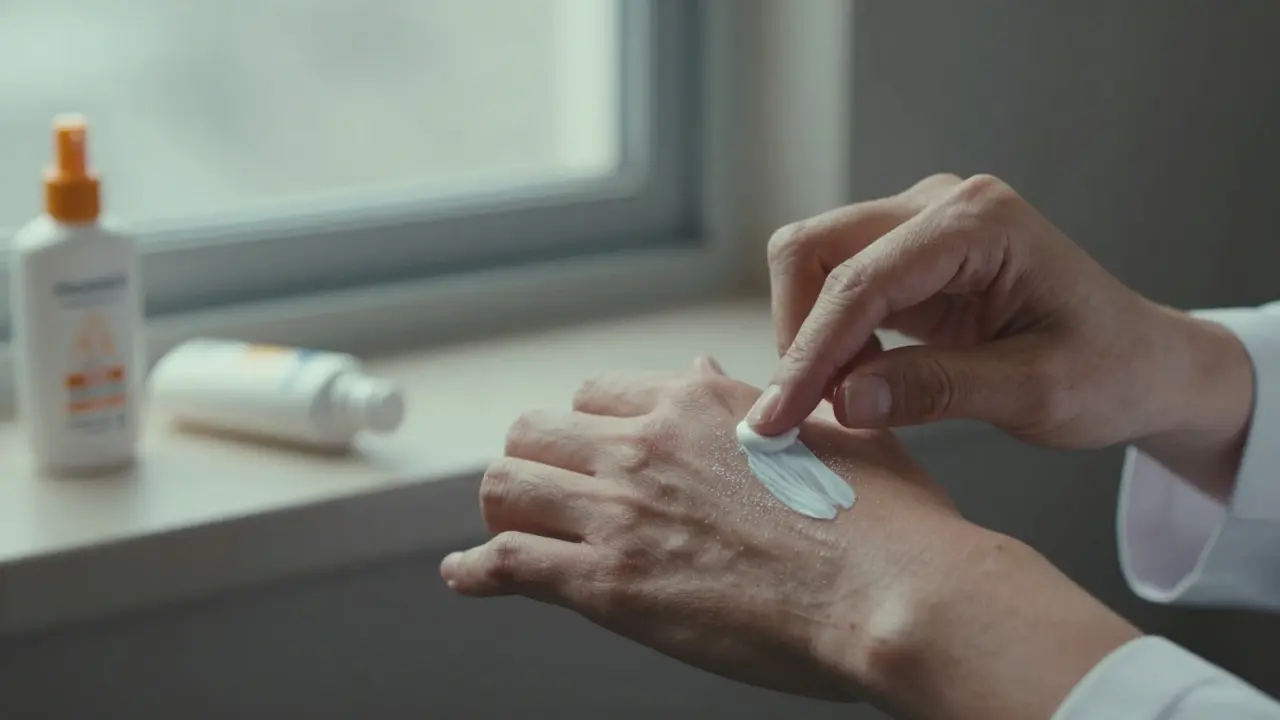
Many people think they’re safe indoors or in the car. They’re wrong. Standard glass blocks almost all UVB rays-the ones that cause sunburn-but lets through 75% of UVA rays. UVA penetrates deeper into the skin, causes aging, and triggers photosensitivity reactions.
If you sit near a window at home, in your office, or drive regularly, you’re still being exposed. DermNet NZ case studies show that patients with severe photosensitivity often develop rashes on one side of their face-where the window is. That’s not a coincidence.
Installing UV-blocking window film is one of the most underused but effective solutions. These films block up to 99% of UVA radiation and cost between $5 and $15 per square foot. They’re clear, don’t tint your windows, and can be DIY-installed. For vehicles, aftermarket window tinting with UVA protection is worth the investment. Some patients with chronic photosensitivity have switched to working night shifts just to avoid daylight exposure-because even their homes weren’t safe.
What Medications and Products Make It Worse?
Photosensitivity isn’t always about your skin. It’s often about what you’re taking or putting on it. Common culprits include:
- Antibiotics: Doxycycline, tetracycline, ciprofloxacin
- Diuretics: Hydrochlorothiazide, furosemide
- NSAIDs: Ibuprofen, naproxen
- Acne treatments: Retinoids (tretinoin, adapalene)
- Skincare: Alpha-hydroxy acids (glycolic, lactic acid), bergamot oil in perfumes or lotions
If you’ve recently started a new medication or switched skincare products and noticed your skin reacting to the sun more than before, talk to your pharmacist. Ask: “Is this photosensitizing?” Most pharmacists can check this instantly using drug databases.
Also, avoid tanning lotions with dihydroxyacetone (DHA). They give your skin a fake tan but offer only SPF 3-barely any protection. Some people think they’re “pre-tanning” to avoid sunburn. That’s dangerous and ineffective.
Smart Habits That Actually Work
Protection isn’t just about gear-it’s about routine. Here’s what works for people who’ve learned the hard way:
- Check the UV index daily. If it’s 3 or higher, treat it like a warning. In Melbourne, that’s most days from September to April.
- Avoid the sun between 10 a.m. and 4 p.m. That’s when UV rays are strongest. If you must go out, stay in shade-but remember, shade only blocks 50% to 95% of UV, depending on the structure.
- Use a portable UPF 50+ umbrella or canopy when outside. These are lightweight, foldable, and can be clipped to a stroller, wheelchair, or picnic table.
- Set phone reminders to reapply sunscreen every two hours. One Reddit user with lupus said they set hourly alarms for a month until it became habit. It worked.
- Keep a sun protection kit in your bag: mini sunscreen, lip balm with SPF, a foldable hat, and UV-blocking sunglasses.
For those with severe reactions, oral supplements like nicotinamide (vitamin B3) at 500mg twice daily have been shown in clinical trials to reduce new skin cancers by 23%. Polypodium leucotomos, an extract from a Central American fern, offers mild systemic protection (equivalent to SPF 3-5) and may help reduce flare-ups. These aren’t magic pills-they’re backups, not replacements for physical protection.
What Doesn’t Work (And Why)
There’s a lot of misinformation out there. Don’t waste time or money on these myths:
- “I don’t need sunscreen on cloudy days.” Up to 80% of UV rays penetrate clouds. Photosensitive skin doesn’t care if it’s overcast.
- “Tanning beds are safer than the sun.” False. Tanning beds emit UVA radiation at levels up to 12 times stronger than the midday sun. For someone with photosensitivity, this is dangerous.
- “Natural oils like coconut oil protect me.” Coconut oil has an SPF of about 2. That’s less than a light cotton shirt.
- “I’ll just wear a hat and call it done.” Hats help, but your neck, ears, arms, and hands are still exposed. Layering is key.
There’s no shortcut. Photosensitivity management requires consistency. One missed reapplication, one window without film, one day without a hat-it can set you back days.
Future Advances and What’s Coming
The field of sun protection is evolving. Researchers are developing smart textiles with built-in UV sensors that change color when protection drops below safe levels. New window films now block 99.9% of both UVA and UVB without distorting visibility. And personalized sun protection plans are emerging-doctors are starting to map individual photosensitivity thresholds based on genetics and medication history.
Climate change is making this more urgent. Since the 1980s, surface UV radiation has increased by 1-2% per decade. Australia already has some of the highest UV levels in the world. What was manageable a decade ago is now a bigger threat.
For now, the best defense is still the same: layered protection. Clothing. Sunscreen. Shade. Window film. Awareness. It’s not glamorous. But for people living with photosensitivity, it’s the difference between staying healthy and spending days in pain.
Can photosensitivity go away on its own?
Sometimes, yes-but only if it’s caused by a temporary trigger like a medication. Once you stop taking the drug, reactions may fade over weeks or months. But if it’s linked to an autoimmune condition like lupus, it’s usually lifelong. Even if symptoms improve, your skin remains more vulnerable to UV damage, so ongoing protection is still essential.
Is SPF 100 better than SPF 50?
Not significantly. SPF 50 blocks 98% of UVB rays. SPF 100 blocks 99%. That extra 1% offers minimal real-world benefit and can create a false sense of security. People using SPF 100 often apply less and reapply less often, thinking they’re fully protected. For photosensitive individuals, SPF 50+ applied correctly is more effective than SPF 100 used poorly.
Do I need to protect my eyes from UV if I’m photosensitive?
Yes. UV exposure can damage the cornea and increase the risk of cataracts and macular degeneration. Photosensitive individuals should wear sunglasses labeled UV400 or 100% UV protection. Wraparound styles offer the best coverage, especially if you’re sensitive to light or have conditions like lupus that affect the eyes.
Can I still go outside if I have photosensitivity?
Absolutely-but you need to plan. Go out early in the morning or late in the afternoon when UV levels are lower. Use UPF clothing, a wide-brimmed hat, and sunscreen. Carry a portable umbrella. Many people with photosensitivity live full, active lives by adjusting their routines, not avoiding the outdoors entirely.
What should I do if I get a photosensitivity reaction?
Stop sun exposure immediately. Apply a cool compress and use a gentle, fragrance-free moisturizer. Avoid popping blisters. If the reaction is severe-blistering, fever, or spreading-see a dermatologist. They may prescribe a short course of topical steroids or antihistamines. Document what you were doing, what products you used, and what medication you took. This helps identify triggers for the future.
Siobhan Goggin
January 5, 2026 AT 02:47Vikram Sujay
January 6, 2026 AT 00:53Jay Tejada
January 7, 2026 AT 14:55Shanna Sung
January 9, 2026 AT 03:01mark etang
January 9, 2026 AT 18:22Brendan F. Cochran
January 11, 2026 AT 11:34Charlotte N
January 12, 2026 AT 23:29bob bob
January 13, 2026 AT 03:24Uzoamaka Nwankpa
January 14, 2026 AT 06:12Chris Cantey
January 15, 2026 AT 07:52Abhishek Mondal
January 16, 2026 AT 20:13Oluwapelumi Yakubu
January 17, 2026 AT 07:52Terri Gladden
January 19, 2026 AT 05:42Jennifer Glass
January 20, 2026 AT 07:43Joseph Snow
January 21, 2026 AT 15:41