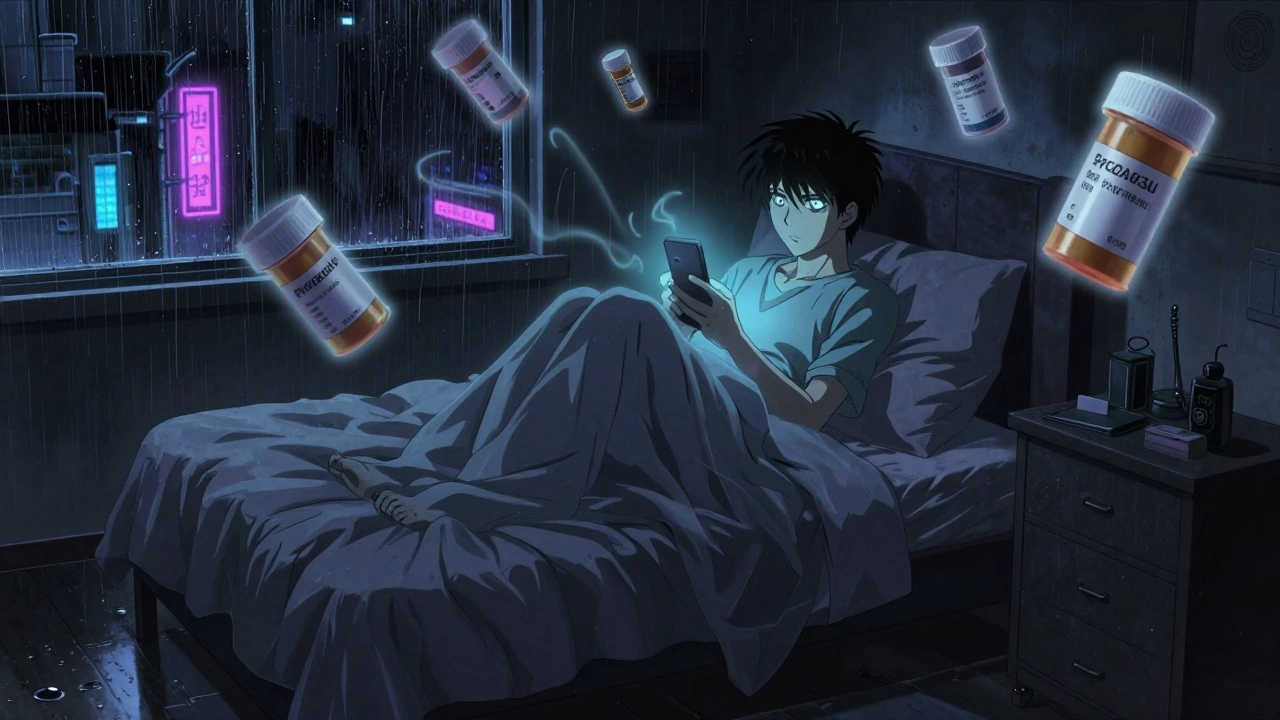
It’s 3 a.m. again. You’re wide awake, heart pounding, mind racing-even though you took your pill exactly as prescribed. You’re not broken. You’re not failing at sleep. You’re just caught in the crossfire of a common but rarely discussed problem: medications disrupting your rest.
More than half of adults in Australia take at least one prescription drug. Many of them-antidepressants, blood pressure meds, even painkillers-mess with your sleep in ways you might not even connect to your pills. You feel groggy in the morning. You wake up at 2 a.m. and can’t fall back asleep. You forget things. You’re irritable. You think it’s stress. Or aging. But it could be your medication.
How Your Medications Are Stealing Your Sleep
Not all drugs affect sleep the same way. Some are stimulants in disguise. Fluoxetine (Prozac), for example, is an SSRI antidepressant that boosts serotonin. That’s good for mood-but bad for sleep. It keeps your brain too active at night. Other SSRIs, like paroxetine (Paxil), do the opposite. They make you drowsy. That’s why switching antidepressants sometimes fixes sleep problems: it’s not about you. It’s about the chemistry.
Beta blockers like metoprolol and atenolol, used for high blood pressure and heart conditions, cut your body’s natural melatonin by nearly 40%. Melatonin is your sleep hormone. Less of it means your body doesn’t get the signal to wind down. Even if you’re tired, your brain stays alert. You lie there. You count sheep. You check your phone. And you blame yourself.
Then there are the sleep meds themselves. Zolpidem (Ambien), eszopiclone (Lunesta), zaleplon (Sonata)-these are called Z-drugs. They help you fall asleep fast. But they don’t always let you wake up cleanly. Two-thirds of users report next-day drowsiness. More than half struggle to focus. Nearly half say their memory feels fuzzy. And it’s not just feeling tired. Driving after taking these pills can be as dangerous as having a blood alcohol level of 0.05%. That’s the legal limit for new drivers in many places. The FDA added a black box warning in 2019 after reports of people sleep-driving, cooking, or even leaving their homes while asleep.
Why Sleep Hygiene Isn’t Just ‘Good Advice’-It’s a Medical Tool
Sleep hygiene isn’t about candles and lavender. It’s a set of science-backed behaviors that retrain your brain and body to sleep better-even when drugs are working against you. The American Academy of Sleep Medicine says it should come before, not after, medication. That’s because drugs treat symptoms. Sleep hygiene treats the system.
Here’s what actually works when medications are messing with your rhythm:
- Wake up at the same time every day-even on weekends. This is the single most powerful tool. Your body needs a fixed anchor. If you sleep in on Saturday, your brain gets confused. It thinks it’s a different day. That throws off your melatonin cycle for days. Stick to a 30-minute window. No exceptions.
- Turn off blue light after 8 p.m. Phones, tablets, TVs-they all emit blue light that blocks melatonin. If your meds are already lowering your natural melatonin, this is like pouring salt on the wound. Use night mode. Or better yet, put your phone in another room.
- Exercise-but not too late. Moving your body helps sleep. But if you work out within 4 hours of bedtime, your core temperature stays elevated. Your brain reads that as ‘alert.’ Schedule workouts for the morning or early afternoon. Even a brisk 30-minute walk helps.
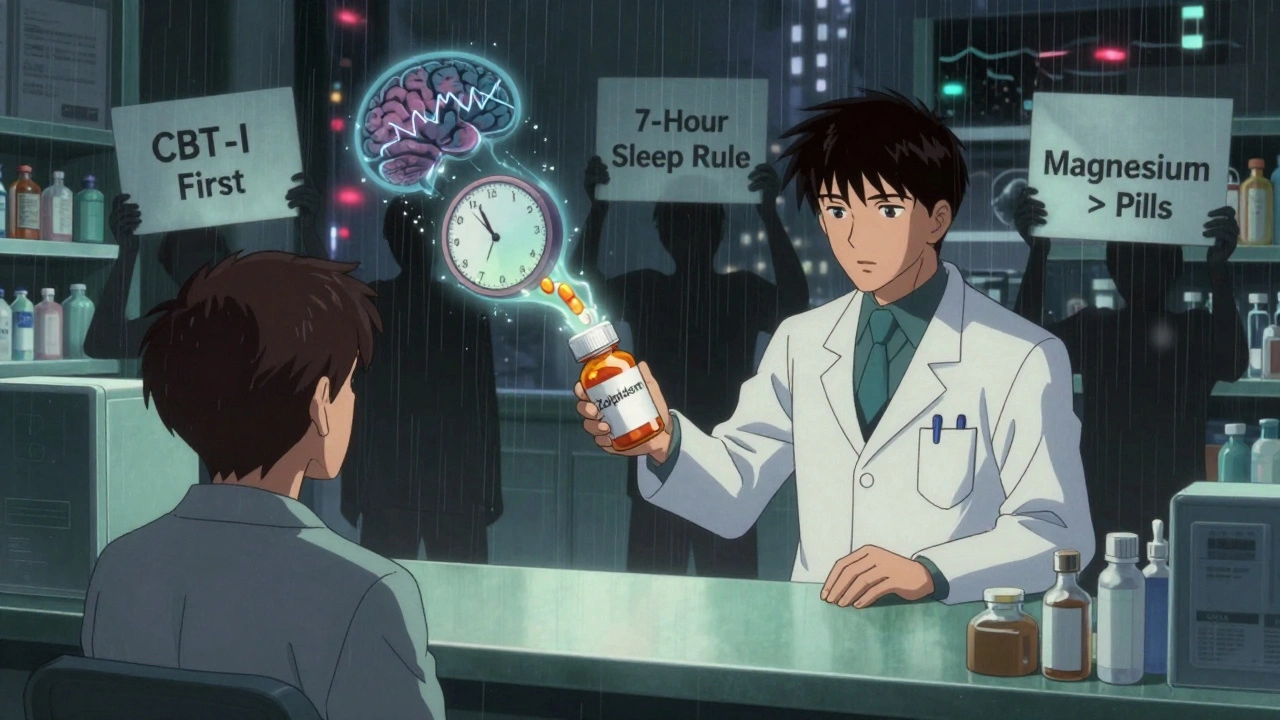
- Don’t take sleep meds unless you can sleep for 7-8 hours. If you have to wake up at 6 a.m. and take Ambien at 11 p.m., you’re only getting 7 hours. That’s not enough. The FDA says taking these pills with less than 7 hours of sleep increases next-day impairment by 32%. Plan your dose around your schedule. If you can’t sleep 7-8 hours, don’t take it.
- Avoid tyramine-rich foods at night. Aged cheese, cured meats, soy sauce, and red wine contain tyramine. It raises blood pressure. If you’re on a beta blocker, this creates a dangerous tug-of-war in your system. It can spike your heart rate and wake you up. Swap those for magnesium-rich foods: almonds, spinach, pumpkin seeds, bananas. A 2020 study found magnesium reduced insomnia severity by 34.7 points on a standard scale.
When Your Sleep Meds Are the Problem
Some people take sleep pills because they can’t sleep. Others take them because they were told to. But here’s the truth: long-term use of benzodiazepines and Z-drugs increases dementia risk by 83%. That’s not a small risk. That’s a major one.
The American College of Physicians recommends cognitive behavioral therapy for insomnia (CBT-I) as the first-line treatment for chronic sleep problems. Not pills. Not herbs. Therapy. CBT-I teaches you how to break the cycle of anxiety around sleep. It’s not talking. It’s doing. It’s restructuring thoughts, behaviors, and routines.
And it works. In the Sleepio CBT-I program, 71% of users reported less next-day grogginess from sleep meds within six weeks. Why? Because they stopped trying to force sleep. They stopped fearing wakefulness. They rebuilt their sleep drive naturally.
If you’re on a sleep medication, talk to your doctor about tapering. Don’t quit cold turkey. But don’t stay on it because you’re scared. There’s a better way.

The Medication Audit: What You Need to Ask Your Doctor
Most people don’t realize their meds are hurting their sleep. Why? Because doctors don’t ask. You need to start the conversation.
Bring a list of every pill, supplement, and OTC drug you take. Then ask:
- Which of these could be affecting my sleep?
- Is there a non-sedating alternative for my condition?
- Can we reduce the dose or switch timing?
- Would CBT-I be appropriate for me?
Some medications have alternatives that don’t disrupt sleep. For example, some blood pressure meds like losartan don’t suppress melatonin like beta blockers do. Antidepressants like bupropion (Wellbutrin) are less likely to cause insomnia than SSRIs.
If your doctor says, ‘It’s just part of aging,’ push back. Aging doesn’t mean you have to feel like a zombie. There are options.
Real People, Real Results
On Reddit’s r/Insomnia community, 78% of users said they felt ‘severe grogginess’ after taking zolpidem. One user wrote: ‘I woke up with a full meal eaten, no memory of making it. I was terrified.’ That’s not a nightmare. That’s a documented side effect.
On PatientsLikeMe, 28% of people on benzodiazepines reported falling because they were too groggy in the morning. One woman broke her hip at 72 because she got up to use the bathroom and couldn’t steady herself.
But there’s hope. People who followed a strict sleep hygiene routine-fixed wake time, no screens after 8 p.m., magnesium-rich snacks, morning light exposure-saw their sleep quality improve in as little as three weeks. One man on metoprolol started using a 10,000-lux light box for 30 minutes after waking. Within 10 days, he stopped waking at 2 a.m. He said, ‘I felt like I was sleeping again.’
What’s Changing in 2025
The tide is turning. In 2023, the FDA made it mandatory for all prescription sleep medications to include sleep hygiene education as part of their Risk Evaluation and Mitigation Strategy (REMS). That means your pharmacist has to give you info on non-drug options before you get your refill.
Twenty-eight U.S. states now require doctors to document sleep hygiene counseling before prescribing long-term sleep meds. The European Medicines Agency limits benzodiazepine prescriptions to four weeks max. Apple’s iOS 17 Health app now scores your meds for sleep disruption risk using FDA adverse event data. If you’re on a high-risk drug, it suggests personalized hygiene tweaks.
The NIH has poured $14.7 million into research on elderly patients, who are 3.2 times more likely to suffer severe next-day effects from sleep meds. The message is clear: we’re moving away from pills as the first answer.
Where to Start Today
You don’t need to fix everything at once. Pick one thing. Right now.
- If you wake up tired: set your alarm for the same time every day, even Sunday.
- If you scroll in bed: put your phone in the kitchen at 8 p.m.
- If you take a sleep pill: only take it if you can sleep 7-8 hours.
- If you’re on blood pressure meds: eat a handful of almonds before bed.
Do that for 21 days. That’s how long it takes to rewire a habit. You might not sleep perfectly. But you’ll sleep better. And you’ll start to feel like yourself again.
You’re not broken. You’re just caught in a system that’s still too quick to reach for a pill. But you have more power than you think. Your sleep isn’t broken. It’s just waiting for you to give it the right conditions to heal.
Can sleep hygiene really help if I’m on antidepressants?
Yes. Antidepressants like fluoxetine can make it hard to fall or stay asleep, but sleep hygiene can offset this. A fixed wake time, avoiding blue light after 8 p.m., and morning light exposure help reset your circadian rhythm. Magnesium-rich foods and avoiding caffeine after noon also reduce stimulation. Studies show 71% of users on antidepressants report improved sleep quality after 6 weeks of consistent sleep hygiene.
Why does taking sleep meds at night still leave me groggy in the morning?
Many sleep medications, especially those with long half-lives like temazepam or zolpidem, don’t fully clear your system by morning. If you take them too close to waking, or don’t get 7-8 hours of sleep, the drug’s effects linger. This causes next-day drowsiness, poor concentration, and even memory lapses. The FDA found that taking zolpidem with less than 7 hours of sleep increases residual effects by 32%.
Are there safer alternatives to prescription sleep aids?
Yes. Cognitive behavioral therapy for insomnia (CBT-I) is the gold standard. It’s as effective as pills, without the side effects. Digital CBT-I programs like Sleepio and Somryst are now covered by most major insurers. Studies show they reduce dependence on sleep meds and improve long-term sleep quality. For mild cases, magnesium supplements and strict sleep hygiene often restore natural sleep without drugs.
Can beta blockers cause insomnia even if I don’t feel anxious?
Absolutely. Beta blockers like metoprolol reduce melatonin production by up to 37%. Melatonin tells your body it’s time to sleep. Lower levels mean your internal clock gets confused-even if you don’t feel stressed or anxious. This isn’t psychological. It’s biological. Morning light therapy (10,000 lux for 30 minutes) can help restore melatonin rhythm and improve sleep quality.
What should I do if my doctor won’t help me reduce my sleep medication?
Bring evidence. Print out the American College of Physicians’ 2021 guideline recommending CBT-I as first-line treatment. Mention the FDA’s black box warning on Z-drugs. Ask for a referral to a sleep specialist or a CBT-I provider. If your doctor refuses, seek a second opinion. Your sleep health matters. You have the right to explore safer, long-term solutions.
Cole Newman
December 13, 2025 AT 20:29Also, stop eating cheese before bed. I ate brie at 11 p.m. and woke up at 2 a.m. with my heart trying to escape my chest. Tyramine is a sneaky bastard.
Emily Haworth
December 15, 2025 AT 06:14Tom Zerkoff
December 16, 2025 AT 09:25Yatendra S
December 18, 2025 AT 00:33Himmat Singh
December 19, 2025 AT 05:43nithin Kuntumadugu
December 20, 2025 AT 05:10John Fred
December 21, 2025 AT 23:34Harriet Wollaston
December 22, 2025 AT 18:26Lauren Scrima
December 22, 2025 AT 23:58Just saying. Sleep hygiene isn’t a cure-all. It’s a baseline. And you’re probably doing half of it wrong.
sharon soila
December 24, 2025 AT 15:46Every single one of these steps-fixed wake time, no screens, magnesium, morning light-is a quiet act of rebellion against a world that tells you to numb yourself.
Choosing sleep over pills is choosing yourself. And that? That is courage.
nina nakamura
December 24, 2025 AT 15:54Hamza Laassili
December 25, 2025 AT 20:55Rawlson King
December 26, 2025 AT 22:14