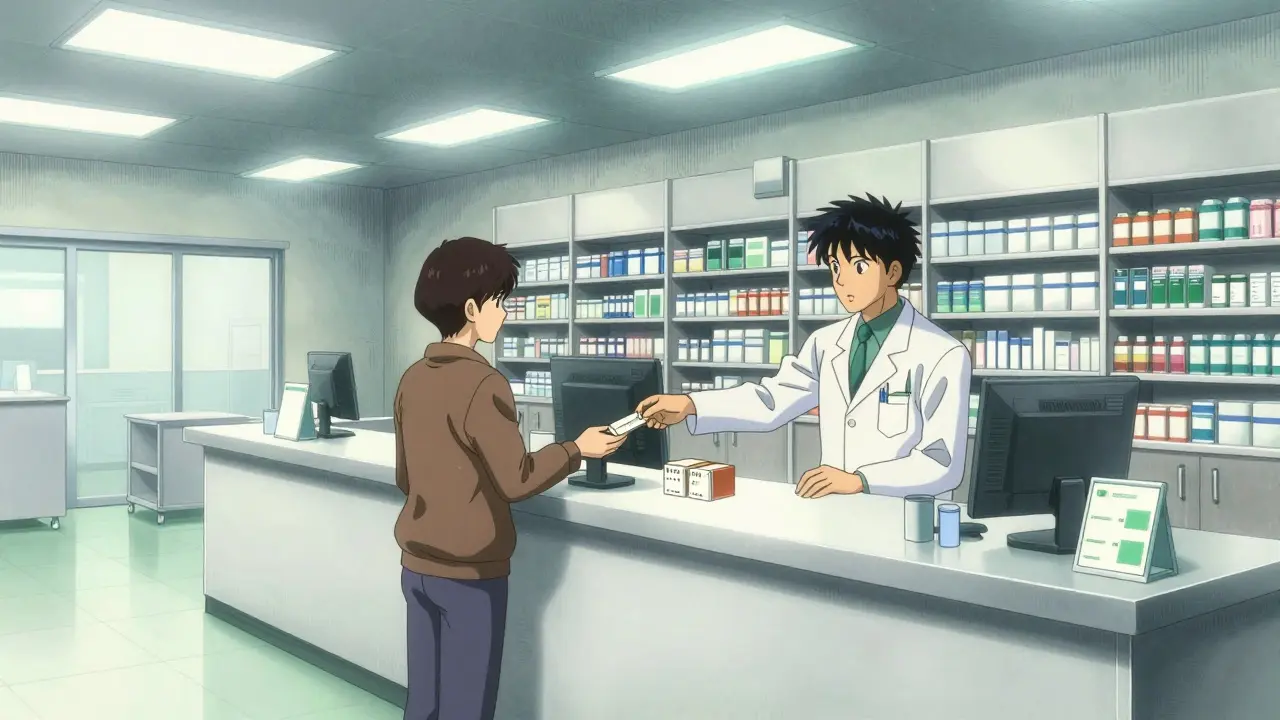
Imagine walking into your local pharmacy, dropping off a prescription for a brand-name medication, and walking out with a generic version-all without a single word being exchanged about the switch. For millions of people, this is the standard experience. This happens because of a legal framework called presumed consent is a regulatory system that allows pharmacists to assume a patient agrees to a therapeutically equivalent generic substitution unless the doctor specifically forbids it . It is the engine that drives the massive affordability of healthcare in the U.S., but it also raises a fair amount of tension between efficiency and patient autonomy.
How Presumed Consent Actually Works
At its core, presumed consent shifts the burden of communication. Instead of the pharmacist asking every single person, "Is it okay if we give you the generic version?", the law assumes the answer is "yes." This isn't just a pharmacy preference; it's a structured legal system that grew out of the Hatch-Waxman Act of 1984. This act created the pathway for generic drugs to enter the market, making it easier for cheaper versions of medicine to be approved by the FDA (Food and Drug Administration).
In most states, this works in tandem with substitution laws. There are two main flavors here: permissive laws, where the pharmacist can substitute, and mandatory laws, where they must substitute if a generic is available. Currently, 43 out of 50 states operate under a presumed consent model for small-molecule drugs. This means that in the vast majority of the country, the "silent switch" is the legal default.
The Gold Standard for Substitution: The Orange Book
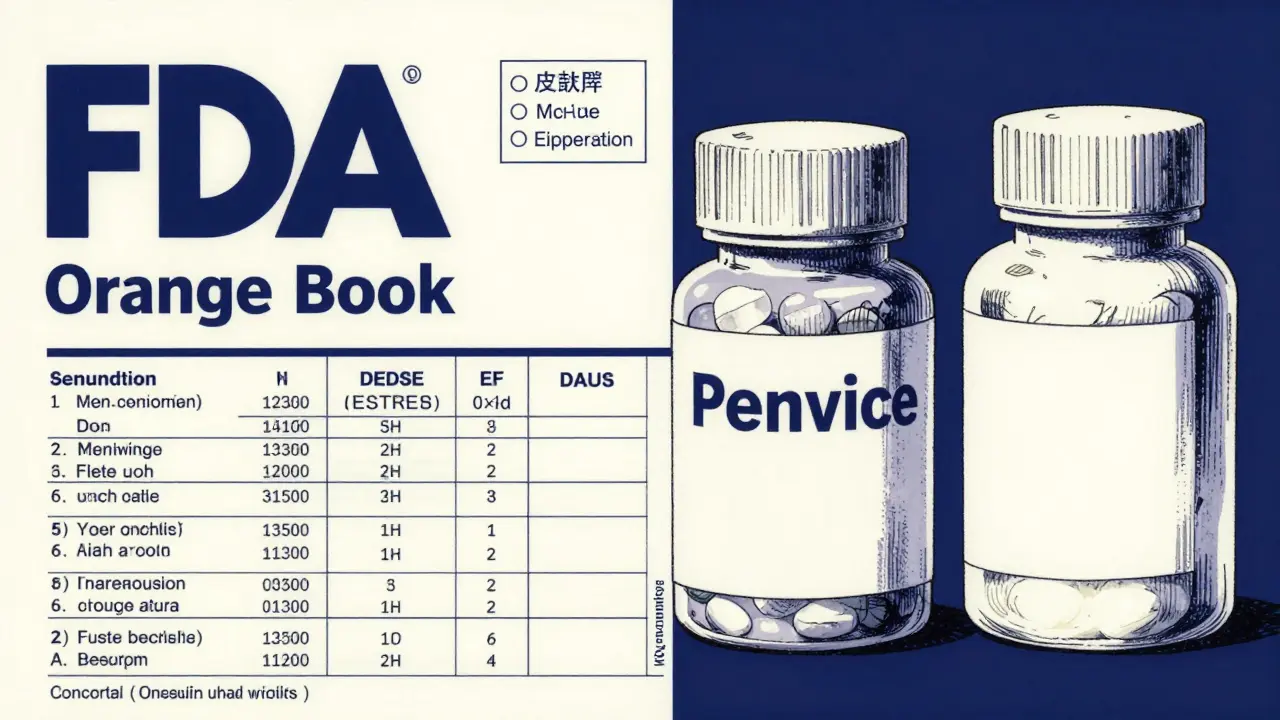
Pharmacists aren't just guessing which drug to swap. They rely on a critical reference tool called the FDA Orange Book , officially known as the Approved Drug Products with Therapeutic Equivalence Evaluations. This book categorizes generics based on their equivalence to the brand name.
The most important rating is the "A-rated" generic. If a drug is rated "A," it is considered therapeutically equivalent, meaning it has the same active ingredient, strength, and dosage form, and it performs the same way in the body. When a pharmacist sees an A-rating, the presumed consent law gives them the green light to make the switch without asking you first.
| Feature | Presumed Consent | Explicit Consent |
|---|---|---|
| Patient Interaction | Substitution occurs automatically | Pharmacist must ask and receive a "yes" |
| Processing Speed | Faster (avg. 1.7 min saved per script) | Slower due to required dialogue |
| Substitution Rates | Higher (avg. 92.3%) | Lower (avg. 87.1%) |
| Patient Autonomy | Lower (assumption of agreement) | Higher (active choice) |
The Economic Impact of the "Silent Switch"
Why do we do this? Mostly because of the staggering cost difference. According to data from the Association for Accessible Medicines, generic drugs make up about 90% of all prescriptions dispensed, yet they only account for 15% of total drug spending. The Congressional Budget Office estimates that this system has saved the U.S. healthcare system roughly $1.68 trillion over the last decade.
For a regular person, this is the difference between a $10 co-pay and a $200 out-of-pocket expense. This benefit is most visible for Medicare Part D beneficiaries, who see a massive percentage of these substitutions, saving them an average of $627 per year.
Where the System Breaks Down: High-Risk Meds
While presumed consent is great for blood pressure meds or cholesterol pills, it can be dangerous for others. Some drugs have what is called a narrow therapeutic index (NTI). This means that a very tiny difference in the drug's concentration in your blood can be the difference between the medicine working and a medical emergency.
Anti-epileptic drugs are a prime example. The American Epilepsy Society has documented nearly 200 cases of breakthrough seizures linked to generic substitutions between 2018 and 2022. Because of this, 15 states-including Tennessee and Hawaii-have put special restrictions on these drug classes. In these cases, a pharmacist cannot simply rely on presumed consent; they need specific guidance or a "Dispense as Written" (DAW) order from the doctor.
The New Frontier: Biosimilars
If small-molecule generics were the first wave, Biosimilars are the second. These are essentially generics for biologic drugs (complex medicines made from living cells). Because biologics are so much more complex, the "presumed consent" model is much harder to apply.
Pharmacists use the FDA Purple Book to check for interchangeability. However, the laws are a mess. Only about 6 states allow automatic substitution of interchangeable biosimilars without extra requirements. In states like Texas and Oklahoma, automatic substitution for these complex drugs is prohibited entirely. As more biologics hit the market, we can expect a massive legal battle over whether presumed consent should be expanded to these more volatile medications.

Practical Tips for Patients and Pharmacists
If you are a patient and you are worried about a substitution, the best way to stop it is to ask your doctor to mark the prescription "Dispense as Written" (DAW). This legally overrides presumed consent and forces the pharmacist to provide the brand name.
For pharmacists, the key is documentation. While presumed consent reduces the time spent talking, it increases the time spent recording. In these states, pharmacists spend about 42 seconds per script on substitution documentation to protect themselves from liability. Always double-check the state-specific rules for NTI drugs to avoid malpractice claims, as a mistake here can have severe clinical consequences.
Can a pharmacist change my medication without my permission?
In 43 U.S. states, yes, provided the drug is a therapeutically equivalent generic as defined by the FDA. This is called presumed consent. However, they cannot do this if your doctor specifically wrote "Dispense as Written" on the prescription.
What is the difference between a generic and a biosimilar?
Generics are exact chemical copies of small-molecule drugs. Biosimilars are "highly similar" versions of large, complex proteins. Because biosimilars aren't exact copies, they have much stricter substitution laws than standard generics.
How do I know if my drug was substituted?
In 31 states and DC, pharmacists are required to notify you after a substitution has occurred. You can also check the name of the drug on the bottle-if it differs from the brand name your doctor mentioned, it was likely substituted.
Are all generic drugs safe to swap?
Most are, but drugs with a "narrow therapeutic index" (like certain seizure medications) carry higher risks. If you have a condition where precise dosing is critical, you should discuss the specific manufacturer of your generic with your healthcare provider.
What is the FDA Orange Book?
It is the official FDA publication that lists which generic drugs are therapeutically equivalent to brand-name drugs. Pharmacists use the "A-rating" in this book to determine if a substitution is legally and clinically permissible under presumed consent laws.
Next Steps and Troubleshooting
If you've noticed a change in how your medication works after a generic switch, don't just stop taking it. Contact your doctor immediately to request a specific brand or a different generic manufacturer. For pharmacists dealing with a patient who is distrustful of presumed consent, the best approach is to proactively provide the A-rating evidence from the Orange Book to reassure them of the drug's equivalence.
Beth LeCours
April 5, 2026 AT 20:51this is just too much reading
Divine Manna
April 5, 2026 AT 21:37The ontological tension between systemic efficiency and individual autonomy is a classic dialectic. One must realize that the "silent switch" is not merely a legal convenience but a utilitarian sacrifice of the individual for the perceived greater good of the collective economy. It is quite naive to assume that the Orange Book's A-rating provides absolute certainty, as the nuances of bioavailability often escape the coarse metrics of regulatory bodies. We are essentially outsourcing our biological trust to a bureaucratic ledger, which is a profound abdication of personal health stewardship. The true philosopher understands that the price of affordability is often the erosion of agency. This systemic inertia ensures that the patient remains a passive recipient rather than an active participant in their own healing process. To be content with a generic is to accept a standardized existence in an era of precision medicine. We should be questioning the very foundation of these substitution laws rather than simply accepting the economic data as gospel. The obsession with trillion-dollar savings obscures the qualitative loss of patient-provider intimacy. In the end, the efficiency of the machine outweighs the dignity of the human subject. It is a tragedy of modern capitalism disguised as a public health victory. One must strive for a higher standard of care than what is merely "therapeutically equivalent." Only then do we reclaim our autonomy from the clutches of the pharmaceutical industrial complex.
Jenna Carpenter
April 6, 2026 AT 11:02ppl really trust the gov to just swap meds without telling them... like srsly?? some of these generics r totaly diffrent in how they feel. i had a bad reaction to a swap last year and the pharmasist just shruged it off because of some "orange book" rule. it's actualy insane how much we just let them do lol
Joseph Rutakangwa
April 7, 2026 AT 13:34just talk to your doc about DAW if you are worried. simple fix
sophia alex
April 8, 2026 AT 07:12Honestly, it is just pathetic that some people can't handle the best healthcare system in the world! 🇺🇸 The U.S. leads the way in pharmaceutical innovation, and if we can save trillions while keeping everyone healthy, that is a WIN. Why on earth would you want to pay 20x more for a brand name just to feel "special"? It's absolute madness to prioritize a label over the economic strength of our great nation! 💅✨
Brian Shiroma
April 8, 2026 AT 18:28Oh sure, because we all know the government and big pharma have a flawless record of transparency. I'm sure the "A-rating" is totally foolproof and never, ever has a glitch. Totally trust the system. 🙄
simran kaur
April 8, 2026 AT 19:32The Orange Book is just a tool for mass control. They tell you it's "equivalent" so you don't notice the subtle fillers they add to keep us docile. I've read that some of these substitutions are actually designed to test drug stability on the general population without their knowledge. It's all a game to the elites who take the brand name while we get the scraps. Don't be fooled by the "savings" argument; it's just a way to make the system more dependent on cheap, mass-produced chemicals.
Dipankar Das
April 10, 2026 AT 03:54It is imperative that we recognize the immense benefit this system provides to the impoverished! We must aggressively champion the use of generics to ensure that no citizen is denied life-saving medication due to cost! This is the only moral path forward for a global healthcare society!
Rachelle Z
April 11, 2026 AT 19:05Omg, let's all just breathe and remember that both sides have a point!!! 🌸 But also, like, imagine thinking a pill's color doesn't matter... so funny!! 😂😂😂 Just use the DAW and stop the drama, everyone!!!! ✨💖
Branden Prunica
April 12, 2026 AT 07:47ARE YOU KIDDING ME?! I had a breakthrough seizure because of a "silent switch" and it was the most terrifying moment of my entire life! I woke up on the floor and the pharmacy had the audacity to tell me it was "therapeutically equivalent"! My life was literally at risk for the sake of some corporate efficiency metric! This isn't just "tension," it's a nightmare! Absolute nightmare!
Hope Azzaratta-Rubyhawk
April 12, 2026 AT 10:14It is absolutely vital that patients take charge of their health immediately! You must demand transparency from your providers or you are simply consenting to subpar care! There is no excuse for the lack of communication in these pharmacy chains!
Ace Kalagui
April 13, 2026 AT 06:48I completely understand where everyone is coming from here, and I think it's just a wonderful opportunity for us to learn more about how our healthcare differs across regions. In my experience, if you just take a moment to kindly explain your concerns to the pharmacist, they are usually more than happy to walk you through the Orange Book ratings and help you find a middle ground that feels safe for you and your family, because at the end of the day, we all just want the best care possible for our loved ones.
Jenna Carpenter
April 14, 2026 AT 02:46srsly thnx for the tip about DAW. i'll be doing that from now on cuz i dont trust these guys as far as i can throw em