What Is Pancreatitis, and Why Does It Matter?
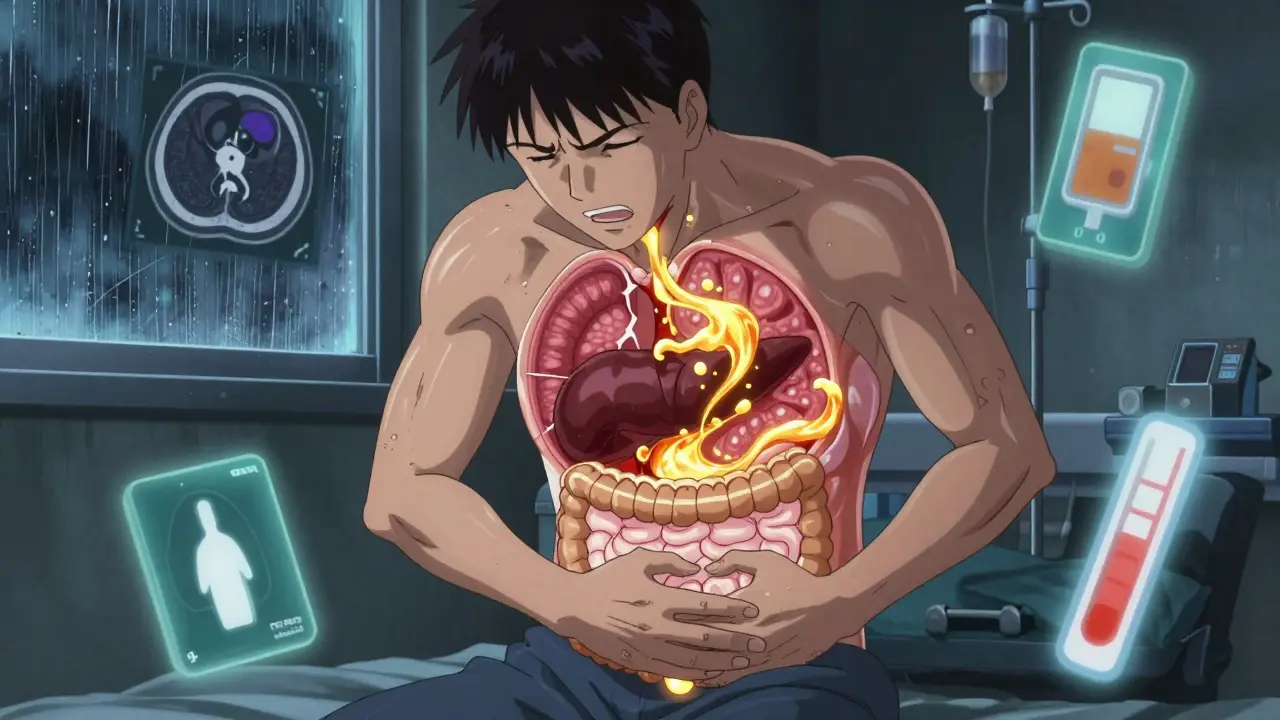
When your pancreas gets inflamed, it doesn’t just hurt-it starts digesting itself. That’s pancreatitis. This organ, tucked behind your stomach, normally releases digestive enzymes only after they reach your small intestine. But when something goes wrong, those enzymes activate too early, turning your pancreas into its own worst enemy. The result? Severe pain, nausea, and potentially life-threatening complications.
There are two main types: acute and chronic. Acute pancreatitis hits suddenly, often after a heavy meal or a night of drinking. Most people recover fully within a week. Chronic pancreatitis, on the other hand, is a slow burn. It doesn’t go away. It damages your pancreas permanently, leading to long-term problems like malnutrition, diabetes, and even pancreatic cancer.
The difference isn’t just in how it feels-it’s in what it does to your body over time. And how you eat? That’s not just a side note. It’s one of the most powerful tools you have to recover-or to keep things from getting worse.
Acute Pancreatitis: Sudden, Severe, But Often Reversible
Acute pancreatitis comes on fast. You’ll feel a sharp, constant pain in your upper belly that radiates to your back. It’s often worse after eating. Nausea and vomiting follow quickly. Most cases are triggered by gallstones or heavy alcohol use. In about 20% of cases, doctors can’t find a clear cause-these are called idiopathic.
Doctors diagnose it with three things: your symptoms, blood tests showing lipase or amylase levels more than three times normal, and imaging like a CT scan showing swelling or fluid around the pancreas. The Revised Atlanta Classification breaks severity into three levels:
- Mild: No organ failure. You’ll likely be in the hospital for 3-5 days.
- Moderately severe: Temporary organ failure (like kidneys or lungs) that clears up in under 48 hours.
- Severe: Organ failure lasting more than 48 hours. This is dangerous-mortality can hit 20-30%.
Early treatment is everything. Studies show that giving fluids aggressively within the first 24 hours reduces the chance of tissue death (necrosis) by 35%. That’s why hospitals now start IV hydration fast-not slow. Most people don’t need surgery. But if infection or dead tissue develops, that’s when things get complicated.
Chronic Pancreatitis: The Silent Degradation
Chronic pancreatitis isn’t a single episode. It’s a pattern of repeated damage that leaves scars. Think of it like a car engine that keeps overheating until the pistons seize. The pancreas can’t heal itself. Instead, it turns healthy tissue into hard, fibrous scar tissue. Calcium deposits form. The ducts narrow. Enzymes stop flowing.
Most cases (70-80%) are tied to long-term alcohol use. But genetics matter too-mutations in genes like PRSS1 or SPINK1 can cause it even in non-drinkers. Smoking? It doesn’t just raise cancer risk-it speeds up pancreatic damage. Quitting smoking cuts disease progression by half over five years, according to the American Pancreatic Association.
Unlike acute cases, the pain in chronic pancreatitis isn’t always constant. Early on, you’ll feel sharp pain after meals. Later, the pain fades-but that’s not good news. It means the pancreas is losing function. By the time pain lessens, most patients have already lost 90% of their digestive enzyme production.
Doctors use imaging to spot the damage: calcifications on CT scans, dilated ducts on MRI. Blood tests won’t show it. Instead, they look for signs of failure-fatty stools, weight loss, high blood sugar.
How Nutrition Changes Everything in Recovery
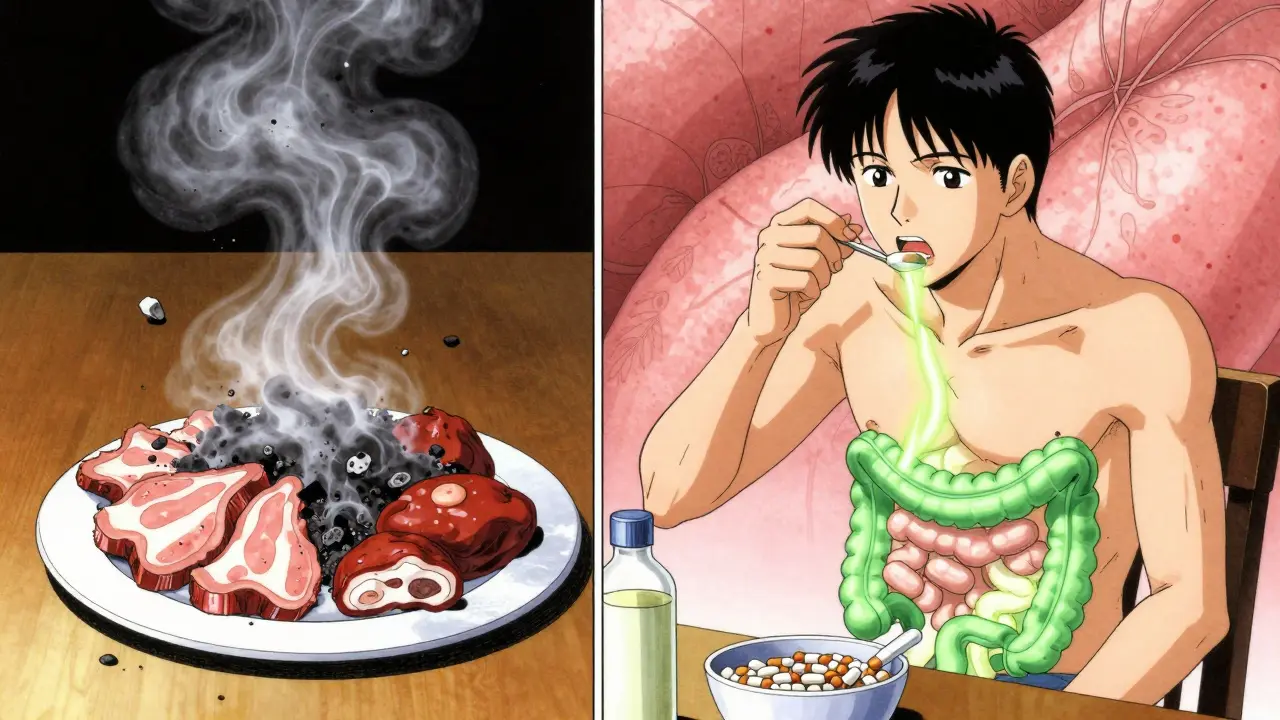
What you eat doesn’t just fuel your body-it can either help your pancreas heal or make it work harder. In acute pancreatitis, doctors often start with nothing by mouth. Why? To rest the pancreas. But that doesn’t mean starving. If you’re stable, enteral feeding (through a tube into the small intestine) starts within 24-48 hours. It cuts infection risk by 30% compared to IV nutrition alone.
Once you’re eating again, the goal is simple: low-fat, high-protein, small meals. Aim for 30-35 calories per kilogram of body weight daily, and 1-1.5 grams of protein per kilogram. That’s about 150-200 grams of protein a day for a 70kg person. Too much fat? Your pancreas can’t handle it. Too little protein? You’ll lose muscle and heal slower.
For chronic pancreatitis, nutrition becomes a lifelong management plan. You’ll need pancreatic enzyme replacement therapy (PERT). Doses vary: 40,000-90,000 lipase units per main meal, 25,000 per snack. Take them right before eating. If you’re still having fatty, foul-smelling stools, your dose is too low. A 72-hour fecal fat test confirms it.
Many patients don’t realize their enzymes aren’t working. One man on PatientsLikeMe lost 35 pounds in six months because he took his pills after meals. He didn’t know timing mattered.
What to Eat-and What to Avoid
Forget the old advice to eat nothing but rice and toast. Modern guidelines are more precise.
During acute flare-ups: Stick to 20-30 grams of fat per day. Avoid fried foods, butter, cream, fatty meats. Choose lean proteins: skinless chicken, tofu, egg whites. Use low-fat dairy. Complex carbs like oats, brown rice, and sweet potatoes give steady energy without stressing your system.
For chronic pancreatitis: Increase fat slightly to 40-50g/day, but choose the right kind. Medium-chain triglycerides (MCTs) are a game-changer. Unlike long-chain fats, MCTs don’t need pancreatic enzymes to be absorbed. They’re found in coconut oil, MCT oil supplements, and some medical formulas. A patient at Johns Hopkins cut her fatty stools from 4-5 times a day to 1-2 weekly just by switching to MCT oil.
Supplements are often needed. Up to 85% of chronic pancreatitis patients are low in vitamin D. 40% lack B12. 25% are deficient in vitamin A. These aren’t optional. Take them daily. Fat-soluble vitamins (A, D, E, K) need fat to absorb-but if your pancreas can’t produce enzymes, even dietary fat won’t help. That’s why supplements must be taken with PERT.
Small, frequent meals-6 to 8 a day-are better than three big ones. They reduce the burden on your pancreas and help stabilize blood sugar. Many patients develop pancreatogenic diabetes (type 3c). Continuous glucose monitors like Dexcom G7, approved in early 2024, help track the unique spikes and drops these patients face.
Why Most People Struggle-and How to Succeed
It’s not just about knowing what to eat. It’s about access, support, and persistence.
Only 35% of primary care doctors feel confident managing chronic pancreatitis. Patients often wait over four months to see a specialist. That delay means missed chances to prevent malnutrition or diabetes.
One major hurdle? Pain. Chronic pancreatitis patients are 30% more likely to develop opioid dependence within five years. That’s why multidisciplinary care matters-gastroenterologists, pain specialists, dietitians, and mental health pros working together.
And then there’s the emotional toll. A 2022 study found 42% of patients lost more than 10% of their body weight because they feared eating would trigger pain. That’s not just physical-it’s psychological. Support groups, like those on the National Pancreas Foundation’s forum, help. Hearing from others who’ve been there makes a difference.
Success stories aren’t rare. One woman, after seven years of misdiagnosis, found relief at a specialized center. With the right enzyme dose, MCT oil, and a dietitian’s plan, she gained back 20 pounds and stopped needing opioids. Her secret? Consistency. Not perfection.
What’s New in Pancreatitis Care
Science is moving fast. In 2023, a new blood marker called pancreatic stone protein (PSP) showed 92% accuracy in predicting severe acute pancreatitis within 24 hours. That means faster, smarter treatment.
Stem cell therapy is being tested in the REGENERATE-CP trial. Early results show 30% improvement in enzyme production after 12 months. It’s not a cure-but it’s hope.
Probiotics are also showing promise. A 2023 study found that Lactobacillus rhamnosus GG and Bifidobacterium lactis reduced pain by 40% over six months. They don’t fix the pancreas, but they calm the gut.
And enzyme formulations are improving. Creon 36,000 now offers 45% better fat absorption than older versions. New non-porcine enzymes are in trials for people allergic to pig-derived products.
The Big Picture: Prevention, Survival, and Quality of Life
Acute pancreatitis can be a wake-up call. If it’s from alcohol, stop drinking. If it’s from gallstones, consider removal. If it’s idiopathic, get tested for genetic causes.
Chronic pancreatitis isn’t a death sentence-but it demands lifelong management. The 10-year survival rate is 70%. The 20-year rate? 45%. Those numbers aren’t fixed. They depend on what you do next.
Quit smoking. Take your enzymes. Eat the right foods. Monitor your blood sugar. Get your vitamins. See a specialist. These aren’t suggestions. They’re survival tools.
And remember: your pancreas doesn’t heal. But your life can still improve. Every meal is a chance to protect what’s left-and to live better, longer.
Can acute pancreatitis turn into chronic pancreatitis?
Yes, but it’s not common. Most people recover fully from a single episode of acute pancreatitis. However, repeated episodes-especially if the cause (like alcohol or gallstones) isn’t treated-can lead to permanent damage and chronic pancreatitis. About 10-15% of patients with recurrent acute pancreatitis develop chronic disease over time.
Do I need to take pancreatic enzymes for life if I have chronic pancreatitis?
Most people do. As the pancreas loses function, it stops making enough enzymes to digest food. Without replacement, you’ll have fatty stools, weight loss, and nutrient deficiencies. Dosing is personalized and monitored through stool tests. Some patients may need to adjust doses over time, especially if they develop diabetes or other complications.
Can I drink alcohol again after recovering from acute pancreatitis?
No. Even one drink can trigger another episode. If alcohol caused your pancreatitis, lifelong abstinence is the only proven way to prevent recurrence and progression to chronic disease. Studies show that continuing to drink increases the risk of chronic pancreatitis by 90% within five years.
Why do I still have pain even though I’m taking enzymes?
Enzymes help with digestion, not pain. Chronic pancreatitis pain comes from nerve damage, inflammation, and scarring. Enzymes won’t fix that. You may need pain specialists, nerve blocks, or even surgery. Some patients benefit from low-dose antidepressants or anti-seizure meds that target nerve pain. Don’t assume your enzymes are failing-your pain might need a different approach.
Is pancreatic cancer a real concern with chronic pancreatitis?
Yes. Chronic pancreatitis increases your risk of pancreatic cancer by 15 to 20 times. While the absolute risk is still low-about 4% over 10 years-it’s high enough that doctors recommend annual imaging (MRI or MRCP) for long-term patients, especially if you smoke, have a family history, or carry certain gene mutations.
What’s the best way to know if my enzyme dose is right?
The gold standard is a 72-hour fecal fat test. If more than 7% of fat is excreted in your stool, your dose is too low. Symptoms like oily, floating stools, bloating, and unexplained weight loss also signal underdosing. Don’t guess-ask your doctor for a test. Many patients are under-treated because they don’t know how to monitor effectiveness.
Joanna Brancewicz
January 7, 2026 AT 12:02Acute pancreatitis is a wake-up call, but the real issue is how often patients are discharged without proper PERT education. I've seen too many come back with 30-pound weight loss because they took enzymes after meals. Timing isn't optional-it's physiology.
Molly Silvernale
January 8, 2026 AT 10:27Imagine your pancreas as a cranky old chef who’s been forced to cook with broken knives, blindfolded, while someone pours gasoline on the stove-then you wonder why the kitchen’s on fire? Chronic pancreatitis isn’t a disease-it’s a betrayal by your own body. And yet, we treat it like a dietary inconvenience. We’re not just feeding organs-we’re negotiating with a wounded, silent partner.
Luke Crump
January 8, 2026 AT 10:40Let’s be real-this whole ‘MCT oil miracle’ is Big Coconut pushing propaganda. I’ve been in ICU three times from acute attacks, and the only thing that saved me was vodka. No, seriously-alcohol was the trigger, but the real cure? Stopping. Not some fancy oil. Stop romanticizing nutrition like it’s a magic spell. It’s not. It’s damage control.
Aubrey Mallory
January 8, 2026 AT 17:16If you’re reading this and you’ve been told to ‘just eat less fat’-you’re being failed. This isn’t about willpower. It’s about systemic neglect. Primary care docs don’t know how to manage this. Insurance won’t cover enzyme tests. You need a specialist, a dietitian, AND a therapist. Don’t wait until you’re losing muscle and crying over your own stools. Advocate. Now. You deserve better than a pamphlet.
Lois Li
January 8, 2026 AT 19:30I was misdiagnosed for 4 years with IBS-turned out to be chronic pancreatitis from a single gallstone episode. Took me 37 pounds to realize something was wrong. The enzymes changed everything-but I didn’t know to take them BEFORE eating. Now I set phone alarms. It’s not glamorous. But it’s survival. And yes, the MCT oil works. My stools went from floating like oil slicks to… normal. No joke.
christy lianto
January 9, 2026 AT 04:15Stop waiting for the perfect diet. Start with one change. One meal. One enzyme. One day. I used to fear food like it was poison-now I eat six small meals a day with coconut oil in my smoothies. I’m not cured. But I’m alive. And I’m not letting this disease steal my joy. You can too. Start small. Keep going.
Ken Porter
January 9, 2026 AT 08:44Why are we even talking about MCT oil? Just quit drinking. Quit smoking. Stop eating junk. No magic supplements. No new trials. Simple. Hard. American healthcare turns everything into a product. Pancreatitis? Just stop being a dumbass.
swati Thounaojam
January 9, 2026 AT 11:13i had acute pancreatitis after a party. doc said no alcohol. i said ok. but i didnt know about enzymes. i lost weight, felt weak. then i found this post. now i take creon before every meal. my stools are normal. thank you.