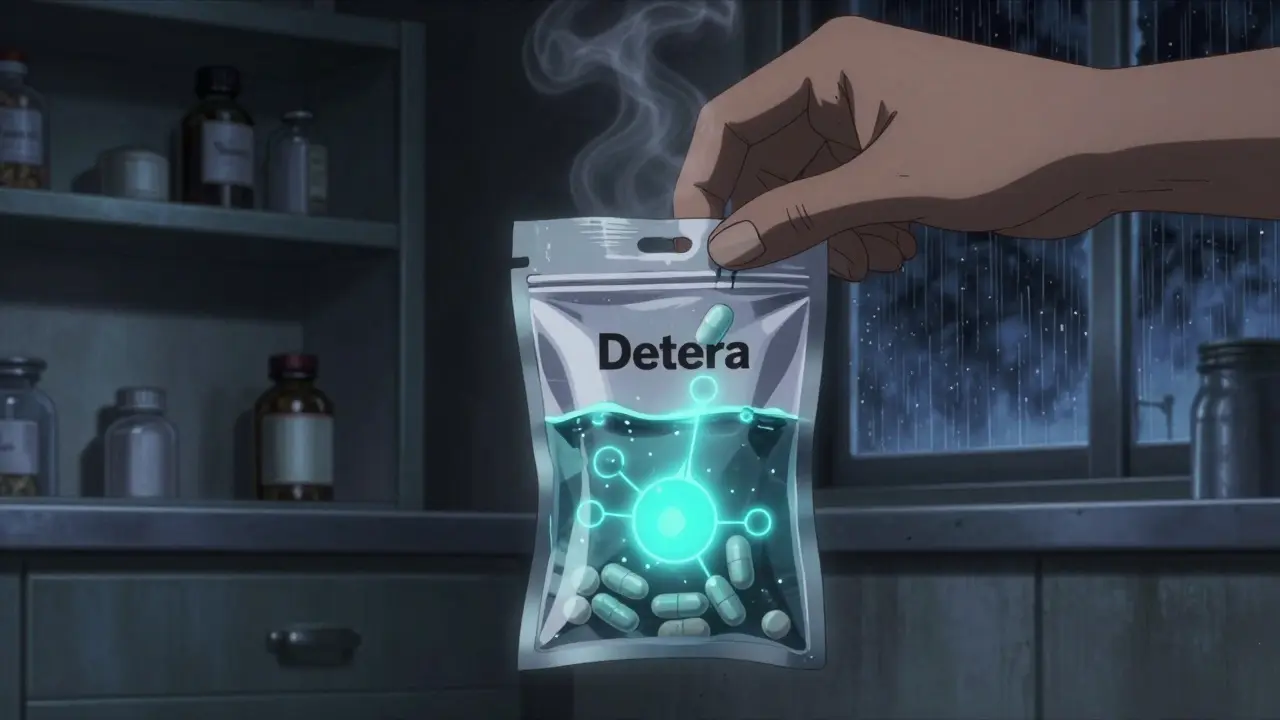
Every year, thousands of opioid overdoses happen not because someone bought drugs on the street, but because they found pills in a family member’s medicine cabinet. The CDC reports that nearly 70% of misused prescription opioids come from friends or relatives - often leftovers from surgery, injury, or chronic pain treatment. If you have unused opioids at home, you’re not just holding onto extra pills - you’re holding a potential danger. The good news? You can eliminate that risk in minutes with the right method.
Why Proper Disposal Matters
It’s not just about keeping pills away from teens or curious kids. Unused opioids in the home increase the chance of accidental overdose, addiction, and even death. In 2021, over 107,000 people in the U.S. died from drug overdoses, and opioids were involved in nearly 75% of those cases. Many of those deaths could have been prevented if unused medications had been removed from homes.Studies show that when people are given clear, simple instructions on how to dispose of opioids, their disposal rates jump from under 25% to nearly 70%. That’s not a small change - it’s a lifesaving one.
Four Safe Ways to Dispose of Unused Opioids
There are four proven, government-recommended methods to get rid of unused opioids safely. Not all are available everywhere, but one of them will work for you.1. Use a Drug Take-Back Program
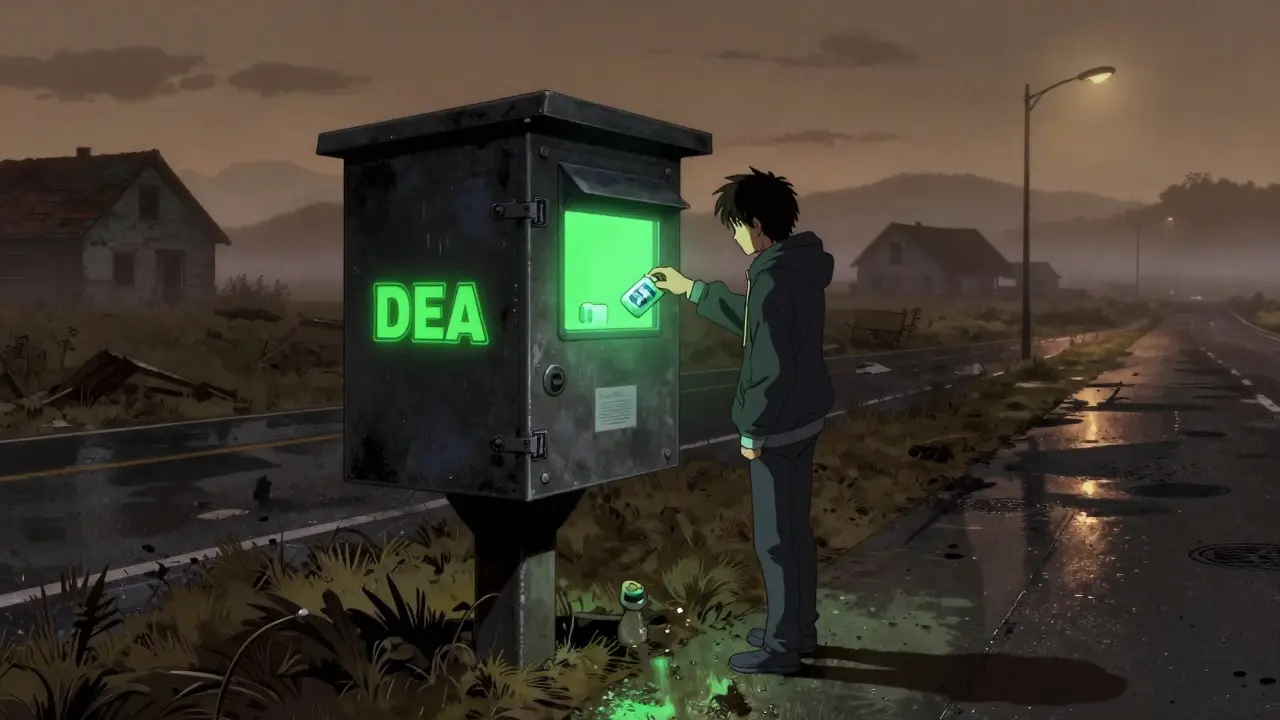
This is the gold standard. Drug take-back programs collect unused medications and destroy them through high-temperature incineration - completely eliminating any risk of misuse.There are over 16,900 official collection sites across the country, including pharmacies like Walgreens and Walmart, police stations, and hospitals. Most are open during regular business hours. You don’t need to show ID or explain why you’re dropping off pills. Just bring the original container or a sealed bag with the pills inside.
To find the nearest site, go to the DEA’s website and enter your ZIP code. The tool works fast - you’ll get a list of locations within 30 seconds. In urban areas, you’re usually within 5 miles. In rural areas, it might be farther, but it’s still the safest option.
2. Use a Deactivation Pouch (Like Deterra or SUDS)
If there’s no take-back site nearby, deactivation pouches are the next best thing. These are small, biodegradable pouches you buy at pharmacies. They contain activated carbon and other compounds that neutralize opioids in under 30 minutes.Here’s how to use one:
- Remove the opioid pills from their original bottle.
- Place them inside the pouch.
- Add warm water up to the fill line.
- Seal the pouch and shake it gently for 15 seconds.
- Throw the pouch in the trash.
Lab tests show these pouches deactivate 99.9% of opioids. They’re especially useful for people who live far from collection sites. You can buy them at most major pharmacies for $2.50 to $5.00 each. Some health systems even give them out for free when prescribing opioids.
Pro tip: Don’t skip the water. One study found that 28% of users didn’t add enough water, which meant the pills weren’t fully deactivated.
3. Household Disposal (When Nothing Else Is Available)
If you can’t get to a take-back site and don’t have a pouch, you can still dispose of opioids safely at home - but you must follow the steps exactly.The FDA recommends this method:
- Remove pills from their original container.
- Mix them with an unappetizing substance - like used coffee grounds, cat litter, or dirt.
- Put the mixture in a sealable plastic bag or container.
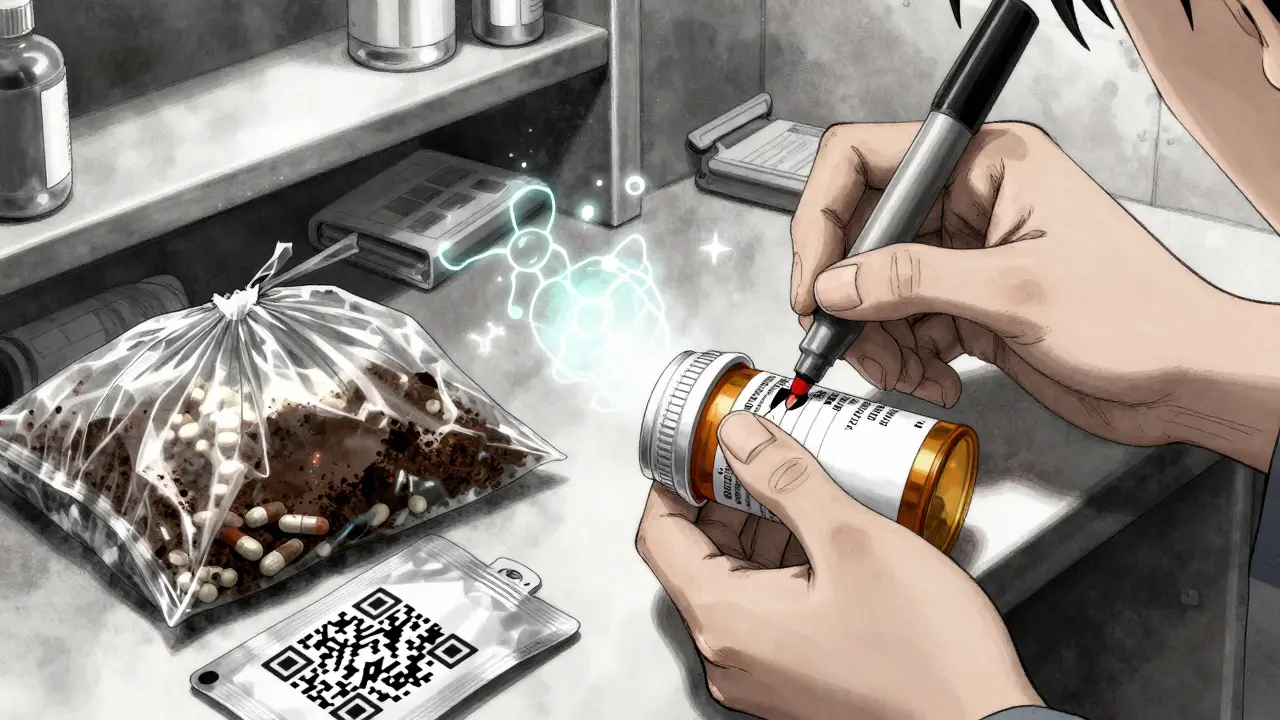
- Cover or scratch out your name and prescription info on the empty bottle with a permanent marker.
- Throw the sealed bag in the trash.
This method isn’t perfect - it only reduces diversion risk by about 68%, according to health department studies. But it’s better than leaving pills in the cabinet. People who follow these steps correctly reduce the chance of someone else finding and using the pills by more than 80%.
4. Flushing (Only for Specific Opioids)
Flushing opioids down the toilet sounds wrong - and it usually is. But the FDA has a short list of 15 high-risk opioids that are dangerous enough to justify flushing if no other option exists.These include:
- Fentanyl patches
- Oxycodone (OxyContin, Percocet)
- Morphine sulfate
- Hydrocodone (Vicodin)
- Tapentadol (Nucynta)
Why flush these? Because they’re so potent that even one pill can kill a child or someone without a tolerance. If a child finds a fentanyl patch and puts it on their skin, it can be fatal within hours. Flushing prevents that.
Don’t flush anything else. Only these 15. Flushing other drugs harms the environment - trace amounts have been found in 80% of U.S. waterways. But for these specific opioids, the risk of accidental overdose outweighs the environmental concern.
What NOT to Do
Some habits people think are safe are actually dangerous:- Don’t flush non-listed opioids. It pollutes water and doesn’t help.
- Don’t throw pills in the trash without mixing them. Someone could dig through your trash and find them.
- Don’t try to dissolve pills in vinegar or bleach. This doesn’t neutralize them - and it’s hazardous to handle.
- Don’t leave them in the original bottle. Even if you throw it away, the label makes it easy for someone to identify and take them.
What If You’re a Caregiver?
If you’re helping an older adult, someone with dementia, or a person recovering from addiction, disposal becomes even more urgent. These individuals may forget they have pills, or may not understand the risks.Here’s what works:
- Ask the pharmacist to give you a deactivation pouch when the prescription is filled.
- Set a reminder on your phone to check the medicine cabinet every 3 months.
- Remove all unused opioids from the home after surgery or injury - don’t wait.
- Use a locked medicine box if you must keep some pills for emergencies.
One study found that caregivers who received a simple checklist and a pouch had 4 times higher disposal rates than those who just got verbal instructions.
How to Get Help If You Can’t Access Disposal
If you live in a rural area and there’s no take-back site within 50 miles, you’re not alone. About 14 million Americans face this problem.Here’s what you can do:
- Call your local pharmacy - some offer mail-back disposal kits for free.
- Ask your doctor or hospital if they have a disposal program for patients.
- Check with your county health department - many run seasonal collection events.
- Use a deactivation pouch - they’re shipped to your door and work anywhere.
In 2023, the DEA added 1,200 new collection sites, including in Native American communities and remote areas. More are coming. But until then, a pouch or household method is your best tool.
What’s Changing in 2026?
New rules are coming fast. By 2025, hospitals will be required to include disposal instructions on all opioid discharge paperwork. The CDC is working to make disposal compliance part of hospital ratings - meaning facilities that don’t educate patients could lose funding.Some states are already testing digital systems. You’ll soon see QR codes on deactivation pouches that let health officials track usage anonymously - helping them place more drop boxes where they’re needed most.
The goal? Reduce opioid-related deaths by 8,000 to 12,000 per year by 2030. That’s only possible if people like you take action.
Final Checklist: Your 5-Minute Safe Disposal Plan
Use this when you have unused opioids:- Check the bottle. Is it on the FDA flush list? If yes, and no other option exists, flush it.
- Find a take-back site. Use the DEA’s online locator - it’s fast and free.
- Buy a pouch. Available at Walgreens, CVS, Walmart, and many independent pharmacies.
- If none of the above - mix with coffee grounds or cat litter. Seal it. Trash it.
- Remove labels. Always cover your name and prescription info with a marker.
Don’t wait. Don’t assume someone else will handle it. If you have unused opioids, dispose of them today. One less pill in the cabinet could mean one less overdose tomorrow.
Can I just flush all my unused opioids?
No. Only 15 specific opioid medications are approved for flushing by the FDA - including fentanyl patches, oxycodone, and morphine sulfate. Flushing other drugs harms the environment and doesn’t provide extra safety. Always check the label or ask your pharmacist if you’re unsure.
What if I don’t have access to a take-back site or deactivation pouch?
Use the FDA’s household disposal method: mix the pills with used coffee grounds, cat litter, or dirt. Put the mixture in a sealed container, then throw it in the trash. Scratch out your name and prescription info on the empty bottle. This reduces the chance of misuse by 82% when done correctly.
Are deactivation pouches really effective?
Yes. Lab tests show they deactivate 99.9% of opioids within 30 minutes when used correctly. They’re used by hospitals, pharmacies, and even the U.S. military. The main issue is user error - not adding enough water or shaking too little. Follow the instructions on the pouch exactly.
Why don’t doctors always tell me how to dispose of opioids?
A 2022 study found that only 38% of prescribers routinely discuss disposal during opioid consultations. Many assume patients know, or they’re rushed. But it’s your responsibility to ask. When you get your prescription, say: “Can you tell me how to safely get rid of these if I don’t need them?”
Can I recycle the empty pill bottle?
Yes - but only after you’ve removed all labels. Scratch out your name, prescription number, and dosage with a permanent marker. Then check your local recycling rules. Most plastic pill bottles are recyclable, but some areas require you to remove the cap first.
What should I do if someone I know is using my unused opioids?
This is serious. If someone is taking your opioids without permission, it’s a sign of potential misuse or addiction. Don’t confront them alone. Contact a healthcare provider or call the SAMHSA National Helpline at 1-800-662-HELP (4357). It’s free, confidential, and available 24/7. You’re not betraying someone - you’re helping them get support before it’s too late.
Next Steps
If you have opioids at home right now, take five minutes to act. Find your nearest take-back site. Buy a pouch. Or mix your pills with coffee grounds. Do it today.Every pill you remove from your home is one less chance for someone to overdose. It’s not just a responsible choice - it’s a quiet act of prevention that saves lives.
Bryan Wolfe
January 12, 2026 AT 10:36Just dropped off my leftover oxycodone at the Walgreens take-back bin today-no questions asked, no judgment, just a quick scan and I was out. So easy. Why do people still leave these in the cabinet???
Prachi Chauhan
January 12, 2026 AT 18:56Disposal is not just a chore-it’s a moral act. We live in a world where pain is commodified and pills are treated like candy. Removing them isn’t about obedience-it’s about refusing to be part of a system that lets death wait in the medicine cabinet.
Katherine Carlock
January 13, 2026 AT 02:12I got a Deterra pouch when my mom had her knee surgery-free from the hospital! Used it the same day. Now I keep one in my bathroom drawer. If you’re reading this and have old pills? Just do it. It takes 2 minutes. You’re literally saving someone’s life.
Sona Chandra
January 14, 2026 AT 11:59Why is this even a thing?? Who lets their kid get their hands on painkillers?? My cousin died because his brother found Dad’s Vicodin. And now we’re giving pamphlets?? This is a failure of parenting, of healthcare, of society. FIX THE SYSTEM, NOT THE TRASH CAN.
Jennifer Phelps
January 15, 2026 AT 07:56So if I mix them with cat litter is that enough? I don’t have a pouch and the nearest drop box is 40 miles away. What if I just throw the bottle in the trash after scrubbing the label? Is that bad? I just want to know if I’m doing it right
beth cordell
January 15, 2026 AT 23:22Just used my first Deterra pouch 🙌 My grandma’s fentanyl patches went in today. She didn’t even remember she had them. So glad I checked. Also-this post made me cry. We can do better. 💙
Lauren Warner
January 16, 2026 AT 20:02Let’s be real-most people who use this info are middle-class white folks with access to Walgreens. Meanwhile, rural Black and Indigenous communities get told to flush pills while their water systems are poisoned. This is performative harm reduction. Where are the free pouches in Appalachia? Where’s the funding? This post is a Band-Aid on a hemorrhage.
Craig Wright
January 18, 2026 AT 02:13As a British citizen, I find it astonishing that the United States permits the widespread distribution of such dangerous substances in the first place. In the UK, controlled drugs are strictly monitored, and disposal is handled centrally by the NHS. This entire system feels dangerously laissez-faire.
Lelia Battle
January 18, 2026 AT 22:37It’s interesting how we treat medication disposal as an individual responsibility, when the real failure lies in the overprescribing culture. If we stopped handing out opioids like candy after minor procedures, we wouldn’t need pouches or take-back bins. But we’d have to change the system-and that’s harder than throwing pills in the trash.
Cassie Widders
January 20, 2026 AT 01:03My dad’s still got a bottle of hydrocodone from his back surgery three years ago. I’m gonna mail him a Deterra pouch tomorrow. He won’t admit he needs help, but he’ll take a free thing from the pharmacy. Small wins.