
When someone takes too much of a sedative or sleep medication, their body doesn’t just feel sleepy-it starts shutting down. This isn’t just a bad night’s rest. It’s a medical emergency that can kill in minutes if you don’t act fast. Every year, thousands of people end up in emergency rooms because they or someone they know took too many sleeping pills. And too often, bystanders wait too long because they mistake the warning signs for simple exhaustion. If you’ve ever wondered whether someone is just deeply asleep or actually overdosing, this is what you need to know.
What Happens When Sedatives Go Too Far
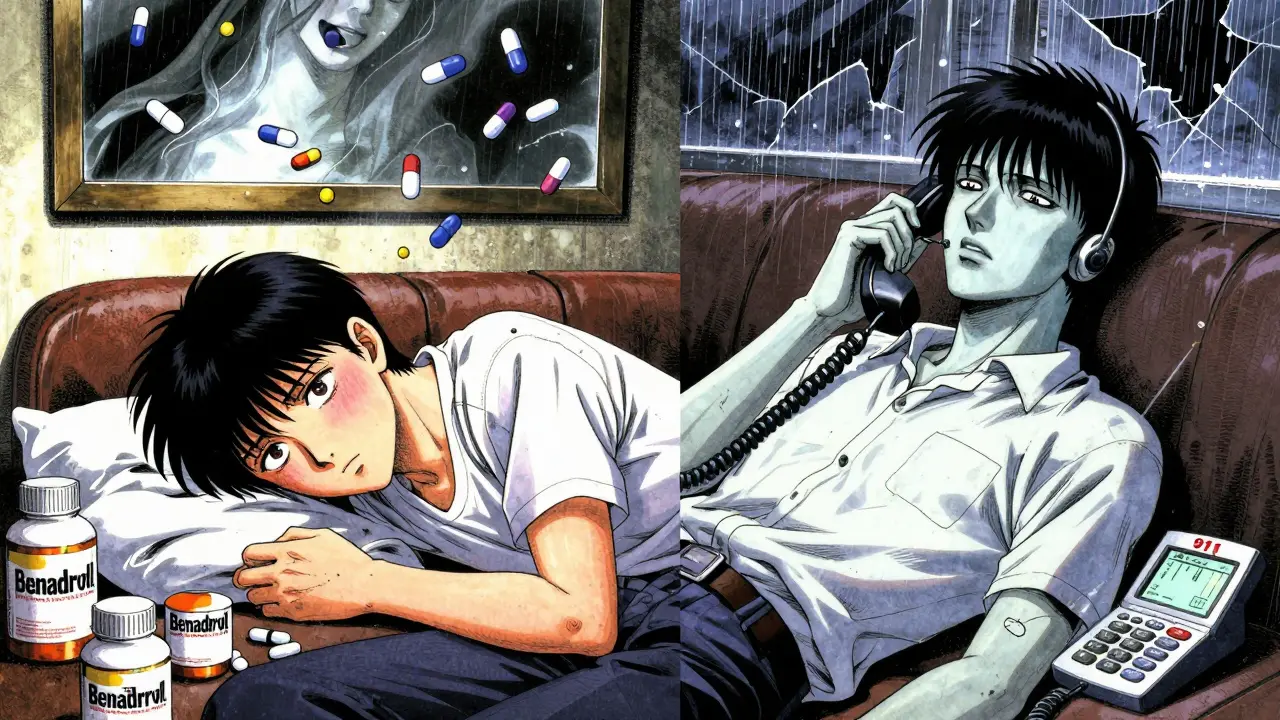
Sedatives and sleep medications work by slowing down your central nervous system. That’s why they help you relax and fall asleep. But when the dose goes beyond what your body can handle, that slowing becomes dangerous. The most common culprits are benzodiazepines like alprazolam (Xanax), clonazepam (Klonopin), and temazepam (Restoril), as well as non-benzodiazepine "Z-drugs" like zolpidem (Ambien), eszopiclone (Lunesta), and zaleplon (Sonata). Even over-the-counter sleep aids like diphenhydramine (Benadryl, Tylenol PM) can cause overdose at high doses.What makes these drugs risky isn’t just the pill count-it’s how they interact. Mixing them with alcohol, opioids, or even some antidepressants can turn a moderate dose into a lethal one. In 2021, nearly one in four benzodiazepine overdose deaths also involved fentanyl. That’s not a coincidence. It’s a deadly combo.
The Five Critical Signs of Overdose
Recognizing an overdose isn’t about guessing. It’s about spotting clear, observable changes. Here are the five most reliable signs:- Unresponsiveness - Try shouting their name and giving a firm sternal rub (pressing hard on the center of their chest). If they don’t move, blink, or make any sound, they’re not sleeping-they’re in trouble. This is the biggest red flag.
- Slowed or shallow breathing - Count their breaths for 30 seconds. Normal is 12-20 per minute. Below 10 means danger. Below 8 means imminent respiratory arrest. Look for chest movement so small you can barely see it. If their breaths are uneven or pause for more than 10 seconds, call 911 now.
- Cyanosis - Check their lips, fingertips, and nail beds. If they look blue or gray, oxygen levels are dangerously low. This is a late sign, meaning damage is already happening.
- Slurred speech or inability to speak - If they’re awake but can’t form words, or their speech is thick and slow like they’re drunk, their brain is being suppressed. This happens in 87% of benzodiazepine overdoses.
- Loss of coordination - They can’t stand, walk, or hold their head up. Their movements are clumsy, uncontrolled, or absent. This isn’t tiredness-it’s neurological shutdown.
These signs don’t always show up at once. Often, they start mild. A person might be unusually drowsy after taking their normal dose. Then, they stop responding to calls. Then, their breathing gets shallow. The window between "just sleepy" and "not breathing" can be as short as 15 minutes.
What’s Different About Z-Drugs vs. Barbiturates vs. OTC Sleep Aids
Not all sleep meds act the same way in overdose.Benzodiazepines and Z-drugs typically cause deep sedation without crashing blood pressure or heart rate-until they do. People often look "just asleep," which is why bystanders delay help. But their breathing can stop without warning.
Barbiturates (like phenobarbital) are less common today but far more dangerous. They suppress breathing at much lower doses. A few extra pills can be fatal. Vital signs drop fast-heart rate, blood pressure, everything.
Diphenhydramine overdoses (from Benadryl or PM pain relievers) can look totally different. People may become extremely drowsy, but they can also have dry skin, flushed face, urinary retention, and even hallucinations or seizures. It’s not a typical CNS depressant overdose-it’s an anticholinergic crisis.
And melatonin? Even at 240 mg (60 times the normal dose), it rarely causes life-threatening symptoms. Headache, dizziness, nausea-yes. Respiratory arrest? Almost never. This is important because people often think "natural" means safe. It doesn’t.
Why People Delay Calling for Help
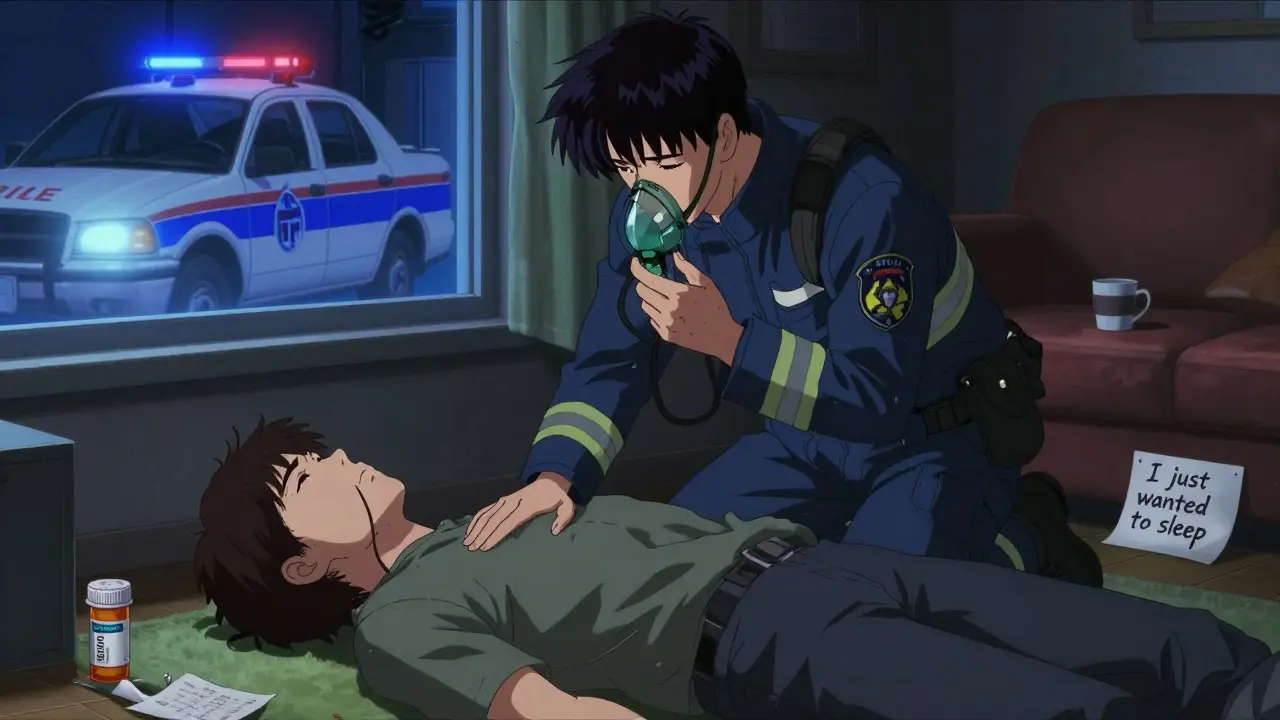
A 2022 study of over 1,200 overdose cases found that nearly 7 out of 10 bystanders waited more than 30 minutes before calling 911. Why? Because they thought the person was just "really tired," "sleeping it off," or "drunk."One Reddit user wrote: "I thought my roommate was just exhausted from work. He was snoring so loud I didn’t think anything was wrong. By the time I checked his breathing, his lips were blue."
Another said: "I assumed the slurred speech was from drinking. I didn’t realize he’d taken his Ambien on top of it. By the time I called for help, he wasn’t breathing."
These aren’t rare stories. The National Poison Data System recorded over 46,000 sedative exposures in 2022. More than half happened at home. And the average delay before calling emergency services? 47 minutes.
Every minute counts. Research shows that for every minute you wait after breathing stops, the chance of survival drops by 7-10%. If someone is unresponsive and breathing less than 10 times per minute, don’t wait for "proof." Don’t check their phone. Don’t try to wake them with ice water. Call 911 immediately.
What NOT to Do
There are dangerous myths about overdose response:- Don’t give them coffee or cold showers. These don’t reverse sedation. They can cause more harm-like triggering a seizure or heart rhythm problem.
- Don’t try to make them vomit. If they’re unconscious, they could choke.
- Don’t give flumazenil. This drug reverses benzodiazepines, but it’s extremely risky outside a hospital. People dependent on these drugs can have seizures if it’s given too fast. The FDA has documented fatal seizures from improper use.
- Don’t leave them alone. Even if they seem stable, their condition can collapse suddenly.
Instead, follow this simple protocol:
- Shout their name and apply a sternal rub. If no response, proceed.
- Count their breaths for 30 seconds. Multiply by two.
- If breathing is under 10 per minute, or they’re unresponsive, call 911 immediately.
- If they’re not breathing, start rescue breathing: tilt head back, lift chin, give one breath every 5 seconds.
- Stay with them. Monitor breathing until help arrives.
What to Look for at the Scene
The environment tells you a lot. Check for:- Empty pill bottles or multiple prescriptions from different doctors
- Alcohol bottles or drug paraphernalia
- Written notes, suicide attempts, or sudden behavioral changes
In 41% of fatal sedative overdoses, alcohol was involved. In 23% of benzodiazepine deaths, fentanyl was present. If you see empty bottles of Ambien next to a beer can, don’t assume it’s "just one night." It’s a pattern.
When to Get Help-Even If You’re Not Sure
You don’t need to be a doctor to act. If someone is:- Unresponsive to loud noise or physical stimulation
- Breathing fewer than 12 times per minute
- Showing blue lips or cold, clammy skin
-then it’s an overdose. Call 911. No exceptions. No second guesses.
Emergency responders are trained for this. They won’t judge. They won’t call the police. They’ll save a life. And if you’re wrong? You’ve just helped someone get the care they needed before it got worse.
The CDC says sedative overdose deaths have more than doubled since 2010. In places like West Virginia, the rate is over three times the national average. But recognition rates are improving. California’s "Don’t Die" campaign distributed 250,000 overdose cards to pharmacies-and saw a 22% increase in bystander action. Knowledge saves lives.
What Happens After You Call 911
Emergency teams will:- Provide oxygen and monitor blood oxygen levels
- Use a breathing tube if needed
- Start IV fluids and monitor heart function
- Check for other drugs in the system
They may use midazolam (Nayzilam) in the nose to stop seizures, or give activated charcoal if the overdose was recent. But none of this matters if you don’t call.
Survival is possible-even after respiratory arrest-if help comes fast. But delay is the biggest killer.
Can you overdose on just one sleeping pill?
Yes, if the person is especially sensitive to the drug, has liver problems, or mixed it with alcohol or another sedative. Even one extra pill can be dangerous for someone who doesn’t take it regularly. Children, older adults, and people with breathing disorders like sleep apnea are at higher risk.
Is it safe to let someone sleep it off?
No. Sedatives don’t wear off like alcohol. They suppress the brain’s breathing control center. A person can stop breathing while asleep and never wake up. "Sleeping it off" is a myth that kills.
Do all sedatives cause the same overdose symptoms?
No. Benzodiazepines and Z-drugs cause deep sedation with slow breathing but often stable heart rate. Barbiturates crash vital signs faster. Diphenhydramine can cause seizures, dry skin, and hallucinations. Melatonin rarely causes serious harm. But if someone is unresponsive and breathing poorly, treat it like a medical emergency regardless of the drug.
What if I’m not sure if it’s an overdose or just heavy drinking?
When in doubt, treat it as an overdose. Alcohol and sedatives amplify each other. Even if you think it’s just alcohol, the person might have taken a pill too. Slurred speech, unresponsiveness, and slow breathing are signs of dangerous CNS depression-no matter the cause. Call 911.
Can naloxone help with sedative overdose?
No. Naloxone (Narcan) only reverses opioid overdoses. It does nothing for benzodiazepines, Z-drugs, or barbiturates. If you suspect an opioid-sedative mix, give naloxone if available-but still call 911. The sedative part still needs medical care.
Are there warning signs before a full overdose?
Yes. Early signs include excessive drowsiness, confusion, slurred speech, and poor coordination. If someone takes their usual dose and suddenly seems "off"-more tired than usual, hard to wake up, stumbling-it could be the start of overdose. Don’t wait for blue lips or stopped breathing. Act at the first sign of unusual behavior.
Final Takeaway: Act Fast, Think Simple
You don’t need to know the name of the drug. You don’t need to understand pharmacology. You just need to recognize three things: Is the person awake? Can they breathe? Are their lips blue? If the answer to any of those is no, call 911. Right now. Not after you check their phone. Not after you text a friend. Now.Sedative overdoses don’t come with warning sirens. They creep in quietly. But your quick action can turn a tragedy into a survival story.
Scott Easterling
March 8, 2026 AT 01:57Mantooth Lehto
March 10, 2026 AT 00:18Melba Miller
March 10, 2026 AT 16:08Katy Shamitz
March 11, 2026 AT 16:56Nicholas Gama
March 12, 2026 AT 02:43Mary Beth Brook
March 12, 2026 AT 10:41Neeti Rustagi
March 13, 2026 AT 04:17Dan Mayer
March 14, 2026 AT 08:05Janelle Pearl
March 15, 2026 AT 10:40I lost my brother to this. He took one extra pill because he was stressed. Thought he could handle it. He never woke up.
I didn't know any of this. If I had, maybe... maybe.
I'm not angry at him. I'm angry at the silence. At the stigma. At the fact that no one told us.
Please. Share this. Even if you think it doesn't matter. It does.
Ray Foret Jr.
March 16, 2026 AT 17:26Samantha Fierro
March 18, 2026 AT 01:58Robert Bliss
March 19, 2026 AT 06:41