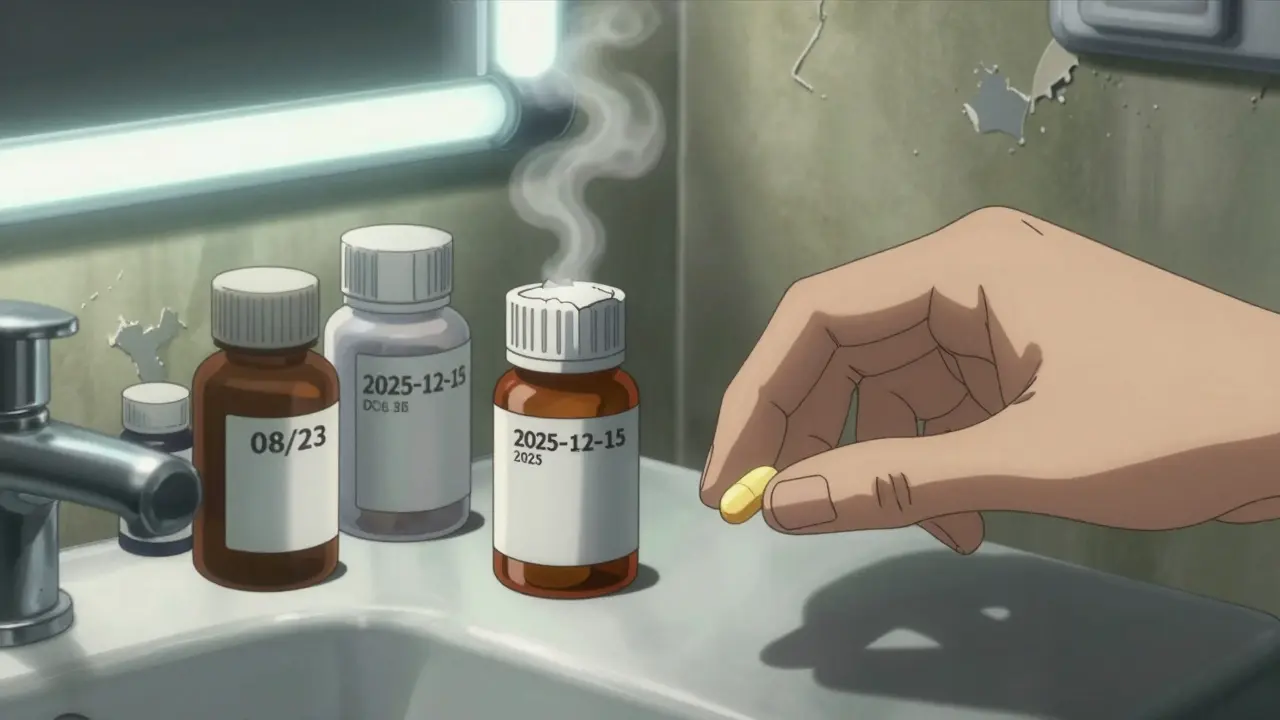
Ever opened a medicine bottle and stared at a date you didn’t understand? You’re not alone. Many people throw out perfectly good pills because they misread the expiration date-or worse, keep taking meds past their safe window without realizing the risk. The truth is, expiration dates aren’t just random numbers. They’re science-backed deadlines that tell you when a drug is guaranteed to work as intended. Get it wrong, and you could be wasting money, risking your health, or even contributing to antibiotic resistance.
What Does an Expiration Date Actually Mean?
The expiration date on your medication isn’t when it turns toxic. It’s the last day the manufacturer guarantees the drug will be fully potent and safe under proper storage conditions. That’s it. The U.S. Food and Drug Administration (FDA) requires this date because drugs can slowly lose strength over time. A painkiller that was 100% effective on the shelf might drop to 85% after two years. For some meds, like antibiotics or heart pills, even a small drop in potency can make them useless-or dangerous.
Manufacturers test each drug under heat, humidity, and light to see how long it stays stable. Most pills and capsules last 1 to 5 years. Eye drops? Usually 6 months to 2 years. Injections? Often 2 to 5 years. These aren’t guesses-they’re results from real lab testing. The FDA’s Shelf Life Extension Program found that 90% of stockpiled drugs kept their strength for years past expiration-if they were sealed and stored perfectly. But your bathroom cabinet? That’s not a controlled lab.
How Expiration Dates Are Shown on Packaging
Don’t assume you know how to read the date just because you’ve seen it before. Labels vary wildly. You might see:
- Expiry: 08/23
- Exp: 2025-12-15
- Use by: 15/12/2025
- Exp date: DEC 2025
- Use before: 12/25
Here’s the key: if it’s only a month and year (like 08/23), it expires on the last day of that month. So 08/23 means August 31, 2023. If you see a full date like 2025-12-15, that’s December 15, 2025. In the EU and Australia, it’s usually day/month/year (15/12/2025). In China, it’s year/month/day (2025-12-15). If you’re unsure, look for the word “Expiry” or “Use by”-that’s your clue.
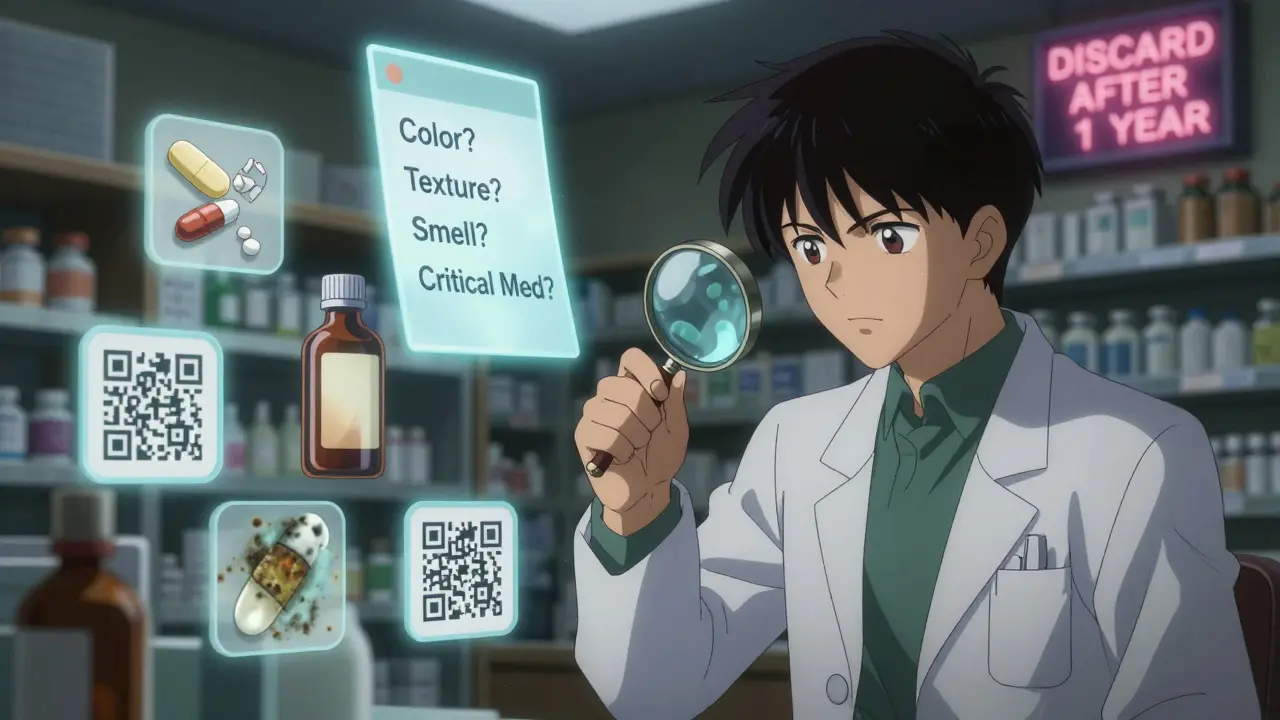
Always check both the original bottle and the pharmacy label. The pharmacy might put a “discard after” date that’s shorter than the manufacturer’s. Why? Because once you open a bottle or pour liquid medicine into a new container, it’s more exposed to air and moisture. Most pharmacies set a 1-year discard date for pills, but liquid antibiotics? Often just 14 days.
When Expired Medication Is Dangerous (Not Just Weak)
Most expired pills won’t hurt you-they’ll just not work as well. But some are different. Taking expired insulin could cause dangerous blood sugar spikes. Expired birth control pills might fail, leading to unplanned pregnancy. Thyroid meds like levothyroxine can lose potency and throw your whole metabolism off. Antiplatelet drugs like aspirin? If they degrade, they might not prevent clots when you need them most.
There’s one famous myth: tetracycline turning toxic after expiration. That was true for old versions from the 1960s. Modern tetracycline doesn’t do this. But that doesn’t mean you should test it. The real danger isn’t poison-it’s inaction. If an antibiotic expires and you take it anyway, it might not kill all the bacteria. That leaves the toughest bugs alive, and they multiply. That’s how antibiotic resistance starts.
People with liver or kidney problems are especially at risk. Their bodies can’t clear degraded chemicals as easily. Even a slightly broken-down drug can build up and cause side effects.
What to Look for Beyond the Date
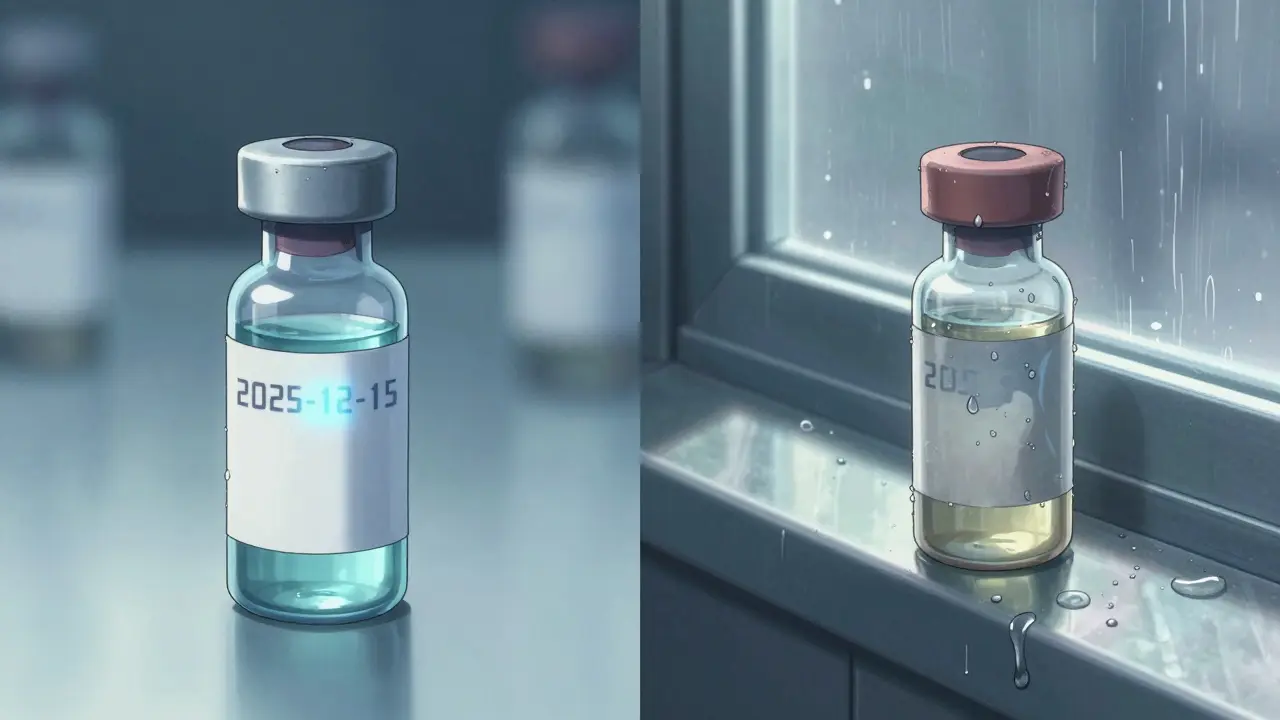
Expiration dates aren’t the whole story. A pill can look fine but be useless. Or it can look weird and still be safe. Here’s what to check:
- Color changes: White pills turning yellow or brown? Ditch them.
- Texture: Crumbly tablets, sticky capsules, or pills that smell weird? Don’t take them.
- Liquids: Cloudy eye drops, syrup with particles, or insulin that looks frosted? Throw it out.
- Smell: If it smells like vinegar, chemicals, or mold, it’s gone bad.
And don’t forget the DIN (Drug Identification Number) or GP number on the label. In Canada and Australia, that number confirms the product is approved. If it’s missing, the bottle might not be legitimate.
Storage Is Just as Important as the Date
Your medicine’s clock starts ticking the moment it leaves the pharmacy. Heat, moisture, and light are the enemies. Storing aspirin in a humid bathroom? It breaks down faster. Leaving insulin in a hot car? It’s useless by lunchtime.
Most pills are fine at room temperature (15-30°C). But check the label. Some need refrigeration. Others must stay in the dark. If the bottle says “store below 25°C,” don’t put it on the windowsill. If it says “keep refrigerated,” don’t leave it on the counter for a week.
And never transfer pills to a pill organizer unless you’re using them within a few days. Those plastic trays don’t protect from moisture or light. Keep the original bottle. It’s designed to shield the drug.
What to Do When You’re Not Sure
When in doubt, talk to your pharmacist. Not your friend. Not Google. The pharmacist. They see hundreds of these questions every week. They know which meds are safe to stretch and which aren’t. Ask them to write the manufacturer’s expiration date on the bottle-not just the pharmacy’s discard date.
For critical meds like insulin, heart meds, or seizure drugs, don’t take chances. If it’s expired, get a new one. The cost of a new prescription is nothing compared to a hospital visit.
Use apps like MedSafe or MyTherapy to track expiration dates. Set reminders 30 days before they expire so you can refill on time. Mark your calendar. Put sticky notes on your medicine cabinet. Do whatever it takes to avoid guessing.
What’s Changing in the Industry
Pharmaceutical companies are starting to fix the problem. Merck now uses smart labels on insulin that change color if the drug gets too hot. The European Medicines Agency now requires thermochromic ink on expiration labels. The FDA encourages QR codes on packaging that link to real-time storage and expiry info. These aren’t gimmicks-they’re lifesavers.
But until every bottle has one, you still need to know how to read the date. The World Health Organization is pushing for global standardization: YYYY-MM-DD format, clear symbols, and consistent labeling. It’s coming. But it’s not here yet.
Final Rule: When to Throw It Out
Here’s your simple checklist:
- ✅ Date passed? → Check the type of medicine.
- ✅ Looks/smells weird? → Throw it out.
- ✅ Critical drug (insulin, birth control, thyroid, heart meds)? → Replace it.
- ✅ Painkiller or allergy pill? → Might still be okay for a few months past date, but don’t rely on it.
- ✅ Uncertain? → Call your pharmacy. Don’t risk it.
Expired meds aren’t always poison. But they’re never guaranteed to work. And in health, that’s the same as being dangerous.
Can I still take medicine after the expiration date?
Most solid medications like pills and capsules remain safe and effective for a while past their expiration date-especially if stored properly. But this doesn’t apply to all drugs. Insulin, liquid antibiotics, nitroglycerin, and birth control pills should never be used after expiration. Even if they look fine, their potency can drop enough to be ineffective or dangerous.
Why do pharmacies put a different expiration date than the manufacturer?
Pharmacies assign a "beyond-use" date based on when you received the medication and how it’s packaged. Once a pill bottle is opened or a liquid is poured into a new container, it’s exposed to air, moisture, and bacteria. The manufacturer’s date assumes the product is sealed and stored perfectly. The pharmacy’s date is more realistic for how you’ll actually use it. For example, a 1-year pharmacy discard date is common, but liquid antibiotics may only last 14 days after being mixed.
How do I know if my medicine has gone bad?
Look for changes in color, texture, or smell. Tablets that crumble, capsules that stick together, liquids that become cloudy or develop particles, or pills that smell sour or chemical are signs of degradation. Even if the date hasn’t passed, if it looks or smells off, don’t take it. Many potency losses happen without visible signs, so if you’re unsure, consult your pharmacist.
Should I store my medications in the refrigerator?
Only if the label says so. Most pills are fine at room temperature (15-30°C). Refrigerating them can actually cause moisture damage if the bottle isn’t sealed properly. Insulin, some eye drops, and liquid antibiotics often need refrigeration. But don’t freeze them. Always check the storage instructions on the packaging or ask your pharmacist.
What’s the best way to dispose of expired medication?
Don’t flush pills down the toilet or throw them in the trash where kids or pets can reach them. The safest way is to take them to a pharmacy or local drug take-back program. Many pharmacies offer free disposal bins. If none are available, mix pills with coffee grounds or cat litter in a sealed bag before tossing them. Remove personal info from the label first.
Marlon Mentolaroc
January 25, 2026 AT 07:00Okay but let’s be real - most people don’t even check the date. I’ve seen grandmas taking antibiotics from 2018 ‘because they still look fine.’ And yeah, sometimes it works. But that’s not medicine, that’s Russian roulette with your liver.
Don Foster
January 26, 2026 AT 20:46Expiration dates are a corporate scam designed to sell more pills. The FDA’s own Shelf Life Extension Program proves most drugs last decades if stored right. Your bathroom is a disaster zone sure but that’s not the manufacturer’s fault. Stop being paranoid and learn to read a label. The date isn’t a death sentence it’s a guideline. And if you’re worried about potency just get a blood test. Problem solved.
Sawyer Vitela
January 27, 2026 AT 08:51Insulin fails. Birth control fails. Nitroglycerin fails. Everything else? Probably fine. Stop overthinking it.
Michael Camilleri
January 29, 2026 AT 06:41People treat medicine like milk. It’s not. It’s not going to make you sick if it’s a month past the date. But you’re not a scientist. You don’t know what degradation looks like. You just see a date and panic. We’ve built a culture of fear around pills because nobody teaches you how to think about chemistry. The real danger isn’t the expired drug it’s the blind obedience to labels written by lawyers not pharmacologists.
Sushrita Chakraborty
January 30, 2026 AT 04:55Thank you for this meticulously researched piece. The distinction between manufacturer expiration and pharmacy beyond-use dates is frequently misunderstood - particularly in regions with limited healthcare access. I have shared this with my community health group in Kolkata, where many patients rely on imported medications with non-localized labeling. The visual indicators (color, texture, odor) are crucial, especially when literacy levels vary. I also appreciate the mention of DIN/GP numbers - such details save lives.
Husain Atther
January 31, 2026 AT 06:19I’ve kept my blood pressure pills for two years past expiration and they still work fine. I store them in a cool drawer, not the bathroom. Honestly, if you’re not taking them for something life-threatening, a little degradation isn’t the end of the world. We’ve got enough anxiety in our lives without turning every pill bottle into a crisis.
siva lingam
February 1, 2026 AT 08:35So you spent 1000 words telling us not to trust expiration dates but also not to trust expiration dates? Cool. Got it. I’ll just guess.
asa MNG
February 3, 2026 AT 02:30OMG I JUST REALIZED I’VE BEEN KEEPING MY INSULIN IN THE CAR FOR 3 MONTHS 😭😭😭 THANK YOU FOR THIS POST I’M GOING TO THE PHARMACY RIGHT NOW 💀💀💀 #medsafety #lifealert 🚑💊
lorraine england
February 3, 2026 AT 18:00My pharmacist told me that for most OTC stuff like ibuprofen or antihistamines, they’re usually fine up to a year past the date if they’re sealed and not exposed to heat. But if it’s something like epinephrine or thyroid meds? No way. I always write the date on a sticky note and put it on my medicine cabinet. It’s dumb, but it works. And yes - the bathroom is a death trap for pills. I learned that the hard way after my aspirin turned into a chalky mess.