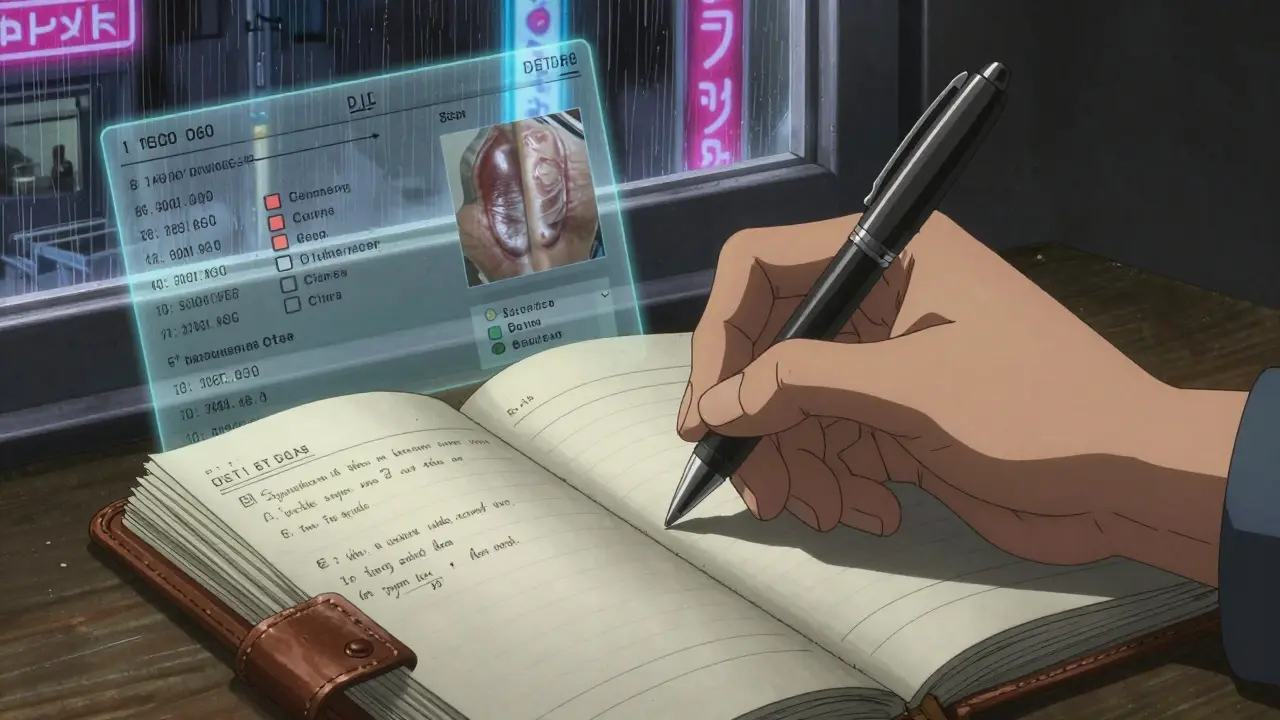
When you start a new medication, it’s normal to wonder: Is this feeling because of the drug, or something else? Dizziness after taking blood pressure pills? Nausea after antibiotics? A rash that showed up two days after starting a new supplement? These aren’t just random glitches-they could be signs of a drug reaction. And the best way to find out isn’t to guess. It’s to track.
A symptom diary isn’t just a notebook. It’s your personal evidence log. It helps you and your doctor separate real drug reactions from coincidences. Without it, you might be told it’s "just stress" or "aging," when the real culprit is a medication you’re taking. Studies show that people who keep detailed symptom records are 83% more likely to get the right diagnosis than those who rely on memory alone. And in some cases, it’s the difference between a dangerous reaction being caught early-or ignored until it’s too late.
What Exactly to Write Down
Don’t just write "I felt sick." That’s not enough. You need specifics. The National Institute on Aging (NIA) and FDA guidelines say your diary must include nine key pieces of information for every entry.
- Date and time of medication taken - to the minute. If you took your pill at 8:17 a.m., write it down. Not "morning." Not "around 8." Precision matters because reactions often happen within minutes or hours.
- Exact dosage and how you took it - Was it 25 mg of lisinopril? Did you take it with food? On an empty stomach? Swallowed or crushed? Route matters. A patch, a pill, an injection-they all affect how and when the drug hits your system.
- All other medications and supplements - Including ibuprofen, vitamin D, fish oil, or herbal tea. Many reactions happen because of combinations, not single drugs. If you didn’t write it down, your doctor won’t know to check it.
- What you felt, exactly - "Headache" is too vague. Was it a throbbing pain behind your left eye? A tight band around your head? Where did it start? Where did it spread? Use your own words, but be detailed.
- When the symptom started after taking the drug - Did it begin 10 minutes later? 4 hours? 2 days? Timing tells the story. Anaphylaxis hits fast. Some rashes take days. This is how doctors decide if it’s even possible the drug caused it.
- How long it lasted - Did it go away in 20 minutes? Did it last all day? Did it come back the next day?
- What you were doing at the time - Were you exercising? In a hot room? Stressed at work? Sleeping? Stress, heat, and activity can mimic or worsen drug reactions. Your doctor needs to know the context.
- What you did to feel better - Did you lie down? Take antihistamines? Drink water? Did anything help? This helps identify safe coping strategies and rule out harmful ones.
- Whether it got better or worse - Did the symptom resolve? Did it return? Did it turn into something else?
For severity, use the Common Terminology Criteria for Adverse Events (CTCAE) scale. It’s simple:
- Grade 1 - Mild. Annoying, but doesn’t interfere with daily life.
- Grade 2 - Moderate. Limits some activities. You might need to rest more.
- Grade 3 - Severe. You can’t do normal activities. Might need medical help.
- Grade 4 - Life-threatening. Requires emergency care.
- Grade 5 - Death.
Don’t overthink it. Just pick the number that fits. You don’t need to be a doctor. You just need to be honest.
Why Digital Apps Work Better Than Paper
Paper diaries sound simple. But most people abandon them within 72 hours. Why? Because they’re slow. You forget. You lose the notebook. You don’t have time to write when you’re dizzy or nauseous.
Apps like Medisafe, CareClinic, and MyTherapy fix this. They:
- Send you reminders to log symptoms right after you take your pill.
- Auto-timestamp entries so you don’t have to guess the time.
- Let you take photos of rashes or swelling-critical for skin reactions. One study found visual evidence improved diagnosis accuracy by 78%.
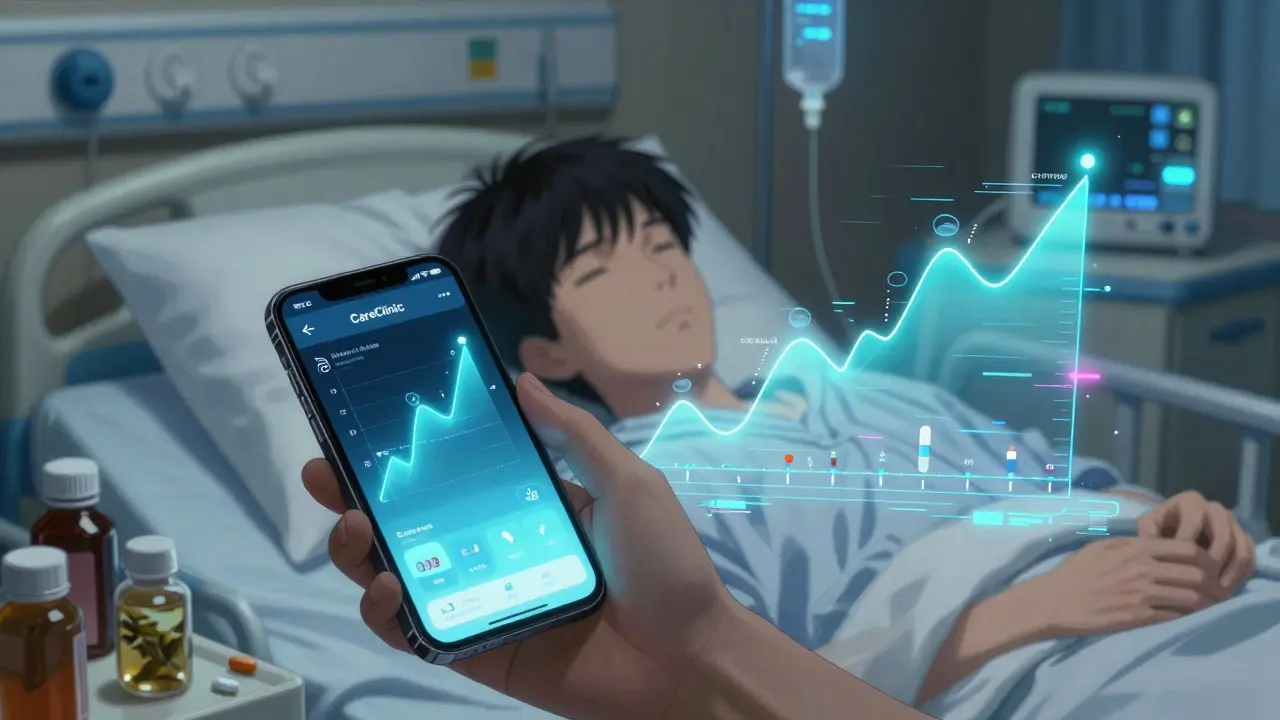
- Generate charts that show exactly when symptoms spiked after a dose. No more saying "I think it happened after the third pill." The app shows you.
And here’s the kicker: if you use an app that meets FDA’s 21 CFR Part 11 standards, your data can be shared directly with your doctor’s electronic health record. That means your notes become part of your official medical file-not just a scrap of paper tucked in a drawer.
What Not to Do
Many people make the same mistakes. Here’s what to avoid:
- Writing down every little thing - Not every headache or burp is a drug reaction. If you log every minor side effect, you’ll drown in noise. Focus on new, unusual, or severe symptoms. The Institute for Safe Medication Practices found that 41% of diaries were too cluttered, delaying real action by over 3 days.
- Waiting until the end of the day - Memory fades fast. After 48 hours, your recall becomes unreliable. The NIA says: document within 15 minutes for acute reactions. For chronic symptoms, set a daily alarm.
- Ignoring concurrent meds - If you took Tylenol, CBD oil, or a new multivitamin, write it down. People forget these all the time. But they’re often the hidden cause.
- Not including environmental factors - Heat, stress, lack of sleep, or even a change in altitude can trigger symptoms that look like drug reactions. Your doctor needs to know the full picture.
How to Make It Stick
Consistency is everything. Here’s how to build the habit:
- Link it to your pill routine - Log symptoms right after you take your medication. Make it part of your routine, like brushing your teeth.
- Use checklists - Print a simple form with the 9 key items. Check them off. It’s faster than writing full sentences.
- Synchronize with your phone - Use your phone’s health app to remind you to log. Set a daily alarm at the same time you take your meds.
- Review weekly with your doctor - Bring your diary to every appointment. Even if nothing seems wrong. Patterns show up over time.
People who do this report better communication with their doctors. One Reddit user shared how their neurologist dismissed their dizziness-until they showed a 14-day diary linking it to levodopa doses. Within 48 hours, the dose was adjusted. That’s the power of data.
When to Call Your Doctor
Not every symptom needs an emergency visit. But some do. If your diary shows:
- Sudden swelling of the face, lips, or throat
- Difficulty breathing or wheezing
- Severe rash with blisters or peeling skin
- High fever with chills
- Unexplained bruising or bleeding
- Confusion, seizures, or loss of consciousness
-call 911 or go to the ER immediately. These are signs of serious, potentially life-threatening reactions. Your diary won’t change that. But it will help doctors treat you faster and know what to test for.
For less urgent symptoms-like mild nausea, fatigue, or a small rash-schedule a follow-up. Bring your diary. Say: "I’ve been tracking this. Here’s what I’ve noticed. Can we figure out if this is the drug?"
What Happens After You Submit Your Diary
Once you share your data, your doctor might:
- Adjust your dosage
- Switch you to a different medication
- Order blood tests or allergy panels
- Refer you to a specialist
- Report it to the FDA’s adverse event database
And here’s something most people don’t know: your diary could help others. The FDA now accepts patient-reported data directly in their adverse event system. If enough people report the same reaction, it can trigger a drug safety review. Your notes might prevent someone else from having the same problem.
Final Tip: Start Now, Even If You Feel Fine
You don’t have to wait for a reaction to start. Begin your diary the day you start a new drug. Track your baseline. Note how you feel before any side effects show up. That way, when something changes, you’ll know for sure it’s new. And you’ll have proof.
Drug reactions aren’t always obvious. But they’re always reportable. And the best tool you have? A clear, honest, consistent record. Not guesswork. Not memory. Just facts. That’s how you take control.
What if I forget to log a symptom?
If you forget, write it down as soon as you remember-but note the actual time it happened if you can. For example: "Forgot to log this. Symptom started around 3 p.m. on Tuesday. Felt dizzy for 2 hours." Don’t guess. Be honest about the delay. Doctors understand mistakes. They just need the truth.
Do I need to log every single pill I take?
Yes. Even over-the-counter drugs, supplements, and herbal remedies. Many reactions happen because of combinations. A common example: mixing blood thinners with fish oil or ginkgo biloba. If you don’t list it, your doctor won’t know to check for interactions.
How long should I keep the diary?
Keep it for at least 2 weeks after starting a new drug-or until the reaction stops and your doctor confirms it’s resolved. If you’re on long-term medication, keep it going. Some reactions appear after months. You never know when a pattern will emerge.
Can I use a free app or should I pay for one?
Free apps like Medisafe and MyTherapy are fully functional for personal use. You don’t need to pay unless you want extra features like family sharing or advanced analytics. The key is consistency-not cost. Use whatever you’ll actually stick with.
What if my doctor doesn’t care about my diary?
If your doctor dismisses it, ask why. If they say, "We don’t use those," it’s time to find a new provider. The FDA and NIH now recommend patient-reported data as part of standard care. A doctor who ignores your diary isn’t following current guidelines. Your health is too important to be ignored.
Glendon Cone
January 1, 2026 AT 03:47Henry Ward
January 1, 2026 AT 23:04Aayush Khandelwal
January 2, 2026 AT 00:52Sandeep Mishra
January 4, 2026 AT 00:36Kelly Gerrard
January 4, 2026 AT 16:13kelly tracy
January 4, 2026 AT 16:14srishti Jain
January 5, 2026 AT 13:05Cheyenne Sims
January 6, 2026 AT 15:55henry mateo
January 7, 2026 AT 05:21