When you walk into a pharmacy and get a pill labeled as a generic version of your brand-name drug, what do you think? That it’s cheaper? Less effective? Or maybe you don’t think about it at all. But for doctors and pharmacists around the world, the decision to prescribe or dispense a generic isn’t just about cost-it’s shaped by culture, regulation, trust, and survival.
Europe: Generics as Policy, Not Preference
In Germany, France, and the UK, generics aren’t an option-they’re the default. Healthcare systems here are under constant pressure to control spending. Governments don’t just encourage generics; they mandate them. Pharmacists can swap a brand-name drug for a generic without asking the doctor. In some cases, they’re even required to. Doctors in these countries don’t fight it. They’ve seen the data: generics work just as well. A 2023 study in the European Journal of Health Economics found no difference in treatment outcomes between brand-name statins and their generic equivalents in over 2 million patients. So why resist? Because the system works. Generic substitution saves European health systems billions each year. Germany alone saves an estimated €3.2 billion annually just from generic prescriptions. But there’s a catch. Growth is slowing. The market is mature. Most common drugs already have generics. The real action now is in complex generics-injectables, inhalers, and specialty formulations. These are harder to copy, harder to regulate, and still expensive to produce. European providers are watching closely, waiting to see if quality keeps up as demand rises.Asia-Pacific: Generics as Lifeline
In India and China, generics aren’t just affordable-they’re the backbone of healthcare. In rural India, where many families live on less than $3 a day, a brand-name heart medication might cost 10 times more than its generic version. There’s no choice. Doctors prescribe generics because their patients can’t afford anything else. But this isn’t just about poverty. It’s about scale. India produces about 20% of the world’s generic drugs by volume. Nearly 40% of the generic pills used in the U.S. come from Indian factories. Indian manufacturers don’t just copy drugs-they’ve built entire ecosystems around low-cost production, regulatory efficiency, and export logistics. Chinese providers are even more aggressive. The government has made generics a national priority. In 2024, China approved over 1,200 new generic drugs-more than any other country. Doctors there are trained from medical school to see generics as the standard. There’s no stigma. No hesitation. If a drug works, and it’s cheap, it’s prescribed. The result? Asia-Pacific is growing at over 6% per year-faster than any other region. And it’s not just oral tablets. Complex generics like insulin pens, inhalers for asthma, and chemotherapy infusions are booming. Hospital pharmacies in India and Thailand now stock more specialty generics than ever before.United States: The Paradox of High Volume, Low Trust
In the U.S., generics make up 90% of all prescriptions. That’s the highest rate in the world. Yet, they account for only about 15% of total drug spending. Why? Because brand-name drugs are insanely expensive. A single dose of a new cancer drug can cost $15,000. A generic version? Maybe $300. Doctors here rely on generics more than ever. But trust is shaky. There have been high-profile cases of contaminated pills, delayed shipments, and shortages. In 2023, over 150 generic drugs were in short supply in the U.S.-many of them critical for heart conditions, seizures, and anesthesia. Providers know the problem: supply chains are stretched thin. Most U.S. generics come from India and China. When a factory in Hyderabad gets shut down for FDA violations-or when shipping delays hit because of geopolitical tensions-doctors scramble. They’ve had patients miss doses because the generic ran out. That erodes confidence. Still, most U.S. doctors will tell you: if it’s FDA-approved, it’s safe. But they also know the system is fragile. The next big wave of patent expirations-drugs like ustekinumab and vedolizumab-are worth over $25 billion in annual sales. When those generics hit, the U.S. market will be flooded. Will quality keep up? Will supply chains hold? That’s what doctors are watching.
Japan: Price Cuts and Patient Resistance
Japan has one of the most aggressive generic policies in the world. Every two years, the government slashes the price of brand-name drugs by 10-20%. That forces doctors to switch. By 2025, over 80% of prescriptions in Japan were for generics. But here’s the twist: patients resist. Many older Japanese patients believe brand-name drugs are stronger, purer, better. They’ll ask for the original. Some even pay out of pocket to avoid generics. Doctors have to navigate this. They explain the science. They show data. They use the same evidence that works in Europe. But cultural trust in established brands runs deep. So while Japan leads in policy, it lags in public perception. The real battle isn’t with cost-it’s with fear.Emerging Markets: Generics as the Only Option
In Brazil, Turkey, and parts of Africa, generics aren’t just preferred-they’re the only thing available. Public health systems can’t afford brand-name drugs. Private clinics can’t charge patients $5,000 for a monthly treatment. Providers in these countries don’t debate whether generics are good enough. They know they are. The real challenge is access. Many rural clinics still don’t have reliable supplies. A patient might get a generic today, but not next month. Quality control is inconsistent. Some generics are imported from unknown manufacturers with no oversight. Still, providers are adapting. In Nigeria, community health workers now carry lists of approved generic equivalents. In Mexico, pharmacies are required to display generic prices next to brand names. These aren’t perfect systems-but they’re the only ones working.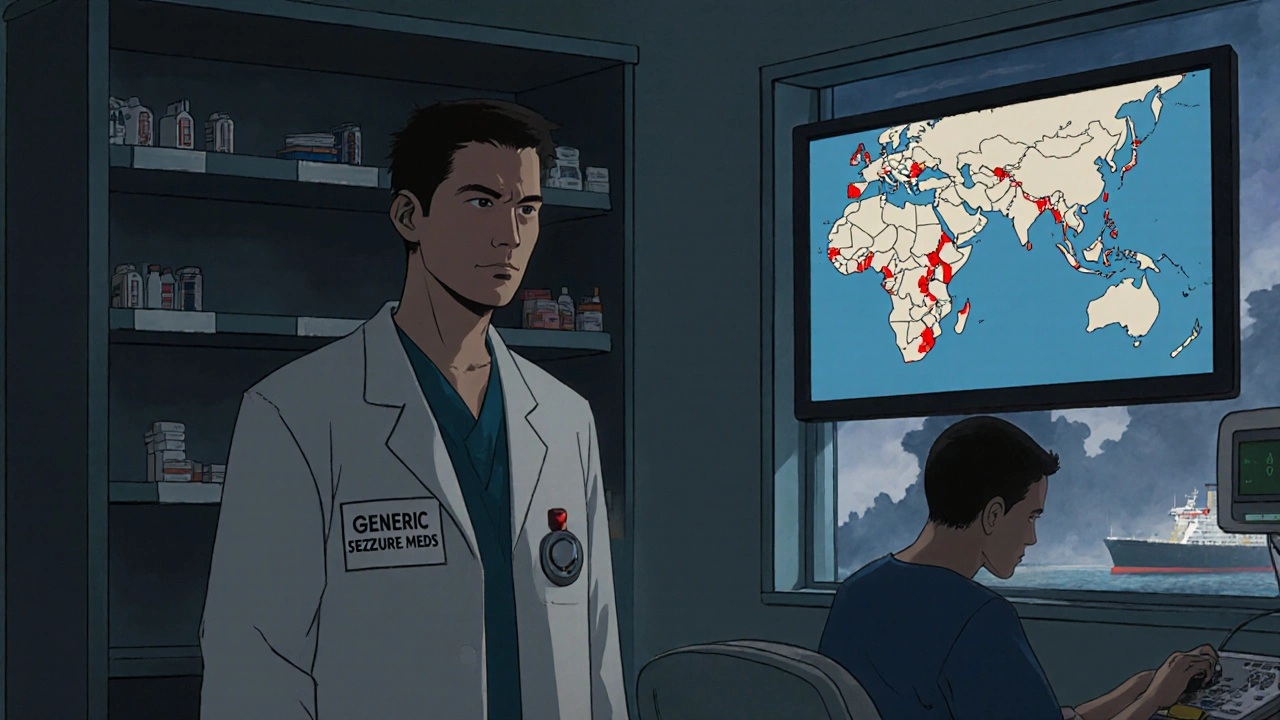
The Future: Complex Generics and Global Interdependence
The next big shift isn’t in pills. It’s in injectables, inhalers, and biologics. These aren’t simple copies. They’re complex products requiring advanced manufacturing. The global market for specialty generics is expected to grow from $76 billion in 2025 to nearly $186 billion by 2033. Doctors in the U.S., Europe, and Asia are all watching this space. A generic insulin pen that works as well as the brand? That could save millions of diabetics. A generic monoclonal antibody for rheumatoid arthritis? That’s a $10,000-a-year savings per patient. But here’s the catch: these drugs need global supply chains. A single batch of a complex generic might be manufactured in India, tested in Germany, packaged in Singapore, and shipped to Brazil. One broken link-regulatory delay, customs hold, factory shutdown-and patients suffer. Providers know this. They’re not just prescribing drugs anymore. They’re managing risk. They’re learning which manufacturers have clean FDA records. Which countries have reliable quality control. Which generics have real-world data backing them up.What This Means for You
If you’re taking a generic drug, you’re part of a global system. The pill in your hand might have been made in India, tested in the U.S., and approved in the EU. Your doctor didn’t choose it randomly. They chose it because it’s safe, effective, and necessary. Generics aren’t a compromise. They’re a solution. A solution born out of necessity in poor countries, out of policy in rich ones, and out of innovation everywhere. The next time you get a generic prescription, don’t assume it’s second-rate. Ask your doctor: "Is this FDA-approved? Is it from a reliable manufacturer? Has it been used successfully in other countries?" Those questions matter more than the brand name on the bottle.Are generic drugs really as effective as brand-name drugs?
Yes. In nearly all cases, generic drugs contain the same active ingredients, in the same strength and dosage form, as brand-name drugs. Regulatory agencies like the FDA, EMA, and WHO require generics to meet strict bioequivalence standards-meaning they work the same way in the body. Studies involving millions of patients across Europe and the U.S. show no meaningful difference in outcomes for conditions like high blood pressure, diabetes, and depression.
Why do some doctors hesitate to prescribe generics?
In some countries, like the U.S. and Japan, doctors may hesitate due to patient preferences or past experiences with supply shortages. In the U.S., there have been cases where a generic version had different inactive ingredients that caused rare side effects, or where a drug suddenly became unavailable. In Japan, cultural trust in brand-name drugs runs deep, especially among older patients. But these are exceptions-not the rule. Most doctors prescribe generics confidently when they’re available and approved.
Why are generics cheaper if they’re the same?
Generics are cheaper because they don’t need to cover the massive costs of drug discovery, clinical trials, and marketing that brand-name companies do. Once a patent expires, other manufacturers can produce the same drug without repeating those expensive steps. Production costs are lower in countries like India and China due to labor, infrastructure, and government support. The savings are passed on to patients and health systems.
Can I trust generics made in India or China?
Many of the world’s most trusted generic drugs come from India and China. Over 40% of U.S. generics are made in India, and many are approved by the FDA after rigorous inspections. While there have been quality issues at some factories in the past, regulatory agencies now conduct regular audits. Look for generics approved by the FDA, EMA, or WHO-these have passed the same safety and effectiveness tests as brand-name drugs.
Will generics become even more common in the future?
Absolutely. Between 2025 and 2030, over $230 billion in annual sales from brand-name drugs will lose patent protection-including major treatments for cancer, autoimmune diseases, and heart conditions. As these drugs go generic, providers worldwide will rely on them even more. The biggest growth will be in complex generics like injectables and inhalers, which are harder to copy but offer huge cost savings. Generics aren’t going away-they’re becoming the standard.
Jacob Keil
November 28, 2025 AT 21:02generics are just big pharma's way of keeping you hooked on their crap while they make billions off the brand names anyway. the system is rigged. you think your pill is safe? lol. check the factory in hyderabad that got shut down last year. yeah. that one. same batch as yours.
Rosy Wilkens
November 29, 2025 AT 22:37Let me be perfectly clear: the FDA’s approval process for generics is a farce. The inspections are scheduled weeks in advance. The labs are owned by the same conglomerates that manufacture the drugs. And don’t even get me started on the Chinese supply chain-every third pill is laced with industrial fillers. This isn’t healthcare. It’s a global biohazard experiment.
Andrea Jones
December 1, 2025 AT 01:16Okay but have you ever actually talked to someone in rural India who’s been on a generic heart med for 10 years? Or a single mom in Ohio who went from paying $400/month to $30? This isn’t about corporate greed-it’s about people staying alive. The system’s messy? Sure. But it’s saving lives. That’s worth fighting for.
Justina Maynard
December 2, 2025 AT 16:11The irony is that while Americans obsess over the origin of generics, they’re the ones consuming 40% of the world’s supply-mostly from India and China. We outsource production, then panic when quality slips. We don’t want to pay for innovation, but we demand perfection. That’s not logic. That’s cognitive dissonance on a national scale.
Evelyn Salazar Garcia
December 3, 2025 AT 04:38USA first. No more foreign pills. Period.
Clay Johnson
December 3, 2025 AT 14:18Generics are the only honest product in modern medicine. No branding. No marketing. Just chemistry. The system rewards spectacle over substance. We worship the label, not the molecule. The pill doesn’t care if it’s branded or generic. Your body does.
Jermaine Jordan
December 4, 2025 AT 16:55Imagine a world where every child with asthma has access to an inhaler. Where a diabetic doesn’t choose between insulin and groceries. Generics aren’t a compromise-they’re a revolution. And we’re standing at the edge of the biggest wave in medical history. Don’t look away. Don’t fear it. Join it.
Chetan Chauhan
December 4, 2025 AT 22:52Everyone says India makes 20% of the world's generics but no one talks about how 70% of those are sold back to the US. We’re exporting our healthcare crisis to India and then pretending we’re heroes for buying it back cheap. Wake up. We’re the problem.
Phil Thornton
December 5, 2025 AT 05:27My cousin in Texas got a generic seizure med. Had a seizure. Then the brand. No seizure. Coincidence? I think not.
Pranab Daulagupu
December 6, 2025 AT 19:26The bioequivalence standards are robust. The real bottleneck is supply chain resilience-not efficacy. We need to invest in diversification, not distrust. India and China aren’t enemies-they’re partners in global health. Let’s build bridges, not walls.
Barbara McClelland
December 8, 2025 AT 15:54Hey, I used to be scared of generics too-until my mom got her blood pressure meds for $5 instead of $400. Now I tell everyone: if it’s FDA-approved, it’s legit. Don’t let fear drive your health choices. Ask questions. Know your source. But don’t reject the solution because it’s cheap.
Alexander Levin
December 9, 2025 AT 22:42💉💊 The FDA is in bed with Big Pharma. You think they’d let a Chinese factory make your heart med if it wasn’t rigged? 🤫 #GenericsAreAScam
Ady Young
December 10, 2025 AT 05:09It’s funny how we trust generic electronics but freak out over generic pills. Same manufacturing logic. Same global supply chains. The only difference? Our bodies are more emotional than our phones. Maybe we need to chill.
Travis Freeman
December 11, 2025 AT 05:21As someone who grew up in a village where the only medicine was a generic tablet your uncle brought from the city-let me say this: it saved my sister’s life. We didn’t have a choice. But we didn’t need one. It worked. That’s all that matters. The world is connected. Our health should be too.
Sean Slevin
December 12, 2025 AT 20:37Think about it: we spend billions on brand-name drugs that do the same thing as generics... and then we wonder why healthcare is unaffordable? It’s not the pills. It’s the branding. The logos. The ads. The corporate egos. The system is designed to make us believe that expensive = better. But science doesn’t care about your marketing budget.