Why Healthcare Communication Training Isn’t Just Nice to Have
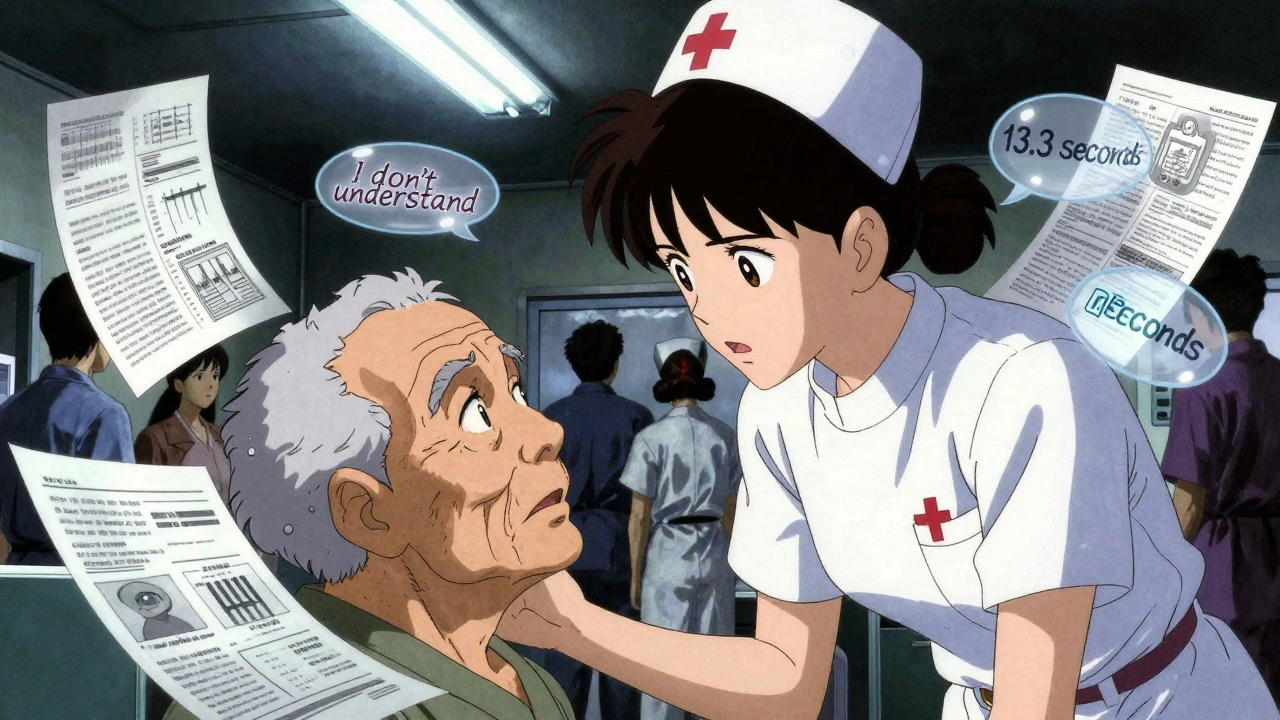
It’s not about being polite. It’s about survival. In hospitals across the U.S., poor communication is linked to 80% of serious medical errors, according to The Joint Commission. Patients don’t understand their diagnoses. Nurses miss critical handoffs. Doctors interrupt before patients finish speaking-on average, in just 13.3 seconds. These aren’t rare mistakes. They’re systemic failures. And institutional generic education programs are the only structured fix we have.
These aren’t fluffy workshops on "being nice." They’re evidence-based, high-stakes training programs designed to fix the broken links in healthcare communication. From emergency rooms to rural clinics, these programs teach clinicians how to listen, explain, and connect-skills that directly reduce errors, lower malpractice claims, and boost patient satisfaction.
What These Programs Actually Teach
Generic doesn’t mean basic. Institutional communication programs are built on decades of research. The Academy of Communication in Healthcare (ACH) pioneered the framework in the 1990s, and today, their curriculum is the gold standard. Programs like the Program for Excellence in Patient-Centered Communication (PEP) at the University of Maryland focus on specific, measurable behaviors: eliciting the patient’s story, responding with empathy, and confirming understanding.
It’s not theory. It’s practice. Mayo Clinic’s online course uses 12 standardized patient videos to show exactly how to set boundaries, manage difficult conversations, and read non-verbal cues. Northwestern University goes further: students must hit an 85% proficiency threshold on simulated patient interactions before moving forward. Mastery learning. No passing by luck. You either do it right-or you practice until you do.
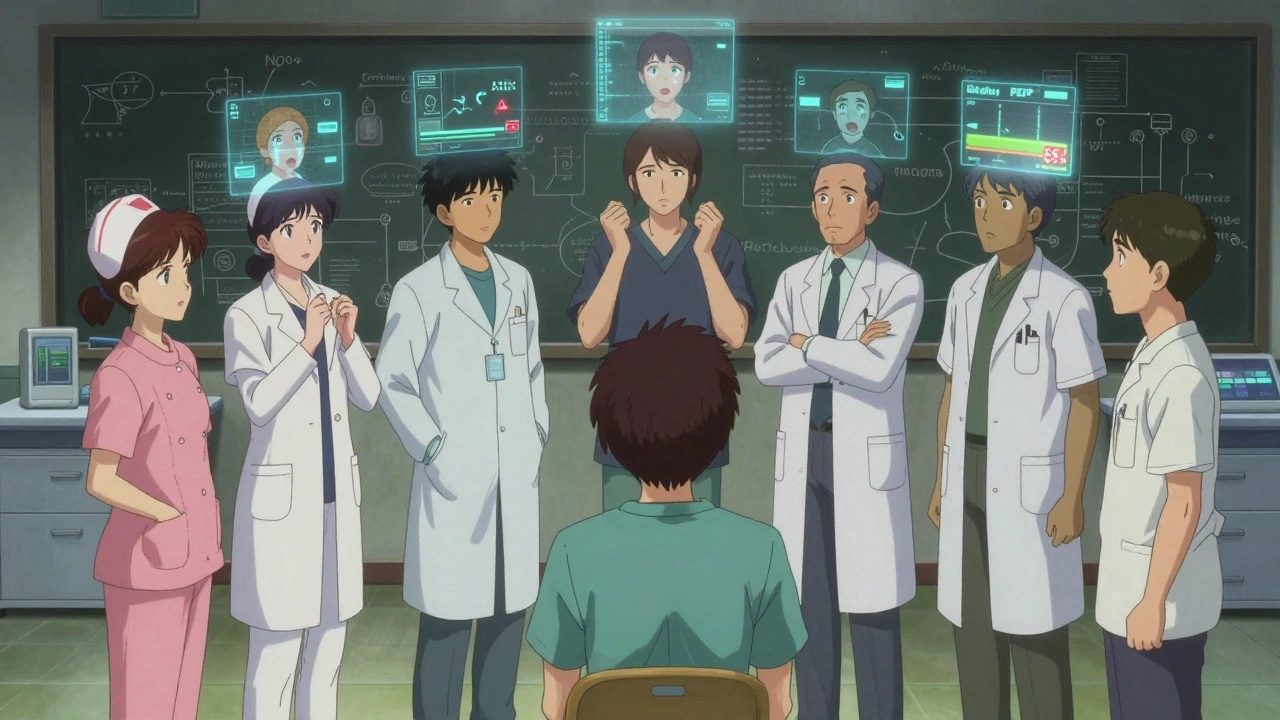
And it’s not just about talking to patients. These programs cover interprofessional communication too. When a nurse, pharmacist, and doctor don’t speak the same language, patients pay the price. AHRQ found that 65% of communication failures happen between staff-not between provider and patient. So programs now train teams to use shared language, structured handoffs, and clear role definitions.
Real Programs, Real Results
Not all programs are the same. Each targets a different need.
- SHEA’s online course (Society for Healthcare Epidemiology of America) trains infection preventionists on policy advocacy, media relations, and social media. One nurse used it to correct vaccine misinformation reaching 50,000 people monthly.
- UT Austin’s HCTS focuses on public health emergencies. Their 2022 pandemic module was built after CDC reports showed 40% of early outbreak delays were communication-related.
- PEP at Maryland improved patient satisfaction scores by 23% compared to generic training-because it centers the patient’s voice, not the provider’s agenda.
- Johns Hopkins’ Master’s in Communication offers deep theory for those who want to lead change, but it’s not for frontline staff needing quick tools.
The numbers don’t lie. Physicians with communication training see 30% fewer malpractice claims. Nurses who complete boundary-setting modules report 40% less burnout. Hospitals with formal programs see higher HCAHPS scores-and CMS ties 30% of reimbursements to those scores.
The Hidden Barriers: Why Training Fails
Even the best programs hit walls. The biggest problem? Time. A 2023 AAMC survey found 58% of healthcare workers said they knew the right communication skills-but didn’t have time to use them in 15-minute appointments.
Another issue: resistance. About 15-20% of clinicians still believe communication is "not teachable." They think it’s personality, not skill. But Northwestern’s data shows mastery learning changes that. After four to six simulations, even skeptical residents start to see results.
Then there’s the "champion gap." Programs succeed when someone on the team-often a senior nurse or respected physician-models the behavior. Mayo Clinic found adoption jumped to 73% when champions were identified from each unit. Without them, training becomes a checkbox, not a culture.
And funding? Only 42% of hospital-based programs have dedicated budgets. Most rely on grants or volunteer faculty. That’s why partnerships like the one between Mayo Clinic and SHEA, announced in February 2024, are becoming more common. Commercial and academic collaboration might be the only way these programs survive.
Equity Is Now Part of the Curriculum
Communication training used to ignore race, language, and culture. Not anymore. AHRQ’s 2023 report found a 28% gap in communication satisfaction between white patients and minority patients. That’s unacceptable.
Today, 74% of new programs include cultural humility training. UT Austin added three new HCTS modules in January 2024 focused on equity-focused communication. Programs now teach how to navigate language barriers without interpreters, how to recognize implicit bias in questioning, and how to adjust explanations for low health literacy.
It’s not just about being fair. It’s about effectiveness. Patients who feel understood are more likely to follow treatment plans, show up for appointments, and trust their care team. Communication isn’t just a soft skill-it’s a clinical intervention.
How to Implement This in Your Facility
If you’re trying to bring this kind of training to your hospital or clinic, here’s what works:
- Start with data. Review patient surveys, complaint logs, and HCAHPS scores. Where are the gaps? Is it discharge instructions? Pain management? Follow-up calls?
- Pick 3-5 behaviors to focus on. Don’t try to fix everything. Start with one high-impact skill-like asking open-ended questions or checking for understanding.
- Use real scenarios. Role-play with actual patient cases from your unit. Generic examples don’t stick.
- Embed it into workflow. Add prompts in your EHR: "Did you confirm understanding?" "Did you ask what matters most to you today?"
- Find your champions. Identify one or two respected staff members who’ll model the behavior and encourage others.
Implementation takes time. Tulane University’s study showed skills plateau at 70% proficiency without ongoing reinforcement. That means monthly refreshers, peer feedback circles, and leadership modeling-not a one-time workshop.
The Future: AI, Telehealth, and Mandatory Training
The field is evolving fast. ACH is testing AI tools that give real-time feedback during simulated conversations-cutting skill acquisition time by 22%. Telehealth platforms now include virtual communication modules. 35% of new programs teach how to build trust over video when you can’t see a patient’s full body language.
The National Academy of Medicine just recommended making communication training mandatory for all clinicians. If that happens, it won’t be optional anymore. It’ll be part of licensure.
And the market is booming. The global healthcare communication training industry hit $2.8 billion in 2023. Forty-seven universities now offer master’s degrees in health communication-up from 29 in 2019. This isn’t a trend. It’s a transformation.
Final Thought: Communication Is the Treatment
Medication, surgery, diagnostics-these are tools. But without clear, compassionate communication, they’re useless. A patient who doesn’t understand their diagnosis won’t take their pills. A family that doesn’t trust the care team won’t follow discharge instructions. A nurse who feels unheard won’t speak up when something’s wrong.
These institutional programs aren’t about making clinicians "better talkers." They’re about fixing a broken system. They’re about giving patients the clarity and dignity they deserve. And they’re about saving lives-not by adding more tests, but by making sure the right information gets through.
Are healthcare communication programs only for doctors?
No. These programs are designed for everyone in the care team: nurses, pharmacists, social workers, administrative staff, and even interpreters. Communication failures often happen between team members, not just between providers and patients. Programs like those from SHEA and Northwestern specifically train non-physician staff on interprofessional communication, handoffs, and policy advocacy.
How long does it take to see results from communication training?
You’ll see small improvements within weeks-like fewer patient complaints or better discharge comprehension. But real behavioral change takes 3 to 6 months. Skills plateau without reinforcement. That’s why top programs include monthly check-ins, peer feedback, and EHR prompts. Long-term retention is highest in programs using mastery learning, like Northwestern’s, where learners repeat simulations until they hit proficiency.
Do these programs work in rural or underfunded clinics?
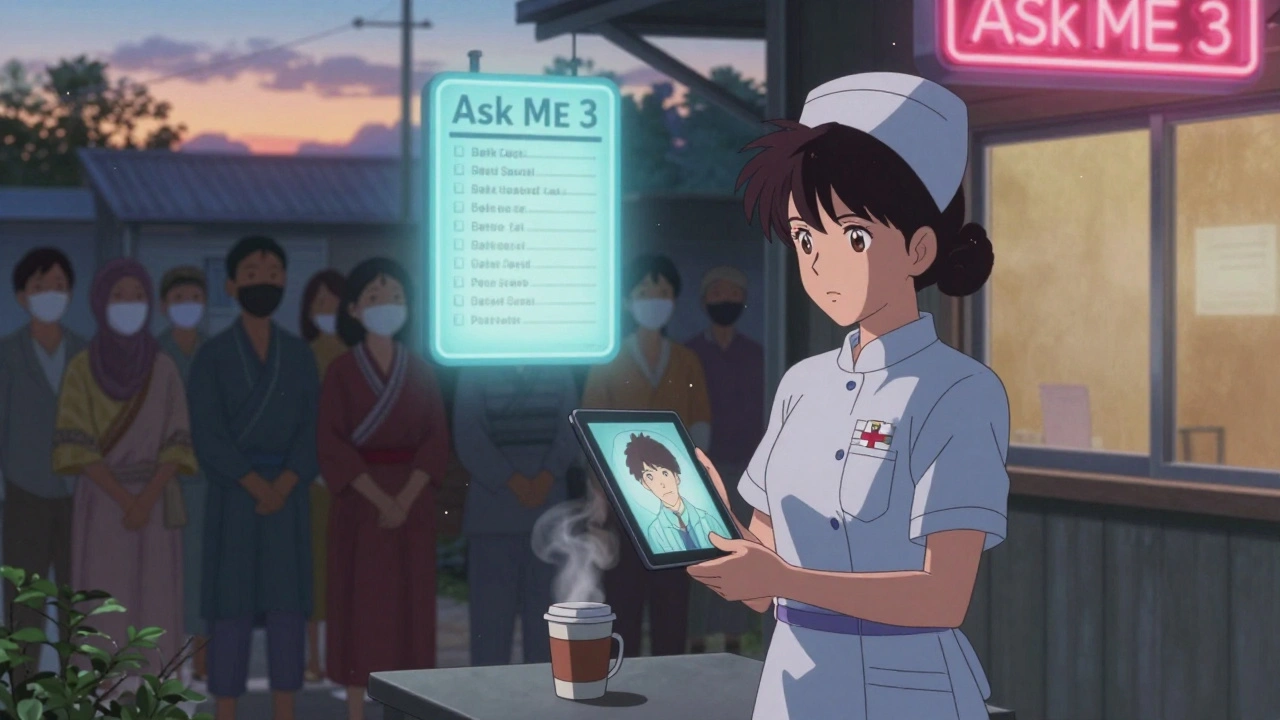
Yes-but they need adaptation. Rural clinics often lack simulation labs or dedicated training staff. Free, self-paced options like UT Austin’s HCTS courses are ideal. Focus on low-resource strategies: using checklists, training one champion per unit, and integrating prompts into existing workflows. Even simple tools like the "Ask Me 3" program (What’s my main problem? What do I need to do? Why is it important?) can dramatically improve outcomes without expensive infrastructure.
Is communication training covered by insurance or reimbursement?
Not directly. But CMS ties 30% of hospital payments to HCAHPS scores, which include communication questions. Hospitals with strong communication programs see higher reimbursement. Some institutions use this to justify funding. Also, many programs offer continuing education credits (AMA PRA, ASWB, IPCE) that help staff meet licensing requirements-making them indirectly reimbursable through professional development budgets.
Can AI replace human communication training?
No-but it can help. AI tools are being used for feedback on simulated conversations, identifying patterns in speech (like interruptions or jargon), and tracking skill progress. ACH’s pilot AI tools cut learning time by 22%. But empathy, cultural awareness, and adapting to emotional cues still require human interaction. AI is a coach, not a replacement. The most effective programs combine AI feedback with live role-play and mentorship.
What’s the biggest mistake facilities make when launching these programs?
Treating it like a one-time training event. You can’t fix years of poor communication with a single workshop. The most successful programs integrate skills into daily workflow-using EHR prompts, peer feedback, and leadership modeling. They also measure outcomes over time, not just satisfaction surveys. If you don’t track whether communication behaviors actually changed in real patient encounters, you’re just checking a box.
Ashley Farmer
December 8, 2025 AT 08:04These programs aren’t just about teaching doctors to be nicer. They’re about fixing a system that’s been breaking patients for decades. I’ve seen nurses get yelled at for asking if a patient understood their discharge instructions-because the doctor was in a rush. This isn’t soft skills. It’s clinical safety.
Jennifer Anderson
December 9, 2025 AT 14:38im not gonna lie i thought this was gonna be another boring hr workshop but the way northwestern does it-like actual sims with real patient actors-changed my whole view. i used to think communication was just ‘being nice’ now i get it’s like learning to suture. you mess up, you die. no second chances.
Sadie Nastor
December 11, 2025 AT 12:47thank you for writing this. as someone who works in a rural clinic with 2 nurses and 1 overworked PA, i’ve been using the ‘ask me 3’ method since last year. patients actually remember their meds now. no fancy tech, no budget-just simple, repeatable tools. it works. 🙏
Nicholas Heer
December 13, 2025 AT 08:44they’re pushing this because the government wants to control what doctors say. ‘cultural humility’? that’s code for shutting down truth. i’ve seen patients lie about their meds because they’re scared of being judged. now we’re being forced to apologize for asking questions? this is tyranny dressed as empathy.
Sangram Lavte
December 13, 2025 AT 12:38In India, we don’t have time for simulations. We have 50 patients a day and 5 minutes each. But we use checklists. We write ‘did you confirm understanding?’ on the whiteboard. We train the junior staff to repeat back what the senior says. It’s not perfect. But it saves lives. Simple tools > fancy courses.
Oliver Damon
December 15, 2025 AT 00:47There’s a deeper philosophical layer here: communication as the first clinical intervention. We treat symptoms, but we ignore the epistemological gap between patient and provider. The patient doesn’t just need information-they need to feel that their reality is acknowledged. That’s not technique. That’s phenomenology. And until we treat it as such, we’re just rearranging deck chairs on the Titanic.
Kurt Russell
December 15, 2025 AT 21:12THIS. IS. LIFE-OR-DEATH. I used to roll my eyes at communication training-until my cousin died because the nurse didn’t catch the subtle change in his breathing during shift handoff. No one said ‘I’m worried.’ No one asked. That’s on us. These programs aren’t optional. They’re oxygen. And if your hospital doesn’t have them? Start pushing. NOW.
Stacy here
December 16, 2025 AT 00:51They’re not teaching communication-they’re programming compliance. Who decided what ‘empathy’ looks like? Who gets to define ‘cultural humility’? This is just another way to silence dissent under the guise of inclusion. They want you to say the right words, not think the right thoughts. And don’t get me started on AI feedback bots-next thing you know, your tone will be scored like a TikTok video.
Olivia Hand
December 16, 2025 AT 04:11What’s the data on long-term retention? I’ve seen 3-day workshops that left zero trace after 6 months. If you don’t embed this into EHR prompts, peer coaching, and leadership accountability, it’s just theater. Real change is measured in behavior, not satisfaction surveys.
Louis Llaine
December 18, 2025 AT 01:19So now we’re spending $2.8 billion to teach doctors to say ‘How are you feeling today?’ instead of ‘Take this pill.’ Brilliant. Next they’ll train nurses to hold hands during vitals. Maybe we should just replace doctors with Siri.
Jane Quitain
December 18, 2025 AT 15:13my unit started using the ‘ask me 3’ prompts in the ehr last month. i was skeptical. but we’ve had zero readmissions in 60 days for heart failure patients. no magic. just asking the same 3 questions every time. i cried the first time a patient said ‘you’re the first one who ever asked me what matters most to me.’
Helen Maples
December 20, 2025 AT 11:13It’s not about being nice. It’s about competence. If you can’t explain a diagnosis in terms a 6th grader understands, you shouldn’t be prescribing. If you can’t confirm understanding, you’re not a clinician-you’re a liability. These programs are the bare minimum. And if your hospital still treats them as optional, you’re not just negligent-you’re dangerous.