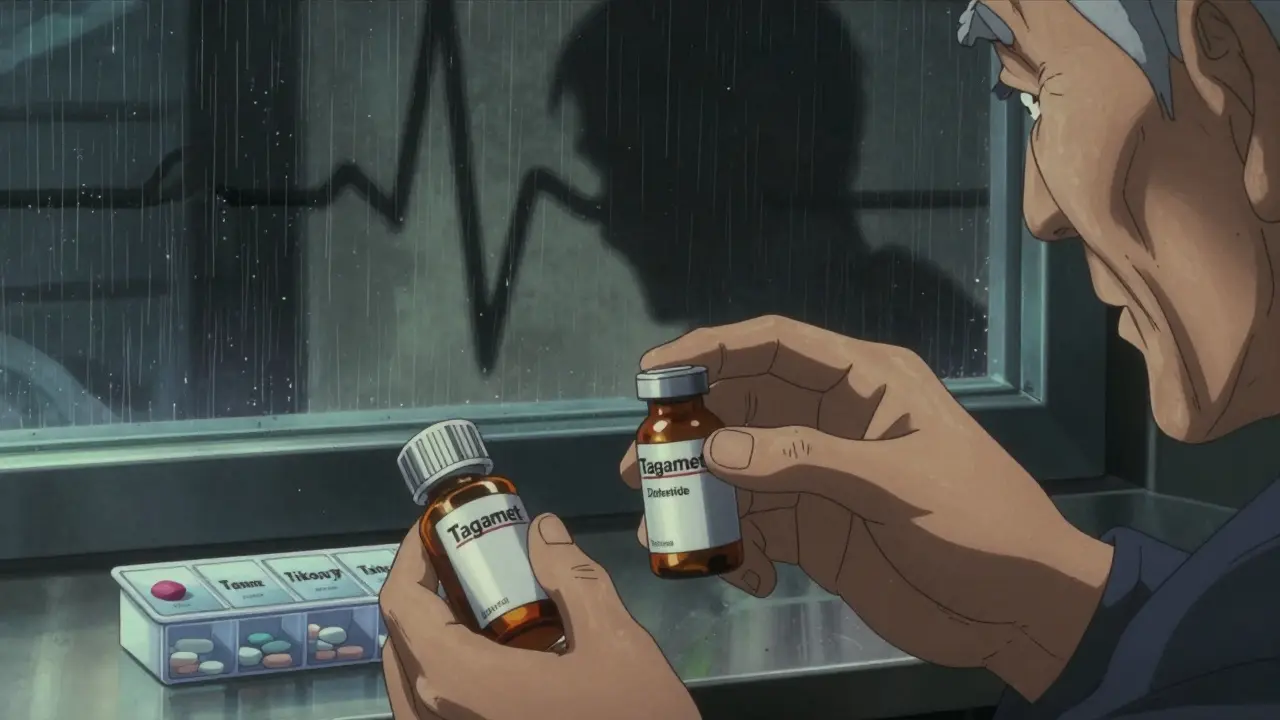
Imagine taking a medication to control your irregular heartbeat, and then, without knowing it, adding something as simple as an over-the-counter heartburn pill that could push your heart into a deadly rhythm. This isn’t science fiction. It’s a real, well-documented danger between dofetilide and cimetidine.
What Dofetilide Does - and Why It’s So Precise
Dofetilide, sold under the brand name Tikosyn, is a powerful antiarrhythmic drug used to restore and keep a normal heart rhythm in people with atrial fibrillation or atrial flutter. It works by blocking specific ion channels in heart cells, which helps reset the electrical timing of the heartbeat. But here’s the catch: it has an extremely narrow safety window. Too little, and it doesn’t work. Too much, and it can trigger a life-threatening arrhythmia called torsades de pointes.
The FDA approved dofetilide in 1999, and from day one, its prescribing guidelines warned that even small changes in blood levels could be dangerous. About 3-5% of patients on dofetilide alone develop significant QT prolongation - a delay in the heart’s electrical recovery phase that can spiral into torsades. That’s why doctors check your kidney function, your electrolytes, and your ECG before starting it. But there’s one thing many patients don’t realize: another common medication can double or even triple that risk.
Cimetidine: The Hidden Culprit in Heartburn Meds
Cimetidine, sold as Tagamet, has been around since the 1970s. It’s an H2 blocker - a type of drug that reduces stomach acid. For decades, it was the go-to treatment for ulcers and acid reflux. But unlike newer H2 blockers like famotidine (Pepcid) or ranitidine (Zantac), cimetidine doesn’t just calm stomach acid. It also messes with how your kidneys clear certain drugs from your body.
Dofetilide is mostly removed from your body by your kidneys through a specific transport system called a cation exchange pathway. Cimetidine blocks that system. It’s like putting a brick in the drain. When you take cimetidine with dofetilide, dofetilide doesn’t get flushed out. It builds up in your blood. Studies show plasma levels can spike by 50-100% within just 24 hours.
That spike isn’t theoretical. A 2021 study in Circulation: Arrhythmia and Electrophysiology analyzed over 12,000 patients and found that combining these two drugs increased the risk of QT prolongation by more than four times. The FDA’s own data shows 87 reports of QT prolongation and 23 cases of torsades de pointes linked to this combo between 2010 and 2022. That’s not noise - it’s a pattern.
Why Cimetidine Is the Only H2 Blocker That Matters Here
Not all acid-reducing drugs are created equal when it comes to dofetilide. Famotidine? Safe. Ranitidine? Also safe. Omeprazole? No problem. But cimetidine? It’s the only one that directly interferes with the kidney transporter dofetilide depends on to exit your body.
Here’s the data: In clinical trials during dofetilide’s approval, cimetidine increased dofetilide exposure by 40-50%. Famotidine? No change. That’s why the original Tikosyn prescribing information, updated as recently as September 2022, calls this combination contraindicated. That’s medical jargon for “never do this.”
And it’s not just about dosage. Even a single 300 mg dose of cimetidine - the kind someone might take for a sudden bout of heartburn - can be enough to trigger arrhythmia in someone on dofetilide. A 2021 case report in Mayo Clinic Proceedings described a 65-year-old woman who collapsed after taking one tablet of cimetidine for heartburn. She had been stable on dofetilide for months. One pill. One episode of polymorphic ventricular tachycardia. ICU admission.
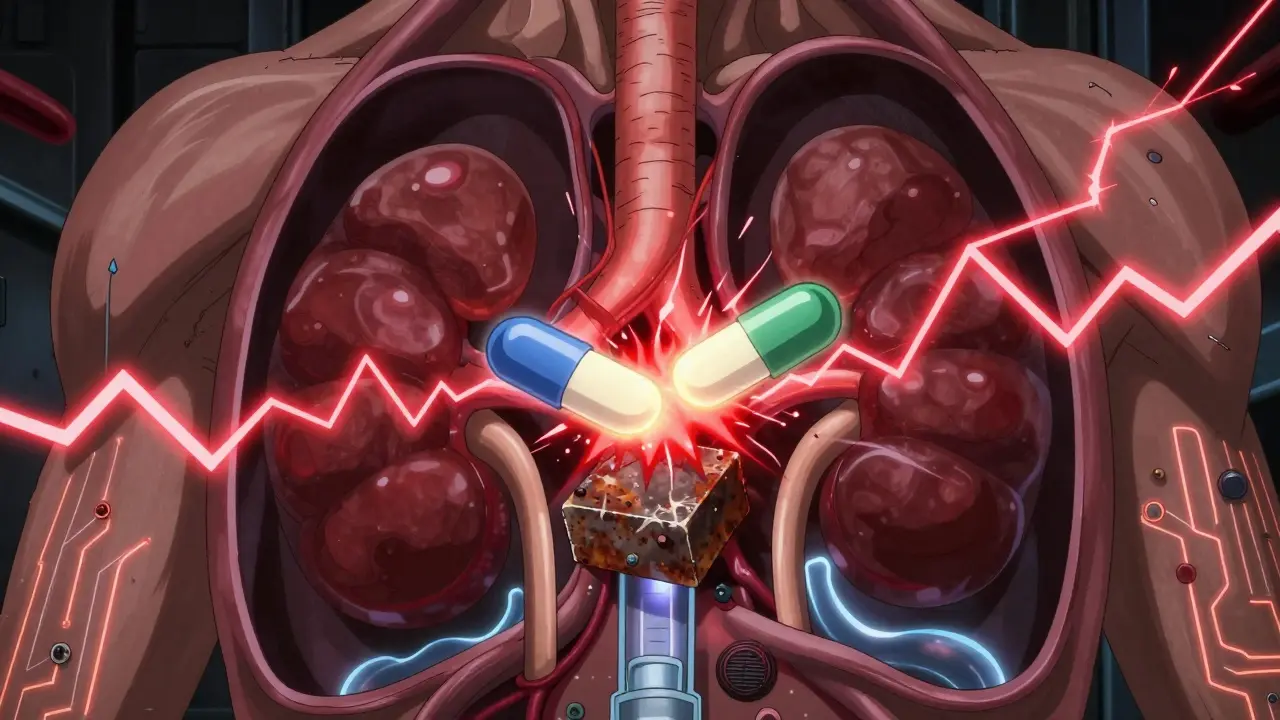
Real Cases, Real Consequences
These aren’t rare outliers. In 2020, a 72-year-old man on stable dofetilide started cimetidine for acid reflux. Within 72 hours, he went into torsades de pointes. He needed emergency cardioversion and spent days in the ICU. His story was published in the Journal of Cardiovascular Electrophysiology.
Surveys of 47 academic medical centers found that 12-15% of unexpected torsades cases in dofetilide patients were traced back to unrecognized cimetidine use. That means doctors and patients are still missing this interaction - even today.
And it’s not just older adults. While cimetidine use has dropped since its peak in the 1990s (from 28 million prescriptions to about 1.2 million in 2022), it’s still available over the counter in many countries. People don’t think of it as dangerous. They think of it as harmless heartburn relief. But for someone on dofetilide, it’s a ticking time bomb.
How to Stay Safe - The Exact Steps You Need to Take
If you’re on dofetilide, here’s what you must do:
- Never take cimetidine (Tagamet) again. Not even once. Not for a day. Not for a week. Not even if you think it’s just a quick fix.
- Check every medication you take. This includes OTC products. Some cold and flu remedies, antacids, or combination pills contain cimetidine. Read the ingredients. Look for “cimetidine” on the label.
- Switch to a safe alternative. Use famotidine (Pepcid) instead. Or a proton pump inhibitor like omeprazole (Prilosec) or esomeprazole (Nexium). These don’t interfere with dofetilide.
- Tell every doctor and pharmacist you see. Say: “I’m on dofetilide. Cimetidine is dangerous for me.” Don’t assume they know.
- Monitor your electrolytes. Low potassium or magnesium makes QT prolongation worse. Your doctor should check your levels regularly. Aim for potassium between 4.0-5.0 mmol/L.
And if you’re already on cimetidine and just started dofetilide? Don’t stop dofetilide on your own. Call your cardiologist immediately. They may need to delay starting dofetilide until cimetidine is fully cleared - which takes about 10 days (five half-lives).
What’s Being Done to Prevent This?
Thankfully, systems are catching up. Most hospitals now have electronic health record alerts that block doctors from prescribing cimetidine to patients on dofetilide. In 2015, 8.7% of patients got this dangerous combo. By 2022, that dropped to 1.2% thanks to automated warnings.
AI tools are now predicting these interactions before they happen - with 94.7% accuracy - by scanning patient records 72 hours in advance. The American College of Cardiology has made this one of its top five medication safety priorities. Hospitals that hit 95% compliance with avoidance protocols even get financial bonuses.
But technology isn’t perfect. People still buy cimetidine online. Elderly patients get prescriptions from multiple doctors. Pharmacists miss it. That’s why your awareness matters more than ever.

The Bigger Picture: Why This Interaction Matters
This isn’t just about two drugs. It’s about how polypharmacy - taking multiple medications - can quietly create lethal risks. The average person with atrial fibrillation takes nearly seven prescription drugs. Add in OTC meds, supplements, and herbal products, and the chance of a dangerous interaction grows.
The dofetilide-cimetidine interaction is a textbook example of a pharmacokinetic drug interaction - one that happens because of how the body moves and removes drugs. It’s predictable. It’s preventable. And yet, it still happens.
Cardiologists call it a “systems failure.” That means it’s not the patient’s fault. It’s not the doctor’s fault. It’s a gap in how we communicate, track, and warn about drug risks. But you can be the one to close that gap - for yourself and for others.
What If You’ve Already Taken Both?
If you’ve accidentally taken cimetidine while on dofetilide, don’t panic - but act fast.
- Stop cimetidine immediately.
- Call your cardiologist or go to the nearest emergency room if you feel dizzy, lightheaded, have palpitations, or faint.
- Do not wait for symptoms. QT prolongation can be silent until it’s too late.
- Bring a list of all your medications - including supplements and OTC pills - to your appointment.
Most people who catch it early and stop cimetidine won’t have a serious event. But delay can be fatal.
Can I take famotidine instead of cimetidine while on dofetilide?
Yes. Famotidine (Pepcid) is safe to use with dofetilide. Unlike cimetidine, it does not block the kidney transport system that clears dofetilide. Studies show no significant change in dofetilide levels when taken with famotidine. You can use famotidine at standard doses (up to 40 mg twice daily) without increasing arrhythmia risk.
Is cimetidine still available over the counter?
Yes, cimetidine is still sold over the counter in many countries, including the U.S., under brand names like Tagamet HB. It’s often marketed as a “mild” heartburn remedy. But for people on dofetilide, even the lowest OTC dose is dangerous. Always check the active ingredients before buying any acid-reducing product.
How long does it take for cimetidine to affect dofetilide levels?
Cimetidine can raise dofetilide blood levels by 50-100% within 24 hours of taking it. That means even a single dose can be enough to trigger QT prolongation. There’s no safe window. If you’re on dofetilide, avoid cimetidine completely - even for one day.
Can I take cimetidine if I stop dofetilide for a few days?
If you need to take cimetidine temporarily - say, for an acute GI bleed - you must stop dofetilide for at least 10 days (five half-lives) before starting cimetidine. Then, after stopping cimetidine, you must wait another 10 days before restarting dofetilide, under close medical supervision with ECG monitoring. Never attempt this without your cardiologist’s direct guidance.
Are there other drugs that interact with dofetilide like cimetidine does?
Yes. Other drugs that inhibit the same kidney transport system include trimethoprim (found in some antibiotics), verapamil (a blood pressure drug), and ketoconazole (an antifungal). These also increase dofetilide levels and carry the same risk. Always review your full medication list with your cardiologist before starting any new drug, even if it’s not on this list.
Final Takeaway: This Interaction Is Preventable - But Only If You Know
Dofetilide saves lives. But it demands respect. Cimetidine isn’t a harmless side note - it’s a silent trigger. The science is clear. The warnings are loud. The consequences are deadly.
If you’re on dofetilide, treat cimetidine like a loaded gun. Don’t touch it. Don’t even consider it. Use famotidine. Use PPIs. Ask your pharmacist to check your list. Tell every provider you see. This isn’t just about avoiding a bad reaction - it’s about staying alive.
Dave Old-Wolf
January 7, 2026 AT 12:21So I just found out my grandpa was on this stuff last year. He didn’t even know cimetidine was in that one OTC pill he took for heartburn. Scary how something so simple can flip a switch in your heart. I’m gonna print this out and hand it to every older relative I got.
Kristina Felixita
January 7, 2026 AT 13:22OMG this is why I always ask my pharmacist to scan my med list now 😅 I used to think 'it's just heartburn medicine' until my aunt ended up in the ER. Now I check every label like it's a bomb defusal manual. Seriously, if you're on dofetilide, treat cimetidine like your ex who still texts you at 2am-delete it, block it, never look back.
Joanna Brancewicz
January 9, 2026 AT 10:02Pharmacokinetic CYP3A4/MDR1 inhibition via renal cation transport blockade. Classic DDIs. Cimetidine’s non-selective inhibition profile makes it uniquely dangerous here. Famotidine lacks this affinity. Always verify transporter interactions.
Manish Kumar
January 9, 2026 AT 23:19You know, in India we still see Tagamet everywhere-corner pharmacies, street stalls, even sold as 'digestive aid' with no prescription. People don’t understand that drugs aren’t just chemicals-they’re signals in a biological orchestra. One wrong note, and the whole symphony collapses. Dofetilide is a precision instrument. Cimetidine? A hammer. You don’t use a hammer on a Stradivarius. And yet, we do. Because we think 'it’s just a pill.' But the heart doesn’t care about your intentions. It only responds to chemistry. And when the chemistry turns toxic, it doesn’t ask for permission before it stops beating.
Prakash Sharma
January 10, 2026 AT 21:49Why do Americans make everything so complicated? In India, we just take what works. Tagamet is cheap, effective, and everyone uses it. If your heart can't handle it, maybe you shouldn't be on fancy Western drugs. This is why I say: stop over-medicalizing everything. People need simple solutions, not 15-page warnings.
Molly Silvernale
January 11, 2026 AT 16:57It’s like… the body is a cathedral-and every drug is a candle. Some candles are gentle, flickering softly. Others? They’re torches. Cimetidine? It’s not just a candle-it’s a flamethrower disguised as a birthday candle. And dofetilide? It’s the stained glass window that catches the light just right… until it doesn’t. And then-shatter. No warning. Just silence. And the worst part? No one knew the flamethrower was even in the room.
christy lianto
January 12, 2026 AT 23:23My mom’s on dofetilide. I read this and immediately deleted every cimetidine bottle from our cabinet. Then I made a color-coded meds chart with red flags for anything that touches kidney transporters. I’m not waiting for a hospital visit to be the teacher. Prevention is the only real win here.
Ken Porter
January 14, 2026 AT 02:47Another overblown FDA scare. People die from falling in the shower. Why aren’t we banning bathtubs? This is just fearmongering wrapped in medical jargon.
Donny Airlangga
January 16, 2026 AT 02:36My dad took Tagamet for years. He had no idea it could mess with his heart meds. I’m glad this got out there. I just told my pharmacist yesterday to flag any new Rx for dofetilide interactions. We’re lucky we caught it before it was too late.
Lois Li
January 17, 2026 AT 00:36I work in a pharmacy and we’ve had three near-misses this year alone where patients grabbed Tagamet because it was 'the cheapest.' We now have a printed card we hand out with every dofetilide script. It’s not enough, but it’s something. Keep talking. Keep sharing. This is how we save lives.
Evan Smith
January 18, 2026 AT 00:05Wait so… if I take cimetidine once and then stop, am I still at risk? Like, is it a one-time bomb or does it linger? Asking for my uncle who took it for three days last month…
Aubrey Mallory
January 19, 2026 AT 09:39You don’t get to dismiss this as 'overmedicalization' when people are dying. This isn’t theoretical. It’s documented. It’s preventable. And if you’re too lazy to read a label or ask your pharmacist, you’re not just risking your life-you’re risking the lives of everyone who loves you. Stop being a passive participant in your own healthcare. Educate yourself. Or get out of the way of those who are trying to survive.
swati Thounaojam
January 21, 2026 AT 00:53my mom just got this script last week and i was like wait… did she buy tagamet? i checked her cabinet. she had one. i threw it out. she’s mad but alive.