
You've probably heard it before: "Be careful taking those antibiotics, they might make your birth control not work." For decades, this has been the standard warning given by pharmacists and doctors. It creates a wave of anxiety every time you get a prescription for a sinus infection or a UTI, often leading to a frantic trip to the pharmacy for emergency contraception or a sudden switch to condoms. But here is the striking truth: for the vast majority of antibiotics, there is virtually zero scientific evidence that they actually cause birth control failure.
The gap between what we are told in the clinic and what the data actually shows is massive. While many health providers still recommend backup methods out of an abundance of caution, the actual risk for most common antibiotics is negligible. To understand why this myth persists and which drugs actually matter, we need to look at how your body processes hormones and where the science actually stands in 2026.
The Only Real Culprit: Rifampin and Its Relatives
If you want to know which drugs actually interfere with your pills, there is one name you need to remember: Rifampin (also known as Rifampicin) is a powerful antibiotic primarily used to treat tuberculosis and some severe bacterial infections that significantly induces liver enzymes.
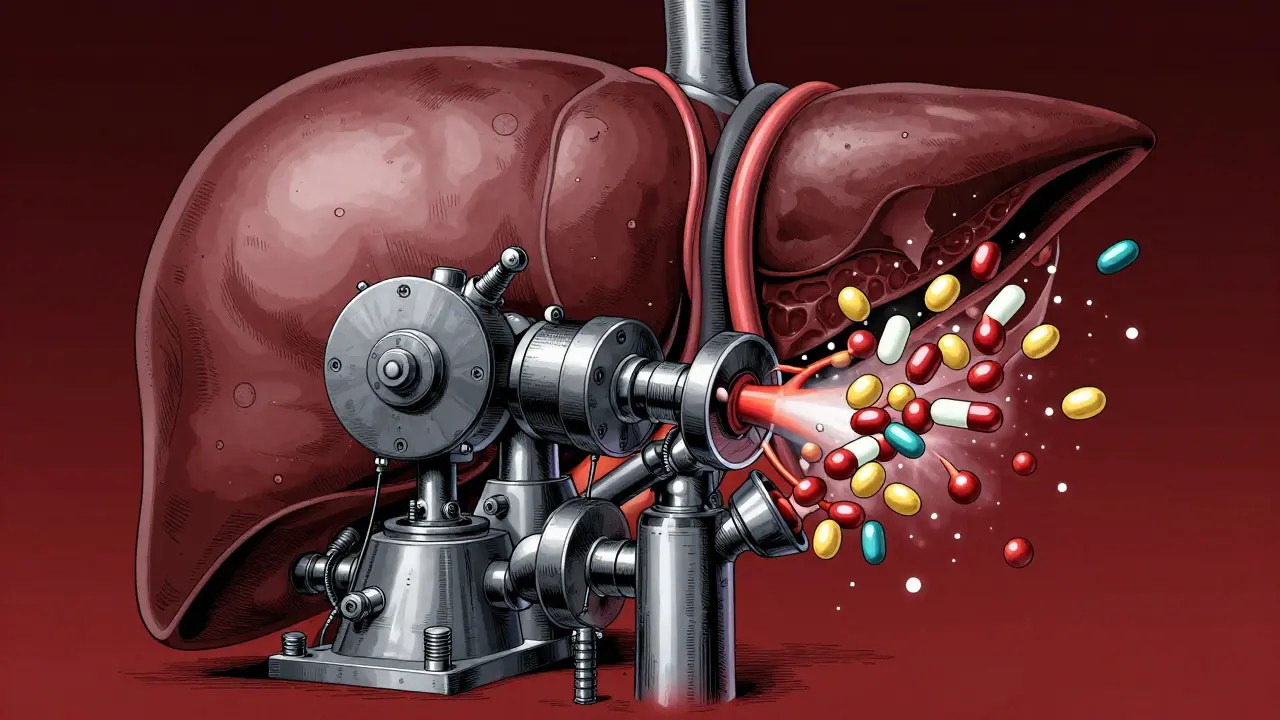
Rifampin doesn't just "interfere" with birth control; it actively tells your liver to chew through the hormones in your pill much faster than usual. Specifically, it triggers the CYP3A4 enzyme, which is the protein responsible for metabolizing ethinylestradiol (the estrogen found in combined pills). When this enzyme goes into overdrive, the amount of estrogen in your blood can drop by as much as 40% to 60%. That is a huge enough dip to potentially stop ovulation and lead to an unplanned pregnancy.
A closely related drug, Rifabutin, also has this effect, though it is generally weaker. If you are taking either of these, you absolutely need a backup method of contraception. However, these drugs are not your typical "quick fix" for a sore throat; they are specialized medications for serious conditions.
Common Antibiotics: What the Data Says
Now, let's talk about the ones you actually encounter most often-like Amoxicillin for a throat infection or Doxycycline for acne. For years, these were lumped into the "danger" category. But when researchers actually tracked women in the real world, the results were surprising.
A major systematic review published in the American Journal of Obstetrics and Gynecology looked at nearly 2,000 participants and found that pregnancy rates among women taking non-rifamycin antibiotics were almost identical to those who weren't taking any antibiotics at all. The difference was statistically insignificant. In other words, your daily pill is still doing its job even if you're fighting off a bacterial infection with a standard course of penicillin or tetracycline.
| Antibiotic Type | Impact on Pill Efficacy | Scientific Evidence Level | Recommended Action |
|---|---|---|---|
| Rifampin / Rifabutin | High (Reduces hormone levels) | Strong (Level A) | Use backup contraception |
| Amoxicillin / Penicillins | Negligible to None | Strong (No effect found) | No backup needed (unless advised) |
| Doxycycline / Tetracyclines | Negligible to None | Strong (No effect found) | No backup needed (unless advised) |
| Azithromycin / Macrolides | Very Low | Limited/Conflicting | Generally no backup needed |
Why the Confusion Still Exists
If the science is so clear, why is your pharmacist still telling you to use condoms? It comes down to two things: outdated medical traditions and a misunderstanding of how the body works.
Back in the 1970s and 80s, birth control pills had much higher doses of estrogen (50-100 mcg). Today’s pills are "low-dose" (typically 20-35 mcg). Some believe that because the margin of error is smaller with low-dose pills, any interaction is more dangerous. While that sounds logical, the pharmacokinetic data doesn't support it. The hormones are still absorbed and processed effectively regardless of the antibiotic (unless it's Rifampin).
There is also an old theory about "gut flora." The idea was that antibiotics kill the good bacteria in your gut, which are needed to help absorb the birth control pill. If the pill isn't absorbed, it can't work. However, studies have shown that the amount of estrogen absorbed remains stable even when your gut microbiome is disrupted. The"gut flora" theory is essentially a medical myth that has survived into the 2020s.
The Real-World Cost of This Myth
This isn't just about a bit of confusion; it has a real financial and emotional cost. Millions of women spend money on unnecessary emergency contraception (the "morning-after pill") simply because they were told their regular pill might have failed due to a course of Amoxicillin. Estimates suggest this adds up to over $140 million a year in unnecessary spending.
Even more concerning is the anxiety it causes. When a woman is told her birth control might not be working, it creates a state of high stress. If she happens to have a breakthrough bleed or a late period-which can happen for a dozen different reasons-she may assume she is pregnant because of the antibiotic, leading to unnecessary panic and medical visits.

Practical Advice for Your Next Prescription
So, what should you actually do when you're handed a prescription? First, check the name of the drug. If it's not a rifamycin (like Rifampin), you can breathe a sigh of relief. However, because different healthcare providers follow different guidelines-some follow the strict evidence of the UK's Faculty of Sexual and Reproductive Healthcare, while others follow the more conservative American Family Physician approach-it's always worth a quick, specific question.
Instead of asking, "Will this interfere with my birth control?" (which often gets a generic "yes" or "maybe"), try asking: "Is this a CYP3A4 inducer like Rifampin?" This signals to the provider that you're looking for evidence-based information rather than a general caution. If the answer is no, you can feel confident in your contraception.
One final pro tip: if you are experiencing severe diarrhea or vomiting as a side effect of your antibiotics, that is when you need backup contraception. Not because of a chemical interaction, but because your body isn't absorbing the pill physically. If you can't keep the pill down for more than 24 hours, the protection is compromised regardless of which antibiotic you're taking.
Do I need backup birth control for a common UTI antibiotic?
Most antibiotics used for UTIs, such as nitrofurantoin or trimethoprim-sulfamethoxazole, have no proven interaction with birth control pills. Unless you are taking Rifampin, scientific evidence suggests your pill remains effective.
What if I have already taken antibiotics and didn't use a backup method?
If you weren't taking Rifampin or Rifabutin, the risk of contraceptive failure is extremely low. You likely do not need emergency contraception. However, if you're feeling anxious or your period is significantly late, a home pregnancy test is the only way to be sure.
Does this apply to the mini-pill (progestogen-only)?
Yes. The evidence regarding Rifampin inducing liver enzymes applies to progestogens as well. However, for other common antibiotics, the lack of evidence for interaction remains consistent across both combined and progestogen-only pills.
Why does the pill package insert say antibiotics can interfere?
Many package inserts use vague language and list "antibiotics" as a general class. This is often based on old case reports rather than modern controlled trials. Regulatory agencies like the FDA have acknowledged that these warnings are often non-specific and not based on current evidence.
Could a severe stomach flu during antibiotics be a problem?
Absolutely. Severe vomiting or diarrhea prevents the pill from being absorbed into your bloodstream. This is a physical failure of absorption, not a chemical interaction. In this case, you should use a backup method until you've been symptom-free for 48 hours.
Next Steps and Troubleshooting
If you are currently taking a medication and are unsure, your best move is to check the official drug labeling or use a reputable database. If you are in a high-risk situation (e.g., you cannot afford an unplanned pregnancy) and your doctor is giving you conflicting advice, using a barrier method like condoms for the duration of the antibiotic course is a low-cost way to buy peace of mind, even if the science says it's not strictly necessary.
For those who find the anxiety of pill interactions too high, you might consider long-acting reversible contraceptives (LARCs) like the IUD or the implant. These methods bypass the digestive system entirely, meaning they are completely unaffected by gut flora changes or most liver-enzyme interactions, offering a "set and forget" level of security.