Medication Review Assessment Tool
Review Your Medications
Answer the following questions to identify medications that may benefit from deprescribing.
Your Deprescribing Assessment
Medications to Consider
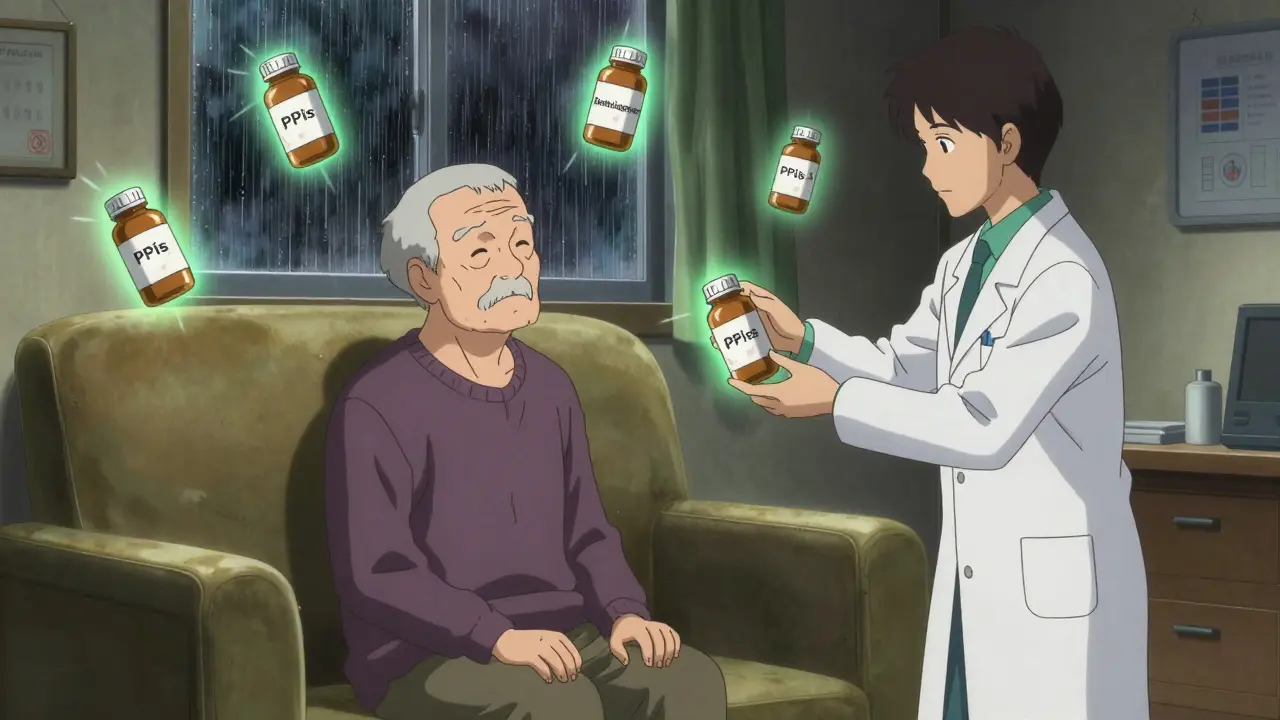
- PPIs (proton-pump inhibitors) for heartburn without active ulcers
- Benzodiazepines/sleep aids for insomnia beyond 3 months
- Antipsychotics used off-label for dementia
- Long-term opioids for chronic pain
- Antihyperglycemics in older adults with limited life expectancy
These medications have the highest evidence for deprescribing in older adults.
Key Questions for Your Doctor
- Which of my medications are still necessary?
- What happens if I stop this medication?
- What would happen if I keep this medication?
- Are there non-drug alternatives?
- Can we try a lower dose first?
Deprescribing Process
Deprescribing is done through a structured process:
- Best Possible Medication History → Evaluate → Deprescribing Recommendations → Synthesis
- Gradual tapering over 4-8 weeks for most medications
- Monitoring for symptoms and side effects
- Collaboration between patient, doctor, and pharmacist
Risk Assessment
Important Safety Note
Never stop medications without consulting your healthcare provider. Some medications require gradual tapering to avoid withdrawal or rebound symptoms.
More than 40% of older adults take five or more medications every day. Many of these drugs were prescribed years ago-some for conditions that no longer exist, others for symptoms that have faded. Yet they keep taking them. Why? Because no one ever asked if they still needed them. This isn’t laziness. It’s systemic. And it’s dangerous.
Every year, one in three hospital admissions among adults over 65 is linked to medication side effects. That’s not just bad luck. It’s preventable. The answer isn’t more pills. It’s fewer. And the process is called deprescribing.
What Deprescribing Really Means
Deprescribing isn’t just stopping a drug. It’s not cutting corners. It’s not ignoring symptoms. It’s a deliberate, step-by-step process to remove medicines that no longer help-or worse, hurt.
Think of it like cleaning out your closet. You keep things you wear, donate what’s outdated, and toss what’s broken. Medications work the same way. Some are still useful. Others are just taking up space-and causing problems.
According to the World Health Organization, inappropriate prescribing affects nearly half of older adults globally. That includes drugs like proton-pump inhibitors (PPIs) for heartburn that were meant for a 2-week course but taken for 10 years. Or benzodiazepines for anxiety that were prescribed after a stressful event and never reviewed since. These aren’t just leftovers. They’re risks.
Side effects from these medications can be silent. Dizziness. Confusion. Falls. Memory loss. Kidney strain. Liver stress. And in many cases, the harm outweighs the benefit. Deprescribing frameworks give doctors and pharmacists a roadmap to reverse this.
The Core Frameworks: How It’s Done
There’s no one-size-fits-all method. But there are proven systems. The most widely used are built on evidence from clinical trials and refined by researchers at deprescribing.org, launched in 2015 by Canadian experts Barbara Farrell and Cara Tannenbaum.
Five major drug classes have formal deprescribing guidelines:
- Proton-pump inhibitors (PPIs)
- Benzodiazepines and sleep aids (BZRAs)
- Antipsychotics (often used off-label for dementia)
- Antihyperglycemics (like insulin or sulfonylureas in older adults with limited life expectancy)
- Opioid analgesics
Each follows a clear structure. Take PPIs, for example. The guideline says:
- Use STOPP/START criteria to identify patients who may not need it anymore
- Check if the original reason still exists-like a recent ulcer or GERD diagnosis
- Reduce the dose slowly over 4 to 8 weeks
- Watch for return of symptoms and adjust if needed
This isn’t guesswork. It’s based on data from over 1,200 patients across multiple studies. The same approach applies to benzodiazepines: taper by 25% every two weeks, monitor for rebound anxiety or insomnia, and offer non-drug alternatives like sleep hygiene or cognitive behavioral therapy.
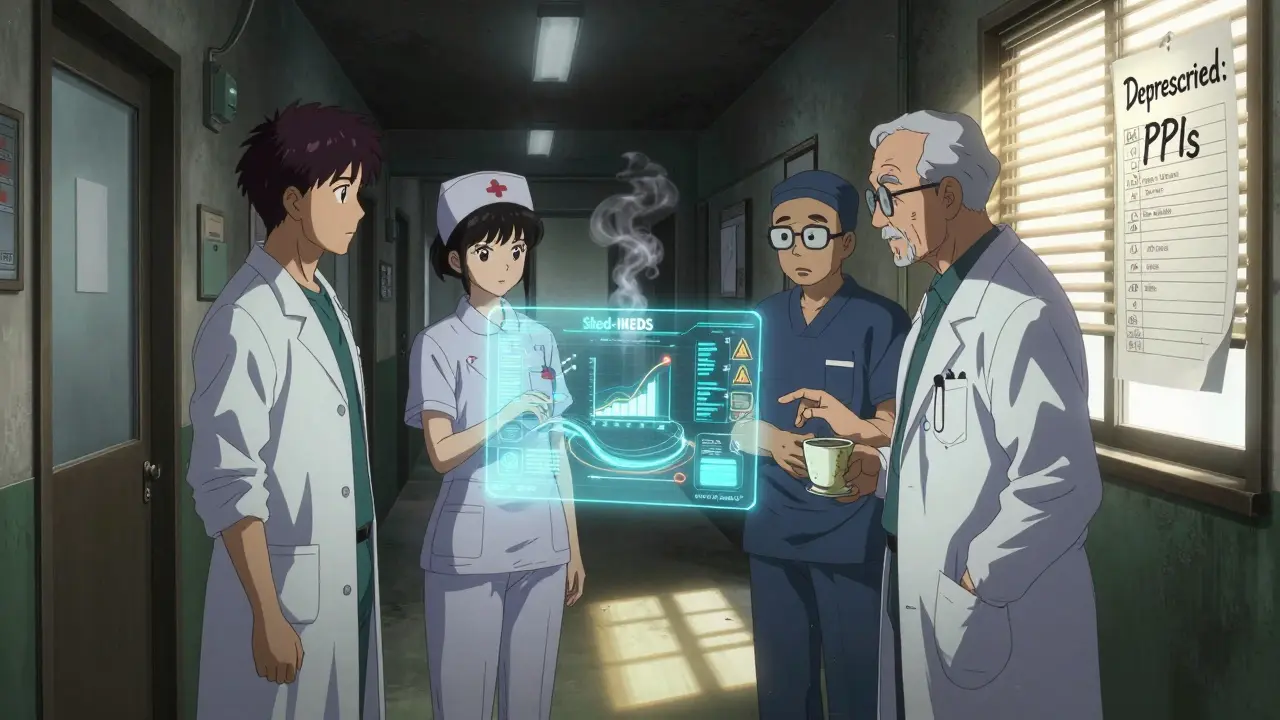
One validated framework, called Shed-MEDS, stands out. It’s simple: Best Possible Medication History → Evaluate → Deprescribing Recommendations → Synthesis. A 2023 JAMA Internal Medicine trial showed patients using this method lost an average of 1.8 medications after leaving a care facility-and still lost 1.6 at 90 days. No increase in hospital visits. No rise in deaths. Just fewer pills and better function.
Why Most Clinicians Don’t Do It
Despite the evidence, deprescribing is rare in practice. Why?
Time. Most primary care visits last 7 to 10 minutes. That’s not enough to review 12 medications, talk about goals of care, check for interactions, and build trust. A 2022 Canadian Medical Association Journal study found fewer than 15% of primary care doctors regularly use deprescribing frameworks.
Another problem? Fear. Doctors worry about backlash. Patients worry about withdrawal. Families worry about "giving up." But the data tells a different story.
In the same JAMA trial, 15.8% of patients in the deprescribing group had an adverse event. The control group? 16.2%. No difference. Yet the intervention group had nearly two fewer medications per person.
Then there’s the system. Electronic health records don’t help. They’re built to remind doctors to prescribe-not to stop. A 2023 survey of 450 U.S. clinicians found only 32% felt their EHR supported deprescribing. Most systems still default to "continue all meds" unless you manually override them.
And guidelines? They’re lopsided. A 2024 analysis of 3,569 clinical recommendations found only 7% addressed deprescribing. The rest? How to start more drugs.
Who Should Be Leading This?
Pharmacists are the unsung heroes of deprescribing. Studies show when pharmacists lead medication reviews, success rates jump 35-40%. Why? They have the time. They’re trained in drug interactions. They don’t have to rush to the next patient.
Take Sarah Chen, a pharmacist in Ohio. She used deprescribing.org’s benzodiazepine algorithm to taper 18 of 22 elderly patients over six months. Only two had mild withdrawal. No hospitalizations. No crises. Just relief.
Nurse practitioners and care coordinators are also key. They build relationships. They ask the right questions: "What do you want your life to look like in the next year?" "Are you taking all these pills because you think they’re helping-or because you’ve always done it?"
Doctors can’t do this alone. It takes a team. And that team needs training. Pharmacists need at least 150 hours of specialized medication therapy management education. Nurses need to recognize withdrawal signs. Primary care providers need to shift from "prescribe and forget" to "review and reassess."
What Patients Say
When patients are included in the decision, they respond well.
A 2022 qualitative study found 65% of older adults felt better after reducing medications. Less confusion. More energy. Fewer trips to the bathroom at night from diuretics. Less drowsiness from antihistamines they didn’t need.
But 22% felt anxious. "I’ve been taking this pill for 15 years," one woman said. "What if I get sick without it?" That fear is real. And it’s why education matters.
Deprescribing isn’t abandonment. It’s reevaluation. It’s saying: "We’re not giving up on you. We’re making sure your treatment fits your life now-not your life 10 years ago."
Patients need clear explanations. Written plans. Follow-up calls. A trusted person to call if symptoms return. Without that, even the best framework fails.
What’s Changing Now
Change is coming. Fast.
In June 2024, the American Medical Association issued its first official policy: physicians should routinely assess the continuing appropriateness of all medications. That’s huge. It’s not optional anymore.
Starting in 2026, Medicare will start measuring deprescribing as part of physician performance bonuses under the Merit-Based Incentive Payment System. Hospitals and clinics will be paid more for reducing inappropriate meds.
The FDA has funded $8.7 million in deprescribing research since 2020. The EU’s Pharmaceutical Strategy calls it a priority. Canada has a national program called DIGE that’s been running since 2018. In Canada, 63% of primary care practices have formal deprescribing protocols. In the U.S.? Just 28%.
And AI is stepping in. Researchers are building algorithms that scan EHRs and flag drugs that might be candidates for deprescribing-like an antipsychotic prescribed for insomnia in a patient with dementia. These tools will soon nudge doctors before they write the next script.
Where the Gaps Still Are
But it’s not perfect. We still lack formal guidelines for 500+ medication combinations. What about someone on blood thinners, antidepressants, beta-blockers, and a statin? There’s no clear algorithm. No step-by-step plan.
And for patients with advanced dementia? Some medications-like antipsychotics-are used to calm agitation. Stopping them too fast can cause distress. The American Geriatrics Society warns against indiscriminate deprescribing. Goals matter. Quality of life matters.
That’s why every decision must be personalized. Not based on age. Not based on charts. Based on the person.
"Deprescribing is not simply stopping medications," says Dr. Amy Gravely, lead author of the 2024 Langford study. "It’s a structured clinical process that requires the same rigor as initiating therapy."
How to Start Today
If you’re a patient or caregiver:
- Ask your doctor: "Which of my medications are still necessary?"
- Bring a full list-every pill, supplement, and OTC drug.
- Ask: "What happens if I stop this?" and "What would happen if I keep it?"
- Request a pharmacist consult if your clinic offers one.
If you’re a clinician:
- Use deprescribing.org’s free algorithms. They’re downloadable and printable.
- Start with one drug class-PPIs or benzodiazepines are good entry points.
- Use STOPP/START version 3 criteria to screen for inappropriate meds.
- Partner with your pharmacy team. They’re your best ally.
- Document every decision. Not just what you stopped-but why.
It doesn’t take a revolution. It takes one conversation. One review. One decision to ask, "Do we still need this?"
What’s Next
By 2030, experts predict deprescribing checks will be as routine as blood pressure screenings. The numbers don’t lie: aging populations, rising drug costs, and mounting evidence of harm are pushing this forward.
The goal isn’t to eliminate all medications. It’s to eliminate the ones that don’t belong. To replace fear with clarity. To replace clutter with control.
Medications aren’t trophies. They’re tools. And like any tool, they should be used only when they help-and removed when they don’t.
Is deprescribing safe for elderly patients?
Yes, when done properly. A 2023 JAMA Internal Medicine trial with 372 older adults showed no increase in hospitalizations or deaths despite reducing an average of 1.8 medications per person. Safety comes from slow tapering, monitoring symptoms, and involving the patient in decisions-not from keeping unnecessary drugs.
Can I stop my medications on my own?
No. Stopping certain drugs suddenly-like benzodiazepines, antidepressants, or steroids-can cause dangerous withdrawal, rebound symptoms, or even seizures. Always work with a doctor or pharmacist. Deprescribing is a planned process, not a DIY project.
What medications are most commonly deprescribed?
The top five are proton-pump inhibitors (PPIs), benzodiazepines and sleep aids (BZRAs), antipsychotics, antihyperglycemics (like sulfonylureas), and long-term opioids. These are the drugs most often prescribed long-term without clear ongoing benefit, especially in older adults.
How long does deprescribing take?
It varies. For PPIs, tapering usually takes 4 to 8 weeks. For benzodiazepines, it can take 3 to 6 months. The pace depends on the drug, the dose, and the patient’s response. Speed isn’t the goal-safety and comfort are.
Are there tools to help with deprescribing?
Yes. Deprescribing.org offers free, evidence-based algorithms for five major drug classes. The STOPP/START criteria (version 3, 2021) and the American Geriatrics Society’s Beers Criteria (2023 update) are also widely used. Many hospitals now integrate these into electronic health records as decision aids.
Why isn’t deprescribing more common in clinics?
Time, training, and system barriers. Most primary care visits are under 10 minutes, making detailed medication reviews impossible. EHRs aren’t designed to help stop meds-they’re built to remind you to prescribe. And few doctors get formal training in deprescribing. It’s changing, but slowly.
Does deprescribing save money?
Yes. A 2023 Canadian study found every $1 spent on deprescribing programs returned $3.20 through reduced medication costs and fewer hospital admissions. For a patient taking 10 medications, cutting just two can save hundreds per year.
What if symptoms come back after stopping a drug?
That’s why monitoring is built into every deprescribing plan. If symptoms return, the drug may be restarted at a lower dose-or replaced with a non-drug option. It’s not failure. It’s fine-tuning. The goal is the right balance, not zero meds.
Is deprescribing only for older adults?
While most common in older adults due to polypharmacy, deprescribing applies to anyone on long-term medications without clear benefit-such as teens on ADHD drugs after high school, or young adults on acid reflux meds after weight loss. Age isn’t the factor-appropriateness is.
How can I find a provider who knows about deprescribing?
Ask your pharmacist. They’re often the first to spot unnecessary meds. Look for geriatricians, geriatric pharmacists, or clinics specializing in medication management. In Canada, the DIGE program is nationally supported. In the U.S., ask if your hospital has a medication therapy management (MTM) service-many do, especially for Medicare patients.
James Dwyer
January 28, 2026 AT 11:20Deprescribing isn't just common sense-it's overdue. I've seen grandparents on 12 meds, half of which were prescriptions from 2008. No one ever checked if they still worked. It's not neglect. It's just how the system rolls. Time to fix it.
jonathan soba
January 28, 2026 AT 13:49Let’s be honest: the data here is cherry-picked. You cite JAMA trials but ignore the 2021 BMJ study showing 22% of deprescribed patients experienced rebound hypertension or anxiety within 30 days. The ‘no difference in hospitalizations’ claim is misleading-most studies exclude patients who died in the first 60 days post-deprescribing. This isn’t medicine. It’s ideology dressed in clinical jargon.
matthew martin
January 29, 2026 AT 07:39Man, this hits different. I spent last weekend helping my aunt clean out her medicine cabinet-turned out she’d been taking a sleep aid since her husband passed in 2011. Didn’t even remember why she started it. We tapered her off over six weeks with melatonin and bedtime walks. She’s sleeping better, not foggy anymore, and actually remembered her own birthday last week. Deprescribing isn’t about taking stuff away-it’s about giving people back their lives. And yeah, pharmacists are the real MVPs here. They’ve got the patience, the training, and the damn time to actually listen. Primary care docs? They’re running on fumes and caffeine. Let the pharmacists lead. We need more of them in the game.
Chris Urdilas
January 30, 2026 AT 09:31So let me get this straight-we’re gonna save lives by making doctors do more paperwork, while the EHR system still thinks ‘continue all meds’ is a valid default? Brilliant. Next they’ll mandate handwritten notes on parchment. At least we got a 2026 Medicare bonus out of it. That’s like giving a gold star to a kid who finally remembered to tie their shoes. Meanwhile, the real problem? No one’s paying for the 45-minute med review. We treat meds like free candy from a vending machine. And now we’re shocked when the whole damn machine explodes.
Jeffrey Carroll
January 31, 2026 AT 12:28The evidence supporting structured deprescribing is compelling and methodologically sound. The integration of frameworks such as STOPP/START and Shed-MEDS into routine clinical workflow represents a paradigm shift toward patient-centered care. However, the implementation challenges-particularly within resource-constrained primary care environments-remain substantial. Systemic reform, including EHR redesign and expanded pharmacist reimbursement, is imperative to ensure equitable access and sustained outcomes.
Phil Davis
February 1, 2026 AT 07:15So we’re gonna fix polypharmacy by adding more checklists? How about we stop pretending the system can be fixed with a pamphlet. The real issue? Doctors are paid to prescribe, not to pause. And patients? They’ve been trained to believe more pills = better care. You can’t fix a broken incentive structure with a nice infographic. But hey, at least the AMA’s got a policy now. Progress, I guess.
Irebami Soyinka
February 2, 2026 AT 12:15Why are Americans so scared to stop taking pills? In Nigeria, we don’t have 12 medications-we have one or two, and we use herbs, prayer, and community. You people turn every cough into a crisis and then drown in prescriptions. This deprescribing thing? It’s just you finally catching up to what the rest of the world knew all along: less is more. 🙏💊
Mel MJPS
February 3, 2026 AT 18:07My grandma started this process last year. She was on 9 meds. Now she’s on 4. She says she feels like she can breathe again. No more dizziness. No more midnight bathroom trips. She’s even gardening again. It’s not magic-it’s just someone finally asking, ‘Do you still need this?’ Thank you for writing this. I’m sharing it with my whole family.
Katie Mccreary
February 4, 2026 AT 00:31Wait, so you’re saying we should stop giving people meds they’ve been on for 15 years? What if they die? 😭
Kevin Kennett
February 4, 2026 AT 08:58Y’all are acting like this is some radical new idea. I’ve been doing this for 12 years as a geriatric nurse. I’ve seen people wake up after being on antipsychotics for dementia. They don’t need to be drugged into silence. They need to be seen. The problem isn’t the patients-it’s the system that treats them like inventory. Pharmacists? Yeah, they’re the ones who actually know what’s in those bottles. Stop making doctors do everything. Let the experts do their jobs. And for god’s sake, stop writing scripts on autopilot.
Jess Bevis
February 5, 2026 AT 10:09Deprescribing is the quiet revolution no one talks about. And it’s working.