
Drug Side Effect Causality Calculator
Dechallenge Assessment
Dechallenge is when symptoms improve after stopping the suspected drug. This is the most common clinical evidence for drug causality.
Rechallenge Assessment
Rechallenge involves restarting the medication to see if symptoms return. This is rarely done due to safety risks.
Have you ever stopped a medication because you felt worse after taking it-only to wonder if it was really the drug or something else? Maybe your skin broke out, your liver enzymes spiked, or you got dizzy every time you took your pill. You’re not alone. But here’s the question doctors ask when they’re trying to figure out what’s really going on: Did the drug cause this? That’s where dechallenge and rechallenge come in. These aren’t fancy lab tests or high-tech scans. They’re simple, powerful clinical moves that help doctors connect the dots between a drug and a bad reaction.
What Is Dechallenge?
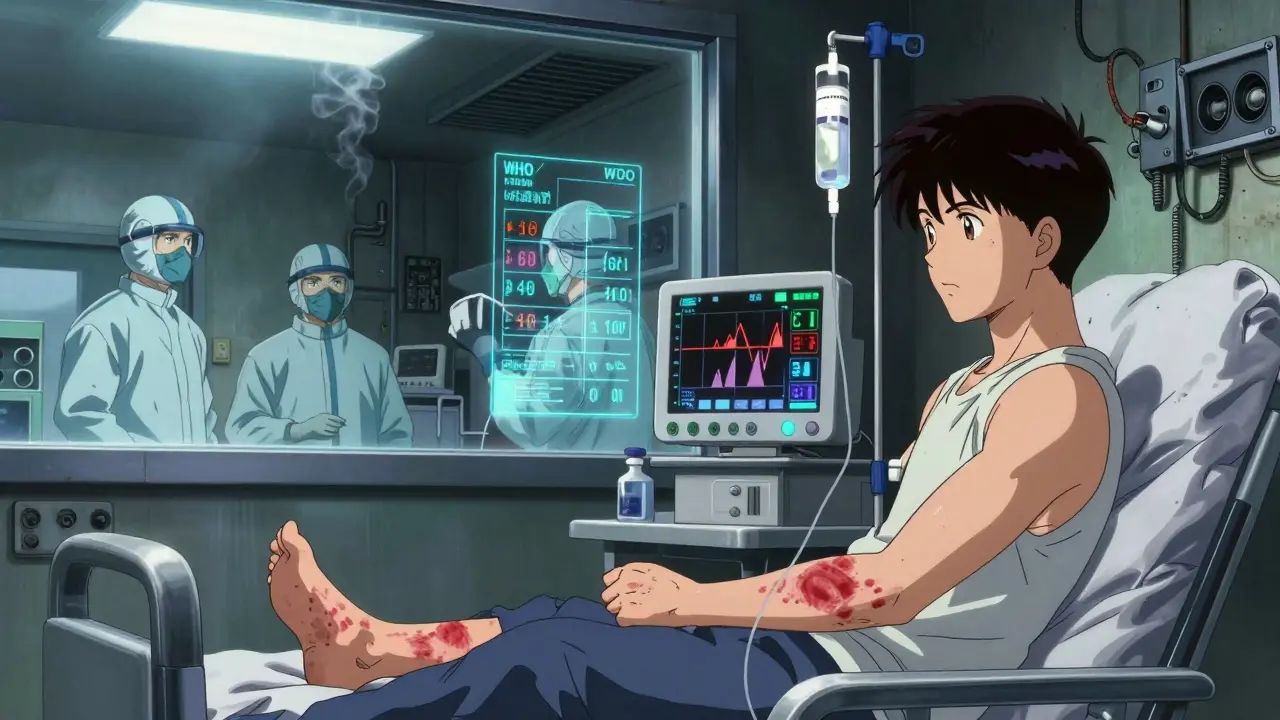
Dechallenge is just stopping the drug to see what happens. If your rash disappears, your nausea fades, or your liver enzymes drop back to normal after you stop taking the medicine, that’s a positive dechallenge. It means the drug was likely the culprit. But if your symptoms stay the same-or even get worse-then it’s a negative dechallenge. That tells you something else might be going on.This isn’t guesswork. It’s based on timing. If you took a pill on Monday and started feeling sick on Wednesday, and then you stop the pill on Friday and feel better by Tuesday next week, that timeline matches how the drug leaves your body. For example, if you were on metronidazole (an antibiotic) and got a fixed drug reaction-a rash that comes back in the same spot every time-you’d expect the rash to fade within days after stopping. In real cases, that’s exactly what happens. One patient had a recurring rash on their ankle after taking metronidazole. After stopping it, the rash faded over two weeks. That’s a textbook positive dechallenge.
But here’s the catch: people often stop meds on their own. They feel bad, so they toss the pills. That’s not dechallenge-it’s self-discontinuation. And it messes up the data. Doctors need to know exactly when the drug was stopped, what symptoms improved, and how fast. That’s why structured reporting matters. In dermatology clinics, where skin reactions are common, doctors use checklists to track this. In fact, 87% of suspected drug rashes in skin clinics involve documented dechallenge. In psychiatry? Only 43%. Why? Because stopping an antidepressant or antipsychotic can trigger withdrawal or relapse. So doctors avoid it-even when it would help.
What Is Rechallenge?
Rechallenge is the next step. It’s when you give the drug back-on purpose-to see if the same reaction happens again. If the rash returns, the nausea comes back, or the liver enzymes spike once more, that’s powerful evidence. It’s not just correlation anymore. It’s proof.But rechallenge is risky. Very risky. If someone had Stevens-Johnson Syndrome-a life-threatening skin reaction-from a drug, no doctor in their right mind would give it back. Even in milder cases, like a mild rash or headache, rechallenge needs approval from an ethics board. In the U.S., fewer than 0.3% of serious adverse drug reaction investigations involve rechallenge. The FDA and European regulators only allow it under strict conditions: in a controlled setting, with emergency care on standby, and with full informed consent.
One famous case involved a man who got a fixed drug reaction from metronidazole. After stopping the drug, his rash vanished. Three months later, under medical supervision, he took the drug again. Within 48 hours, the exact same rash appeared on the same spot on his ankle. That’s rechallenge in action. It didn’t just suggest the drug caused it-it proved it. According to WHO-UMC guidelines, a successful rechallenge moves the causality rating from “probable” to “definite.” In 97% of verified cases, that’s exactly what happens.
Why These Two Steps Matter
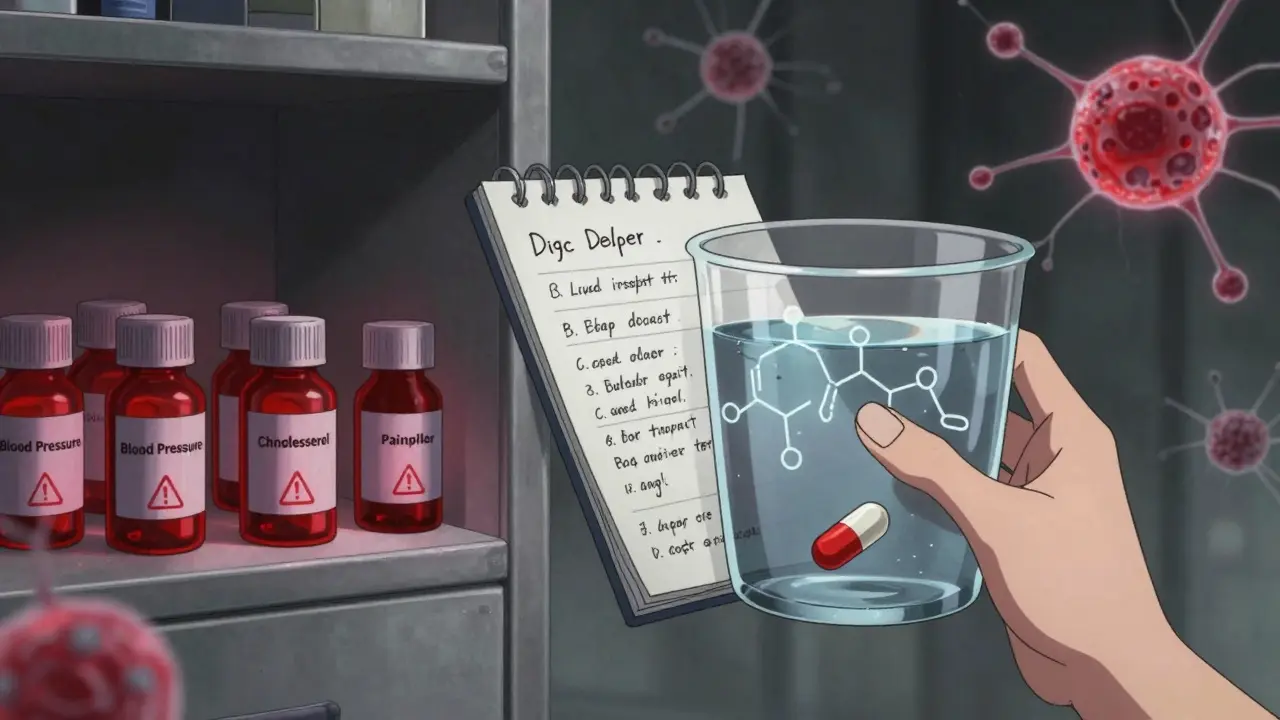
Most people think side effects are obvious. But they’re not. You might be on five medications. You start feeling tired. Is it the blood pressure pill? The cholesterol drug? The painkiller? Without dechallenge and rechallenge, you’re just guessing.That’s why tools like the Naranjo Scale exist. It’s a questionnaire that gives points for things like timing, whether symptoms improved after stopping, and whether other causes were ruled out. But even the best algorithm can’t replace what happens in a real body. A computer might say “probable,” but if the rash comes back when you take the drug again-that’s definitive.
And it’s not just about diagnosis. It’s about safety. If a drug is causing liver damage in a small group of people, and we don’t know which one, the whole class might get pulled from the market. That’s what happened with some older antibiotics. But if we can prove it’s just one drug in the class-thanks to dechallenge and rechallenge-we can keep the safe ones available. That’s why pharmaceutical companies now require dechallenge data in post-marketing studies. Eighty-two percent of major drug makers track this information now. They need it to avoid lawsuits and meet global safety standards.
What’s Changing in 2025
Technology is helping, but not replacing, these methods. Wearable sensors can now track heart rate, skin temperature, and even inflammation markers in real time after a drug is stopped. In a 2023 study, sensors detected resolution of side effects in 78% of cases, compared to only 52% when patients just reported how they felt. That’s a big jump in accuracy.There’s also new research into blood tests that can predict who’s likely to react to a drug-without ever giving it to them. Scientists at the NIH are using lymphocyte toxicity assays to see how a patient’s immune cells respond to a drug in a petri dish. If the cells die, the person is probably at risk. This test is 89% accurate for certain skin reactions. That could make rechallenge obsolete for many people.
Still, experts agree: no algorithm, no blood test, no AI model can replace the real-world observation of a symptom disappearing after stopping a drug. As Dr. Elena Rodriguez from the WHO said in 2024: “No algorithm can substitute for the clinical reality of symptom resolution after drug discontinuation.”
What You Can Do
If you’re on a new medication and feel off, don’t just assume it’s “normal.” Write down:- When you started the drug
- What symptoms you got and when
- How bad they were
- Whether you stopped the drug, and what happened after
Bring this to your doctor. If your symptoms improved after stopping, that’s dechallenge data. If you’re asked to try the drug again under supervision, understand the risks. Ask: “Is this necessary? Are there safer ways to confirm this?”
And if you’ve had a reaction before-tell every new doctor. That’s called a positive prechallenge. It saves lives.
When Dechallenge and Rechallenge Don’t Work
These tools aren’t magic. They have limits.- Polypharmacy: If you’re on 10 drugs and stop them all at once, you won’t know which one caused the problem.
- Delayed reactions: Some side effects take months to show up. By the time you notice, the drug’s long gone.
- Irreversible damage: If a drug caused permanent nerve damage or scarring, stopping it won’t fix it. That’s a negative dechallenge-but not because the drug didn’t cause it.
- Psychiatric meds: Stopping an antipsychotic can trigger psychosis. Rechallenge here is almost never done.
That’s why doctors use dechallenge and rechallenge alongside other clues: the timing of the reaction, whether the drug is known to cause this side effect, and whether there’s a biological reason it should.
Bottom Line
Dechallenge and rechallenge aren’t just medical jargon. They’re the difference between guessing and knowing. Between removing a drug unnecessarily-and keeping a safe one in your treatment plan. They’re low-tech, high-impact tools that have saved countless people from dangerous medications-and kept effective ones in use.Next time you hear a doctor say, “Let’s stop this for a bit and see,” don’t think they’re just being cautious. They’re doing science. And you’re part of it.
What does a positive dechallenge mean?
A positive dechallenge means your symptoms improved or disappeared after stopping the suspected drug. This strongly suggests the drug caused the side effect. For example, if your skin rash fades within days of stopping a medication, that’s a positive dechallenge. It’s one of the most reliable clinical signs that a drug is responsible for an adverse reaction.
Is rechallenge safe?
Rechallenge is only done in very specific cases-usually for mild reactions like a rash or headache-and never for life-threatening reactions like Stevens-Johnson Syndrome or liver failure. It requires approval from an ethics board, your informed consent, and medical supervision. Less than 0.3% of serious adverse drug reaction investigations include rechallenge because the risks often outweigh the benefits.
Why don’t doctors always do rechallenge?
Rechallenge can be dangerous. If a drug caused a severe reaction once, giving it back could kill you. Even for mild reactions, doctors avoid it unless absolutely necessary. That’s why dechallenge-just stopping the drug-is used in about 85% of cases. Rechallenge is reserved for research settings or when the benefit of confirming the cause outweighs the risk.
Can a computer or blood test replace dechallenge and rechallenge?
No. While new tools like wearable sensors and lymphocyte tests can predict reactions with high accuracy, they can’t replace the real-world observation of symptoms resolving after stopping a drug. Algorithms and lab tests are helpful, but they’re still predictions. Dechallenge is direct evidence. As experts say, no algorithm can substitute for what actually happens in a patient’s body.
How do I know if my reaction was caused by a drug?
Look at the timeline: Did symptoms start shortly after you began the drug? Did they improve after you stopped it? If you’ve had this reaction before with the same drug, that’s a red flag. Doctors combine this with known side effect profiles and biological plausibility. Dechallenge is the most common and reliable clue. Rechallenge, when possible, confirms it. If you’re unsure, keep a symptom diary and share it with your doctor.
Nancy Kou
December 20, 2025 AT 08:46Finally, someone explains this without jargon. I stopped my antidepressant because I felt like a zombie, and my doctor acted like I was being dramatic. Turns out, my brain fog cleared in 72 hours. That’s dechallenge in action - no fancy scan needed, just time and observation.
Hussien SLeiman
December 20, 2025 AT 18:30Look, I get that this sounds scientific, but let’s be real - most doctors don’t give a damn about dechallenge unless it’s convenient. I had a rash from amoxicillin. I stopped it. Rash went away. Doctor said, ‘Probably coincidence.’ Then I got it again when I took it on a lark - same spot, same burn. Now they call it ‘probable.’ Probable? It’s a damn fingerprint. They’d rather blame stress than admit their algorithm missed it.
And rechallenge? Please. If you’re not terrified of giving back a drug that nearly killed someone, you’re not paying attention. I’ve seen patients get rechallenged for mild rashes just so some pharma rep could tick a box. It’s not science - it’s liability management dressed up as curiosity.
And don’t even get me started on the Naranjo Scale. That thing’s a glorified fortune cookie. You give it a symptom, it spits out ‘probable,’ and everyone nods like it’s gospel. Meanwhile, the patient’s liver is still screaming.
Wearables? Lymphocyte assays? Cute. They’re still just proxies. The only thing that matters is: did the symptom vanish when you stopped? Did it come back when you restarted? Everything else is noise. If your doctor can’t explain that in plain English, fire them.
And yes, I’ve done this three times. No, I don’t take meds lightly. But I also don’t let lazy medicine define my health.
Carolyn Benson
December 21, 2025 AT 23:56It’s fascinating how we privilege anecdotal, subjective experience over measurable, reproducible data. The entire framework of dechallenge and rechallenge is built on phenomenological observation - a pre-scientific epistemology masquerading as clinical rigor. We live in an age where we can sequence genomes in hours, yet we still rely on patients remembering whether their ‘headache started after Tuesday’s pill’?
And yet, the very reliability of these methods lies in their simplicity: the human body doesn’t lie, even if the patient does. But that’s the paradox - we trust the body’s response more than our instruments, even as we dismiss the body’s capacity to self-report accurately. The tension here is philosophical as much as medical.
Perhaps the real innovation isn’t the blood test or the sensor - it’s the humility to admit that some truths can only be known through lived experience, not quantification. That’s uncomfortable for a system obsessed with metrics.
But if we’re going to call it science, shouldn’t we at least try to reduce observer bias? Or is the placebo effect only real when it helps the drug?
Kinnaird Lynsey
December 22, 2025 AT 22:55Interesting how this post makes dechallenge sound like common sense - but it’s not. Most patients don’t know to track timing. Most doctors don’t ask for it. I had a friend who got liver damage from a statin. She stopped it on her own, felt better, told her doctor - and he just prescribed a different one. Two months later, same thing. She had to beg for a referral to a specialist before anyone took her seriously.
It’s not that the method doesn’t work. It’s that the system doesn’t care unless it’s forced to. The fact that 87% of dermatology clinics document this but only 43% of psych clinics do? That’s not a medical gap. That’s a cultural one. We’re scared of withdrawal. We’re scared of liability. We’re scared of admitting we don’t know.
And yet, when patients do the work - when they write down dates, symptoms, durations - they become the most powerful diagnostic tool we have. We just refuse to listen until it’s too late.
shivam seo
December 24, 2025 AT 19:56So you're telling me we're still using 1950s medicine because modern tech is too expensive? That's why America's healthcare is broken. In Australia, we have AI that flags drug reactions before the patient even takes the pill. You think your ‘positive dechallenge’ is groundbreaking? We've been automating this since 2021. Your ‘textbook case’ is just a failed algorithm.
Andrew Kelly
December 26, 2025 AT 19:31Let me guess - this is one of those ‘trust your doctor’ pieces written by someone who’s never had a drug nearly kill them. Rechallenge? You’re seriously suggesting someone should take back a drug that gave them Stevens-Johnson? That’s not science. That’s a death sentence wrapped in a white coat. And don’t even get me started on the pharma companies ‘tracking this data’ - they’re not doing it to save lives. They’re doing it so they can sue you if you get hurt and didn’t sign their 47-page consent form.
And who wrote this? Some NIH shill trying to make people feel safe about toxic meds? Wake up. The system doesn’t want you to know which drug is killing you. It wants you to keep taking them while they patent the next one.
I’ve seen three people die from ‘probable’ reactions. None of them had rechallenge. All of them had doctors who said, ‘It’s probably just anxiety.’
Dechallenge isn’t a tool. It’s a last resort. And if your doctor’s not terrified of using it, they’re not doing their job.
Moses Odumbe
December 28, 2025 AT 12:10Bro, I took Zoloft and got this weird tingling in my fingers. Stopped it. Tingling gone in 3 days. Took it again (stupid, I know) - tingling back. 😅 That’s dechallenge and rechallenge in 10 seconds. No lab, no scan, just my body screaming at me. AI can’t replace that. My nerves > your algorithm. 🧠💥
holly Sinclair
December 29, 2025 AT 02:09What’s striking isn’t that dechallenge works - it’s that we need it at all. We’ve built a pharmaceutical industry that assumes every drug is safe until proven otherwise, and then we ask patients to be the canaries in the coal mine. We outsource risk to the vulnerable: the elderly on polypharmacy, the mentally ill afraid of relapse, the uninsured who can’t afford to stop meds and wait. Dechallenge isn’t a clinical technique - it’s a moral compromise. We’re asking people to gamble with their health so we can maintain the illusion of scientific certainty.
And yet, when it works - when a rash vanishes, when a tremor stops - it’s the most honest form of evidence we have. It doesn’t require funding. It doesn’t need peer review. It just requires someone to pay attention. That’s why it’s so rare. Attention is expensive. Empathy is a liability.
So yes, sensors and blood tests are coming. But they’ll never replace the quiet, terrifying moment when a patient says, ‘I stopped it… and I felt like myself again.’ That’s not data. That’s a soul speaking.
Kelly Mulder
December 30, 2025 AT 23:56One must interrogate the epistemological foundations of dechallenge and rechallenge as a hermeneutic framework for pharmacovigilance - wherein the phenomenological subjectivity of the patient is elevated above the objective, quantifiable, and statistically validated metrics of modern toxicological inquiry. This paradigm, while intuitively compelling, constitutes a retrograde epistemic regression, privileging anecdotal temporality over biochemical specificity. One might posit that the very reliance on rechallenge - an ethically fraught, non-replicable, and potentially lethal intervention - reflects a systemic failure to invest in predictive genomics and in vitro immunotoxicity screening. The persistence of such archaic methodologies in contemporary clinical practice is not a testament to their efficacy, but rather to the institutional inertia of a medical-industrial complex resistant to paradigmatic change. One is left to wonder: is this science, or is it superstition dressed in stethoscopes?
Tim Goodfellow
January 1, 2026 AT 06:13Man, I’ve been on more meds than a pharmacy shelf. Took that one antibiotic for a sinus infection - woke up with a rash that looked like someone had thrown red paint at me. Stopped it. Vanished in 48 hours. My GP said, ‘Probably allergies.’ I said, ‘But I’ve never had allergies.’ He shrugged. Two years later, I had to take it again - same rash, same spot, same damn timing. That’s not coincidence. That’s a signature. I told every doc after that. Now they call it ‘Holly’s Law’ - if it flares when you restart it, it’s the drug. Simple. Brutal. Beautiful.
And yeah, rechallenge? Scary as hell. But if you’ve got the guts to do it right - under supervision, with backup - it’s the closest thing to a smoking gun in medicine. No machine, no algorithm, no fancy blood test can match that. It’s just you, your body, and the courage to say: ‘I’m not guessing anymore.’
Doctors need to stop treating patients like data points and start treating them like witnesses. Because in this game? We’re the only ones who know what’s really happening.