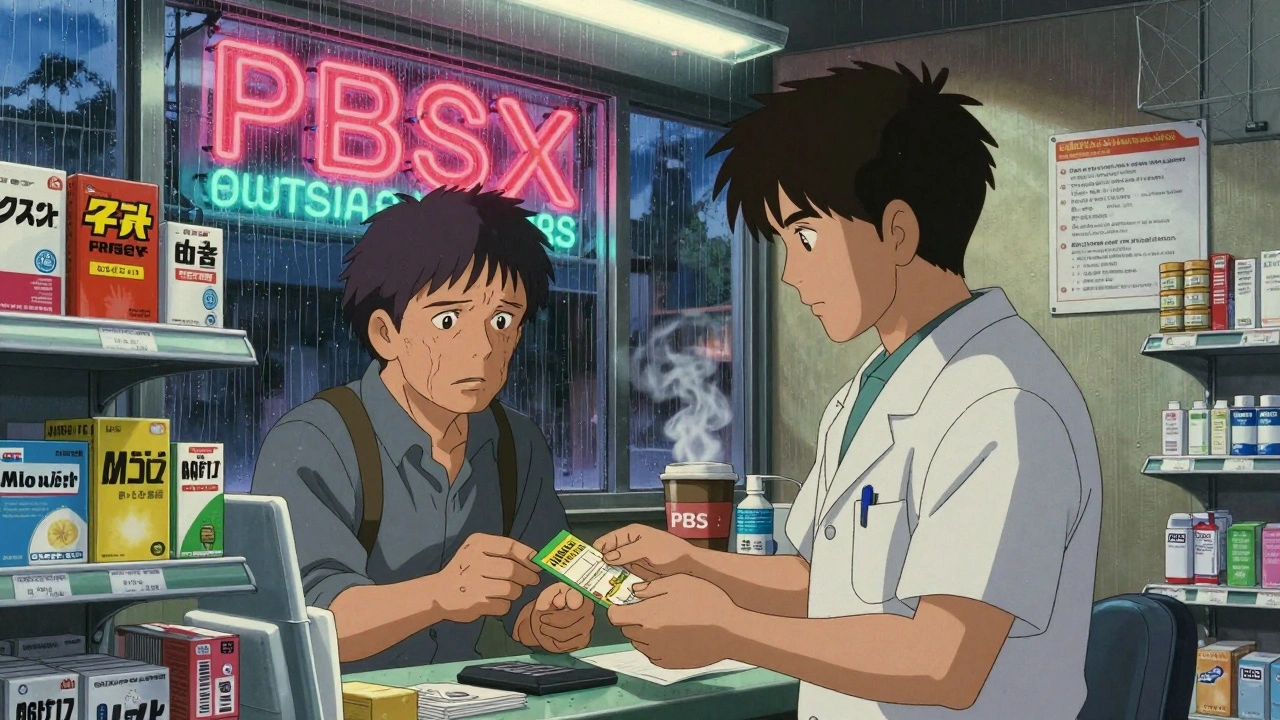
The Pharmaceutical Benefits Scheme (PBS) is the backbone of Australia’s medicine access system. It’s not just a subsidy program - it’s what keeps millions of Australians from choosing between food and their prescriptions. Since 1948, the PBS has ensured that essential medicines are affordable, no matter your income. Today, it covers over 5,400 medicines, with 87% of all prescriptions in Australia paid for in part by the government. But behind the numbers is a complex, often frustrating system that shapes how generics reach patients - and who can actually afford them.
How the PBS Works: Subsidies, Co-Payments, and Safety Nets
The PBS doesn’t give you free medicine. It lowers the price. As of July 2024, general patients pay $31.60 per script, while concession card holders pay just $7.70. These amounts are indexed to inflation, but the government has stepped in to freeze increases. In 2025, despite CPI rising, co-payments stayed flat - saving patients $127 million that year alone.
There’s a safety net. Once you spend $1,571.70 on PBS medicines in a calendar year, your co-payment drops to $7.70 - no matter if you’re a general or concession patient. That’s huge for people on multiple medications. One Melbourne retiree told me she used to skip her blood pressure pill every other month until she hit the safety net. After that, she said, “I stopped counting the pills. I just took them.”
But here’s the catch: not everyone qualifies. Over 1.8 million Australians skipped or delayed filling prescriptions in 2024 because they couldn’t afford the co-payment. That’s 12.3% of non-concession holders. Many are self-funded retirees, casual workers, or people just above the income threshold for government support. They’re caught in the gap - not poor enough for concessions, not rich enough to pay without stress.
Generic Medicines: The Hidden Engine of the PBS
Generics make up 84% of all PBS prescriptions by volume. That’s higher than the OECD average of 78%. But here’s what most people don’t realize: generics account for only 22% of total PBS spending. Why? Because even though they’re cheaper, the original brand-name drugs still cost a lot more - and they’re still prescribed often.
The PBS uses a system called reference pricing. If five drugs treat the same condition, the government sets the subsidy based on the cheapest one. So if you’re prescribed a brand-name statin, but a generic version exists, you pay the difference. That pushes pharmacies and doctors toward generics - and saves the government billions.
When a patent expires, the price of generics drops fast. In cardiovascular drugs, prices fall by 74% within a year of multiple generics entering the market. For CNS drugs like antidepressants, it’s 68%. The government pushes this further: after six months, the reference price is set at 60% of the original brand’s price. After a year, it drops to 43%. That’s aggressive - and it works.
The top five generic makers - Symbion, Sigma, Mylan, Aspen, and Hospira - control nearly 70% of the market. They’re not just selling pills. They’re playing a high-stakes game of price competition, knowing that the PBS will only pay so much. And they win - because the PBS needs them to keep costs down.
Why Some Medicines Take Forever to Get Listed
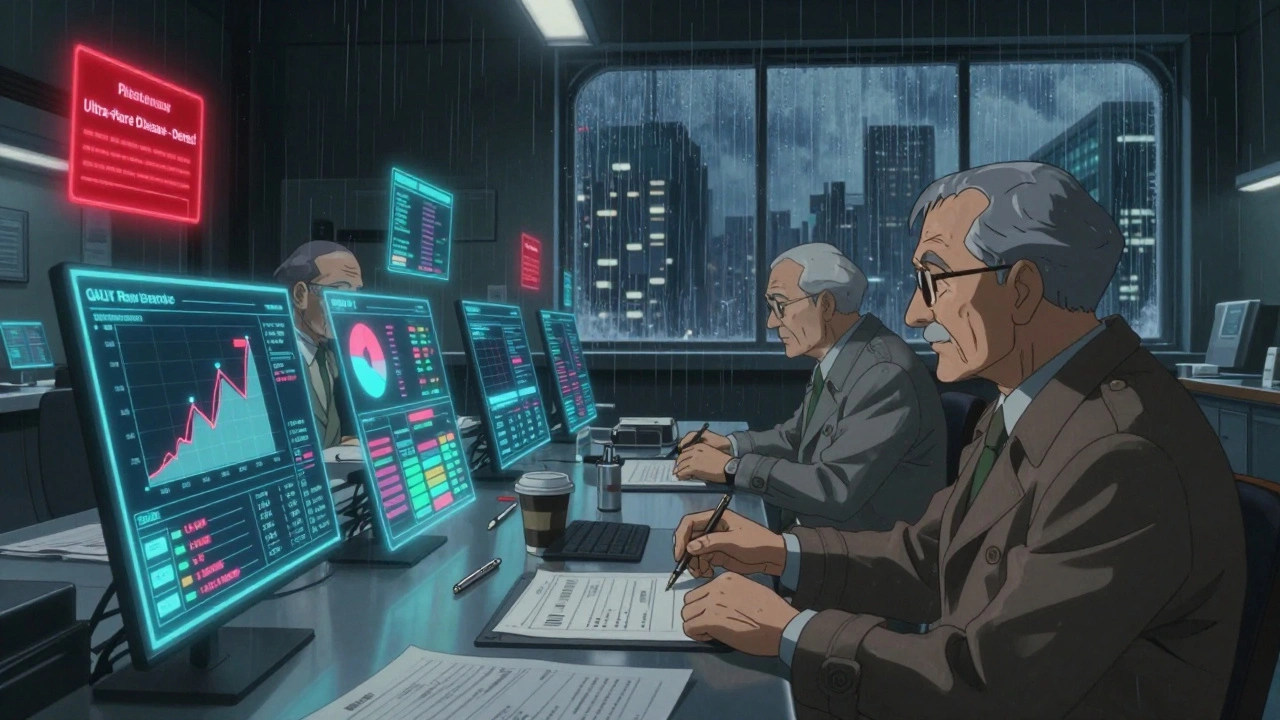
Getting a new drug onto the PBS isn’t like ordering online. It’s a slow, bureaucratic process. The Pharmaceutical Benefits Advisory Committee (PBAC) reviews every application. They look at clinical benefit, cost-effectiveness, and budget impact. Their unofficial threshold? Around $50,000 per quality-adjusted life year (QALY). But it’s not a hard rule. Some rare disease drugs costing over $150,000 per QALY have been approved under the Highly Specialised Drugs Program (HSDP).
Still, the wait is brutal. On average, it takes 587 days from when a drug is launched globally to when it’s listed on the PBS. In Germany, it’s 320 days. In Canada, 410. That means Australian patients pay full price - often $1,850 or more - for 14 months while waiting. For someone with cancer or a rare condition, that’s not just money. It’s time. And time is life.
The HSDP has eight strict criteria. If your disease doesn’t meet all of them - even if it’s deadly - you might be denied. A 2024 Senate Inquiry found that some life-extending treatments for ultra-rare diseases were rejected not because they didn’t work, but because too few people had the condition. That’s changing. Starting November 1, 2025, two of those eight criteria will be relaxed. It’s a small win, but it matters.
Doctors, Pharmacists, and the Administrative Burden
It’s not just patients who struggle. Doctors and pharmacists are drowning in paperwork. Nearly half of all PBS prescriptions require prior approval - authority-required listings. These are for drugs with strict usage rules: maybe only for Stage 3 cancer, or only after trying two other drugs first.
Pharmacists do an average of 17.3 PBS-related transactions a day. About 68% say authority scripts disrupt their workflow. One pharmacy in Footscray told me they’ve had to hire a part-time admin officer just to handle PBS forms. That’s not what pharmacy is supposed to be about.
Doctors need 40 hours of training just to understand the PBS rules. And even then, mistakes happen. A patient gets denied because the script didn’t include the right diagnosis code. The pharmacy calls. The doctor calls back. The patient waits. And waits. The Services Australia online portal handles 2.1 million authority requests a month. Electronic approvals take 1.8 days. Paper? Over a week.
The Big Changes Coming in 2026
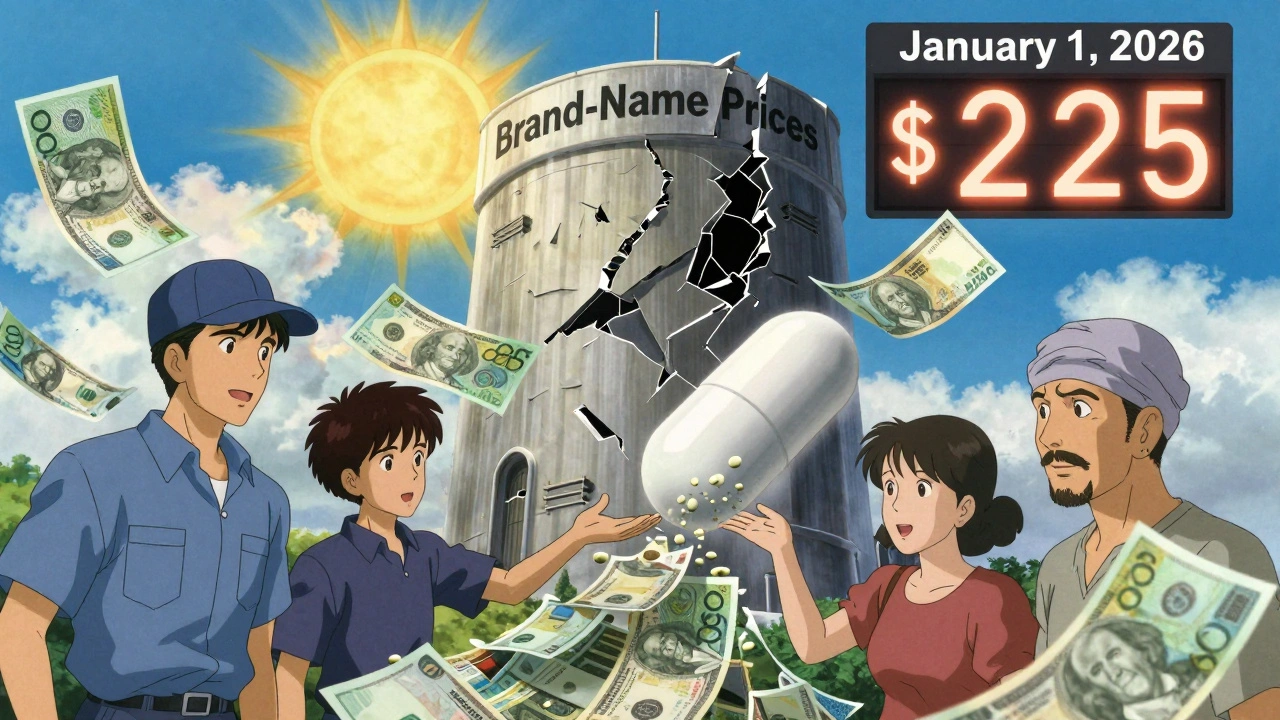
On January 1, 2026, the co-payment for general patients drops to $25. That’s a $6.60 cut - and it’s going to save patients nearly $800 million over four years. The government will pick up the extra $689 million in cost. It’s a political move, sure - but it’s also the right thing to do.
At the same time, the PBS is adding 150 new medicines in 2025-26. Talazoparib for prostate cancer. Relugolix for endometriosis. These aren’t just new drugs. They’re new chances for people who’ve been stuck with outdated options.
And the government is finally trying to fix the delays. The 2025-2030 Strategic Plan includes AI tools to spot inappropriate prescribing, real-time prescription monitoring, and faster listing pathways. It’s not perfect - but it’s a start.
What’s Working - and What’s Not
The PBS is one of the most efficient pharmaceutical systems in the world. It saves Australian households $13 billion a year in out-of-pocket costs. It gets generics into the market faster than most countries. It keeps drug prices low compared to the U.S. - where a month’s supply of the same medicine can cost 10 times more.
But it’s not fair. The system works best for people with concession cards. For others, the co-payment still hurts. The bureaucracy still slows access. The rare disease rules still leave people behind.
And here’s the truth: as Australia ages, PBS spending is projected to hit 2.6% of GDP by 2045. That’s up from 0.7% in 2005. The system is sustainable - but only if we keep fixing it. Not just by cutting prices, but by cutting delays. Not just by expanding subsidies, but by expanding access.
Generics are the quiet heroes of the PBS. They’re not flashy. They don’t have ads. But they’re what make the whole thing possible. Without them, the PBS would collapse under the weight of brand-name prices. And without the PBS, millions of Australians couldn’t afford to live with chronic illness.
It’s not a perfect system. But it’s ours. And it’s working - if we keep pushing it to work better.
What is the PBS co-payment in 2025?
As of 2025, the PBS co-payment is $31.60 for general patients and $7.70 for concession card holders. These amounts were frozen despite inflation, saving patients money. Starting January 1, 2026, the general co-payment will drop to $25.00 under the National Health Amendment (Cheaper Medicines) Bill 2025.
How many medicines are covered by the PBS?
As of 2025, the PBS lists over 5,400 prescription medicines. This includes both brand-name drugs and generics. About 87% of all prescriptions dispensed in Australia are covered by the PBS, making it the primary mechanism for medicine access nationwide.
Why are generic drugs cheaper on the PBS?
The PBS uses a reference pricing system. When multiple drugs treat the same condition, the government sets the subsidy based on the lowest-priced option. This pushes pharmacies and prescribers toward generics. After patent expiry, the reference price drops to 60% of the brand’s price after six months, and 43% after 12 months. This drives competition and rapid price declines - especially in categories like statins and antidepressants.
How long does it take for a new drug to be listed on the PBS?
On average, it takes 587 days from global launch to PBS listing - much longer than in countries like Germany (320 days) or Canada (410 days). This delay means patients often pay full price for over a year. The government is working to reduce this through digitization and faster review pathways, but the process remains slow, especially for complex or rare disease drugs.
Who qualifies for PBS subsidies?
All Australian citizens and permanent residents with a Medicare card qualify. International visitors from 11 countries with reciprocal health agreements - including New Zealand, the UK, Ireland, Sweden, the Netherlands, Finland, Italy, Malta, Norway, Slovenia, and Belgium - also qualify. Around 26.5 million people are covered under the current system.
What is the PBS safety net?
The PBS safety net kicks in once you’ve spent $1,571.70 on PBS medicines in a calendar year. After that, your co-payment drops to $7.70 - regardless of whether you’re a general or concession patient. This prevents financial hardship for people on multiple medications. In 2024, over 300,000 Australians reached the safety net, significantly improving their ability to afford ongoing treatment.
How does the PBS compare to other countries?
Australia’s PBS is more cost-effective than the U.S., where drug prices are 30-40% higher. Compared to the UK’s NHS, PBS prices are 15-20% higher, but access is faster. Unlike the UK’s strict £20,000-£30,000 per QALY threshold, the PBS uses a more flexible $50,000 benchmark and has approved treatments costing over $150,000 per QALY for rare diseases. The PBS also has higher generic usage (84% by volume) than the OECD average (78%), thanks to aggressive reference pricing.
Can I get a 60-day prescription on the PBS?
Yes, concession card holders can get 60-day prescriptions for the cost of one co-payment ($7.70), saving 50% compared to two 30-day scripts. General patients can also get 60-day scripts, but they pay two co-payments ($63.20). Many chronic disease patients - especially those on blood pressure or diabetes meds - use this option to reduce trips to the pharmacy and lower overall costs.
Suzanne Johnston
December 8, 2025 AT 18:30The PBS is one of those systems that works quietly in the background until you need it - then you realize how fragile it really is. Generics are the unsung heroes here, but the real win is the safety net. I’ve seen people in the UK struggle with the £20k/QALY cutoff - Australia’s flexibility is surprisingly humane. Still, that 587-day lag? Criminal. If we can launch rockets to Mars in weeks, why does a life-saving drug take 20 months to reach someone in Perth? It’s not bureaucracy - it’s moral laziness.
Andrea Petrov
December 8, 2025 AT 21:58Let’s be real - this whole PBS thing is just a government psyop to make us think healthcare is affordable. Did you know the big pharma companies own the PBAC? They *want* generics to be cheap so they can buy out the small manufacturers and raise prices later. That $25 co-pay? A distraction. They’re already planning the next surge. Watch - in 2027, the safety net gets slashed and ‘essential medicines’ get redefined as ‘non-luxury.’ They’re just waiting for us to stop caring.
Sabrina Thurn
December 10, 2025 AT 02:16Reference pricing is the most elegant cost-control mechanism in global pharma - and Australia executes it better than almost anyone. The 43% price drop after 12 months isn’t just aggressive - it’s mathematically optimal. It incentivizes generics to enter fast, forces manufacturers to innovate on delivery, not just molecules, and keeps the system solvent. The real failure isn’t the PBS - it’s that other countries refuse to adopt this model because they’re terrified of disrupting brand-name profits. The U.S. could cut its drug spending in half overnight if it just copied this.
Graham Abbas
December 11, 2025 AT 05:55My grandmother was on six PBS scripts. She’d cry every time she got the bill - not because it was expensive, but because she felt guilty taking something the government ‘gave’ her. That’s the quiet tragedy here. We’ve built a system that saves lives but makes people feel like beggars. The co-payment freeze? Good. The safety net? Brilliant. But we need to stop treating medicine like a handout and start treating it like a right. Maybe then we won’t have people skipping doses because they feel ashamed to ask for help.
Nikhil Pattni
December 11, 2025 AT 18:59Okay so let me explain something to you people who think this is complicated. The PBS is basically a socialist fantasy that only works because Australia has a small population and no real pharma industry to lobby. In the US we have 330 million people and Big Pharma owns Congress so we can't have this. Also the generics are not cheaper because of reference pricing they are cheaper because Indian companies make them for 2 cents and ship them here and the government is too lazy to check if they are actually safe. Also why do we even have safety nets? Shouldn't we just pay for everything? Like why is there a threshold? Why not just make it free? Also I read on Reddit that the PBAC is controlled by the WHO and they are trying to reduce global medicine access to control population growth. I'm not joking. Look it up. It's true.
Courtney Black
December 12, 2025 AT 11:09Generics are the real story here. Not the co-payments. Not the safety net. The fact that 84% of scripts are generics and they cost 1/5th of brands? That’s the revolution. Nobody talks about it because it’s boring. No drama. No outrage. Just pills. Quietly saving millions.
iswarya bala
December 13, 2025 AT 08:49omg this is so relatable!! i have my mum on 4 meds and we just hit the safety net last month and it felt like winning the lottery 😭 thank god for the pbs!!
Richard Eite
December 14, 2025 AT 19:11Australia’s system is a joke. You pay $31 for a pill while Americans pay $1850? That’s because your government is weak. We don’t need subsidies - we need competition. If you can’t afford medicine, get a job. Or move to Canada. At least they’re not pretending socialism works.
om guru
December 15, 2025 AT 15:51It is imperative to recognize that the structural integrity of the PBS lies in its disciplined application of economic principles and clinical evidence. The reference pricing mechanism is not merely a fiscal tool but a moral imperative to ensure equitable access. Delays in listing are regrettable but stem from rigorous evaluation protocols designed to prevent wasteful expenditure. The upcoming reduction in co-payment represents a prudent fiscal adjustment aligned with demographic trends. It is recommended that stakeholders continue to support evidence-based reform rather than emotional appeals.
Haley P Law
December 16, 2025 AT 02:36ok but like… why is no one talking about the fact that the guy who invented the safety net system is now a billionaire? i mean… i just looked it up and his name is on a pharma company. like… is this a scam? 🤔