MAOI Food Safety Checker
Check Your Food Safety
Enter a cheese or processed meat to see if it's safe while taking MAOI medications. This tool uses data from the article on tyramine content and safety classifications.
When you're on certain antidepressants or Parkinson's medications, a slice of cheddar or a sandwich with pepperoni isn't just a snack-it could be a medical emergency. The interaction between aged cheeses and processed meats with MAOI drugs is one of the most dangerous food-drug reactions in clinical practice. It doesn't happen often, but when it does, it can spike your blood pressure to dangerous levels in minutes.
Why Aged Cheese and Processed Meats Are Risky
Aged cheeses and cured meats contain tyramine, a naturally occurring compound formed when proteins break down during aging or fermentation. Your body usually breaks down tyramine with an enzyme called monoamine oxidase. But if you're taking an MAOI-like phenelzine (Nardil) or tranylcypromine (Parnate)-that enzyme is blocked. Tyramine builds up in your system and forces your nerves to release large amounts of norepinephrine. That causes your blood pressure to skyrocket.Studies show that a single 30-gram serving of aged cheddar can contain between 2.16 and 28.59 milligrams of tyramine. For someone on an MAOI, as little as 6 milligrams can trigger symptoms. At 25 milligrams or more, you’re looking at a medical emergency.
Which Cheeses Are Safe? Which Are Not?
Not all cheese is dangerous. The risk depends entirely on how long it’s been aged and how it’s made.- High-risk cheeses: Aged cheddar (72-953 mcg/g), Parmesan (610-1,400 mcg/g), Swiss (400-1,200 mcg/g), blue cheeses like Stilton and Gorgonzola (1,000-3,500 mcg/g), and brined feta (350-800 mcg/g). These are the ones to avoid.
- Moderate-risk cheeses: Camembert, Brie (200-600 mcg/g), Gruyère, Edam (150-500 mcg/g). These should be eaten in very small amounts, if at all.
- Safe cheeses: Fresh mozzarella (under 25 mcg/g), ricotta (under 40 mcg/g), cottage cheese (under 30 mcg/g), cream cheese (under 20 mcg/g), and American cheese (under 50 mcg/g). These are fine.
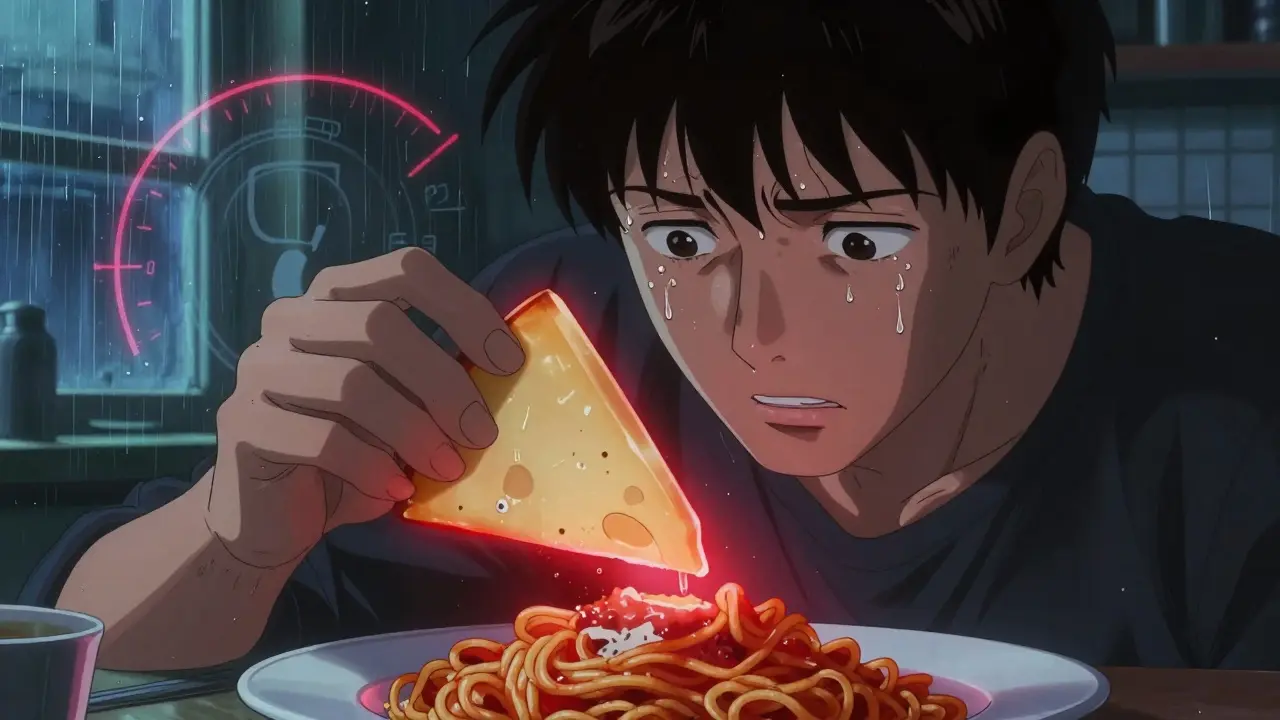
Many people assume all hard cheeses are dangerous, but that’s not true. Freshly made mozzarella from the deli counter is safe. It’s the aged, fermented, or mold-ripened cheeses that are the problem. Even a small amount of Parmesan shaved over pasta can push you over the edge.
Processed Meats: More Than Just Salami
Processed meats are just as risky as aged cheese. The curing and fermentation process creates tyramine, and some types are worse than others.- High-risk meats: Dry-cured salami (150-500 mcg/g), pepperoni (200-600 mcg/g), and dry summer sausages (300-900 mcg/g). These are the most dangerous.
- Moderate-risk meats: Bacon (75-250 mcg/g), corned beef (60-180 mcg/g), and bologna (50-200 mcg/g). These can be eaten occasionally in small portions.
- Safe meats: Freshly cooked chicken, beef, pork, or turkey. No curing, no smoking, no aging. Just plain, refrigerated meat.
Don’t be fooled by labels like "natural" or "no nitrates added." If it’s cured, fermented, or aged, it likely contains tyramine. Even smoked fish, like lox or kippered herring, can be risky-though properly stored versions are usually under 300 mcg/g, which is borderline safe if eaten in small amounts.
What Happens When You Eat the Wrong Food?
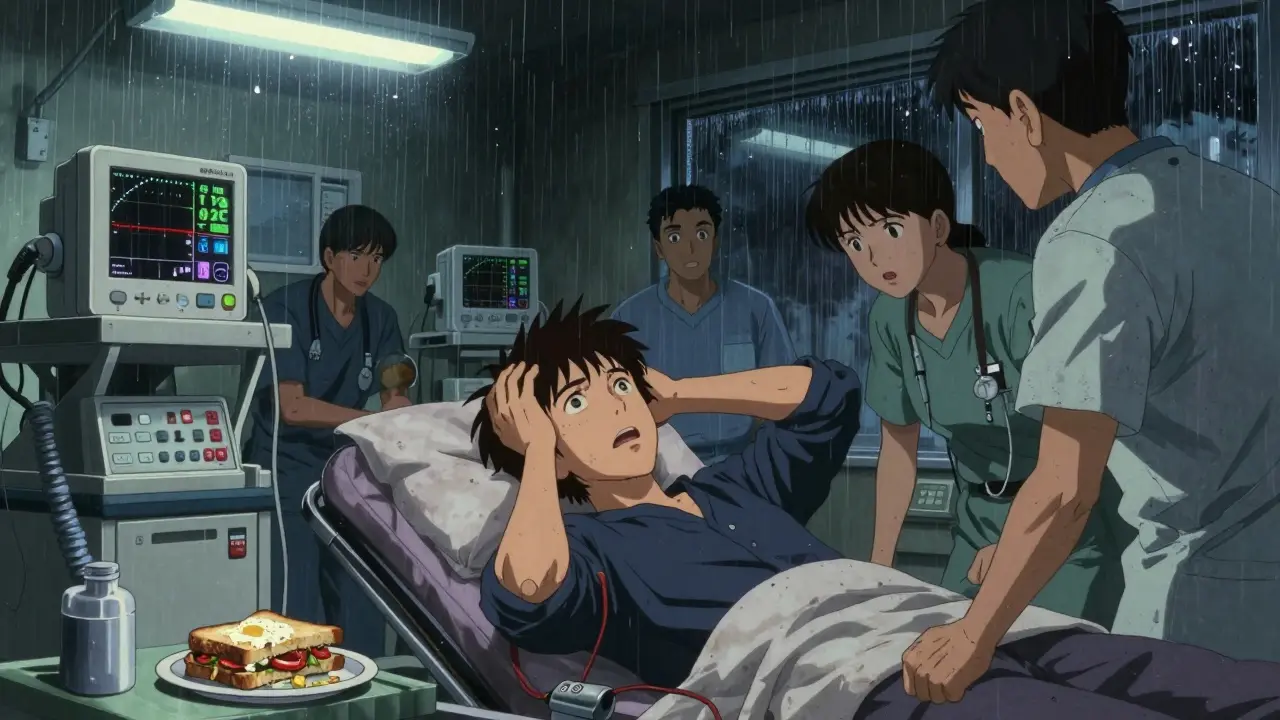
A hypertensive crisis from tyramine doesn’t sneak up on you. Symptoms hit fast-within 15 to 30 minutes after eating.- Severe headache, often at the back of the head (occipital)
- Blood pressure spikes to 180/120 mmHg or higher
- Palpitations or racing heart
- Profuse sweating
- Blurred vision or sensitivity to light
- Nausea, vomiting, or chest pain
One user on Drugs.com described eating a Parmesan salad while on Nardil and ending up in the ER with a blood pressure of 198/112. "The headache was like nothing I’ve ever experienced," they wrote. That’s not an exaggeration. The pressure can rupture blood vessels, cause a stroke, or lead to heart failure if not treated immediately.
It’s Not Just Cheese and Meat
Tyramine hides in other places too:- Soy sauce (1,000-2,500 mcg/g)
- Miso paste (800-2,000 mcg/g)
- Fish sauce (1,200-3,000 mcg/g)
- Tap beer and some wines (especially unpasteurized)
- Overripe bananas or avocados (rare, but possible)
Surprisingly, chocolate contains only 50-150 mcg/g-well below dangerous levels. Peanuts are also safe at 75-200 mcg/g. Many people are told to avoid these, but the science doesn’t support it. The real threats are fermented and aged products.
How Long Do You Need to Stay on the Diet?
You can’t just stop your MAOI and go back to eating salami the next day. The enzyme monoamine oxidase takes 14 to 21 days to fully recover after you stop the medication. That means you must stick to the diet for two to three weeks after your last dose.Many patients stop the diet too soon because they feel better. But the enzyme hasn’t returned to normal yet. That’s when people get caught off guard-eating a slice of aged cheese and having a crisis weeks after stopping the drug.

How to Manage This Diet in Real Life
This isn’t just about reading labels. It’s about changing how you eat.- Use a food diary: Track everything you eat and your blood pressure readings. Many patients find their personal threshold-some can handle 10 mg of tyramine, others react to 6 mg.
- Ask questions at restaurants: "Is this cheese aged?" "Was this meat cured or smoked?" Don’t assume. Even "fresh" mozzarella can be aged if it’s not refrigerated properly.
- Buy fresh cheese in small portions: Look for brands like Sargento’s MAOI-safe mozzarella cups. They’re labeled and tested for tyramine under 20 mcg/g.
- Carry an emergency card: It should say you’re on an MAOI, list your medications, and warn about tyramine. Paramedics need to know this fast.
- Use the MAOI Diet Tracker app: Launched by Mayo Clinic in early 2023, it scans barcodes and flags high-tyramine foods with 89% accuracy.
Patients who work with a dietitian cut their learning curve from 4-6 weeks to just 2-3. That’s the difference between confusion and confidence.
Why This Interaction Still Matters
About 1.4 million Americans take MAOIs every year-for treatment-resistant depression, anxiety, or Parkinson’s. Despite decades of warnings, 61% of emergency visits linked to MAOIs are due to dietary non-compliance, according to the CDC. Most of those cases involve cheese or cured meat.Pharmaceutical companies now include detailed dietary warnings on MAOI packaging. The FDA requires it. The EU mandates tyramine labeling on aged cheese. But the real problem isn’t the label-it’s the lack of consistent education.
Doctors assume patients understand the risks. Patients assume they can "just have a little." But with tyramine, there’s no safe middle ground. One bite can be enough.
What’s Next?
Researchers are working on solutions. A clinical trial funded by the NIH is testing a supplement that breaks down tyramine before it enters the bloodstream. If it works, it could change everything.Some food scientists are even breeding cheeses with naturally lower tyramine levels. Imagine a Parmesan that tastes the same but won’t kill you. That’s not science fiction-it’s happening.
Until then, the rules are simple: If it’s aged, fermented, or cured, skip it. Stick to fresh, refrigerated, and plainly labeled foods. Your blood pressure-and your life-depend on it.
Can I eat cheese if I’m on an MAOI?
Only fresh cheeses like mozzarella, ricotta, cottage cheese, cream cheese, and American cheese are safe. Avoid all aged, blue, or fermented cheeses-including cheddar, Parmesan, Swiss, feta, Gorgonzola, and Stilton. Even small amounts can trigger a dangerous spike in blood pressure.
How much tyramine is dangerous on MAOIs?
As little as 6 milligrams can cause symptoms in sensitive individuals. A single serving of aged cheddar (30g) can contain up to 28.59 mg. Doses over 25 mg can trigger a life-threatening hypertensive crisis. There’s no universal safe amount-it varies by person, so strict avoidance of high-tyramine foods is the only reliable approach.
Do I need to stay on this diet after stopping MAOIs?
Yes. Monoamine oxidase enzyme activity takes 14 to 21 days to return to normal after you stop taking MAOIs. You must continue avoiding tyramine-rich foods for two to three weeks after your last dose to avoid a delayed reaction.
Are there any safe processed meats?
Only freshly cooked meats like grilled chicken, roasted turkey, or baked pork are safe. Avoid all cured, smoked, or fermented meats-including salami, pepperoni, bacon, corned beef, and ham. Even "low-sodium" or "natural" versions contain tyramine if they’ve been aged or cured.
Can I drink beer or wine on MAOIs?
Unpasteurized beer and some wines, especially reds and home-brewed varieties, can contain tyramine. Bottled, pasteurized beer and most commercial wines are generally low-risk, but it’s safest to avoid alcohol entirely while on MAOIs. Alcohol can also worsen side effects like dizziness and low blood pressure.
What should I do if I accidentally eat high-tyramine food?
Check your blood pressure immediately. If it’s over 160/100, or if you develop a severe headache, rapid heartbeat, sweating, or blurred vision, seek emergency care. Don’t wait. Call 911 or go to the nearest ER. Bring your medication list and mention you’re on an MAOI.
Are there apps or tools to help me avoid tyramine?
Yes. The Mayo Clinic’s MAOI Diet Tracker app, launched in January 2023, scans barcodes and identifies high-tyramine foods with 89% accuracy. It includes databases for cheese, meats, sauces, and alcoholic drinks. Many patients find it invaluable for grocery shopping and dining out.
Can I ever eat aged cheese again after being on MAOIs?
If you stop MAOIs permanently and your doctor confirms enzyme levels have returned to normal, you may be able to reintroduce aged cheese cautiously. But most patients are advised to avoid it long-term due to the high risk and potential for irreversible damage. Always consult your prescriber before trying any previously restricted food.
Anu radha
December 17, 2025 AT 20:19I didn't know cheese could be dangerous like this. My grandma eats cheddar every day, now I'm scared for her.
Sachin Bhorde
December 17, 2025 AT 23:24Bro, MAOIs are wild. Tyramine is a silent killer-like a sneaky biohazard in your feta. Even if you're 'just having a little,' it's like playing Russian roulette with your BP. The Mayo app? Lifesaver. Scan before you snack.
Joe Bartlett
December 18, 2025 AT 01:09Brits don't get this. We just eat cheddar on crackers and call it a day. Yanks overcomplicate everything.
Peter Ronai
December 19, 2025 AT 09:12Oh please. You think this is new? I’ve been telling people since 2018 that ‘artisanal’ just means ‘tyramine bomb.’ You think your $18 wheel of ‘raw’ blue cheese is safe? It’s basically liquid hypertension. And don’t even get me started on miso. That stuff should come with a hazmat warning.
Chris Van Horn
December 20, 2025 AT 05:05So you're telling me my favorite pepperoni pizza is a cardiac time bomb? And I thought the real danger was the carbs. This is why I stopped trusting doctors. First they say ‘eat less sugar,’ now it’s ‘don’t touch cheese’? Who even made this rule? Some lab rat with a clipboard and a grudge against salami?
Salome Perez
December 21, 2025 AT 11:35For those of you who’ve never been on an MAOI-this isn’t about restriction, it’s about liberation. This diet isn’t a prison, it’s a map to safety. I used to think I was being ‘too careful’ until I saw a friend in the ER after a ‘small’ slice of parmesan. Now I carry my emergency card like a badge. And yes, fresh mozzarella from the deli? Pure joy. No guilt. No fear. Just flavor.
The Mayo app? I use it daily. It’s not perfect, but it’s the closest thing we have to a personal tyramine bodyguard. And for those who say ‘I can handle a little’-you can’t. There’s no safe middle ground with this. One bite. One minute. One crisis.
Don’t wait for the headache to start before you learn. Learn now. Eat with confidence. Live without fear. Your future self will thank you.
Michael Whitaker
December 21, 2025 AT 15:53It is, of course, imperative to acknowledge the profound biochemical implications of tyramine accumulation in the context of irreversible monoamine oxidase inhibition. The pharmacokinetic profile of phenelzine, for instance, renders the body incapable of metabolizing dietary amines with any degree of efficacy. Consequently, the consumption of even trace amounts of fermented or aged proteins-such as those present in Gorgonzola or dry-cured salami-constitutes a statistically significant risk factor for hypertensive encephalopathy. One must, therefore, exercise the utmost diligence in food selection, as the consequences of negligence are not merely unpleasant-they are, quite literally, fatal.
Moreover, the notion that ‘a little won’t hurt’ is not only medically unsound but epistemologically dangerous. The human body does not operate on a sliding scale of tolerance in this context; it operates on an all-or-nothing binary. The enzyme is either inhibited or it is not. There is no middle ground. There is no compromise. There is only survival.
That said, I am heartened to see the development of the Mayo Clinic’s app. It is a rare example of clinical pragmatism meeting technological innovation. I have recommended it to every patient I counsel. It is, without hyperbole, a miracle of modern medical communication.
Sam Clark
December 23, 2025 AT 14:17I’ve been on Parnate for 5 years. This post saved my life. I used to think I was being overly cautious-until I read the numbers. Now I check every label. I even call the cheese counter and ask if it’s aged. People think I’m weird. I don’t care. I’m still here. And I’m eating fresh mozzarella with basil and olive oil every night. It’s not deprivation-it’s freedom.
Marie Mee
December 23, 2025 AT 19:44theyre lying about the cheese thing i bet its the government putting something in the food to make us sick so they can sell us more meds
Kaylee Esdale
December 24, 2025 AT 11:29My mom’s on an MAOI and she used to cry because she thought she couldn’t eat anything. Then we found the safe cheeses and she started making these little caprese salads with fresh mozz and tomatoes. She says it’s the first time in years she’s felt like she can actually enjoy food. This isn’t about rules-it’s about joy. And yeah, sometimes you gotta skip the salami. But you still get to have the good stuff.
Steven Lavoie
December 24, 2025 AT 11:52As someone from a culture where fermented foods are central to daily meals-miso soup, soy sauce, pickled vegetables-I’ve had to completely rethink my plate. But here’s the thing: it’s not about losing your culture, it’s about adapting it. I make my own low-tyramine miso using fresh soybeans and short fermentation. I use coconut aminos instead of soy sauce. I still have flavor. I still have tradition. I just don’t have a trip to the ER.
To anyone from Asia or Latin America reading this: your grandmother’s recipes can still live. You just need to tweak them. Talk to a dietitian. It’s not surrender. It’s survival with dignity.